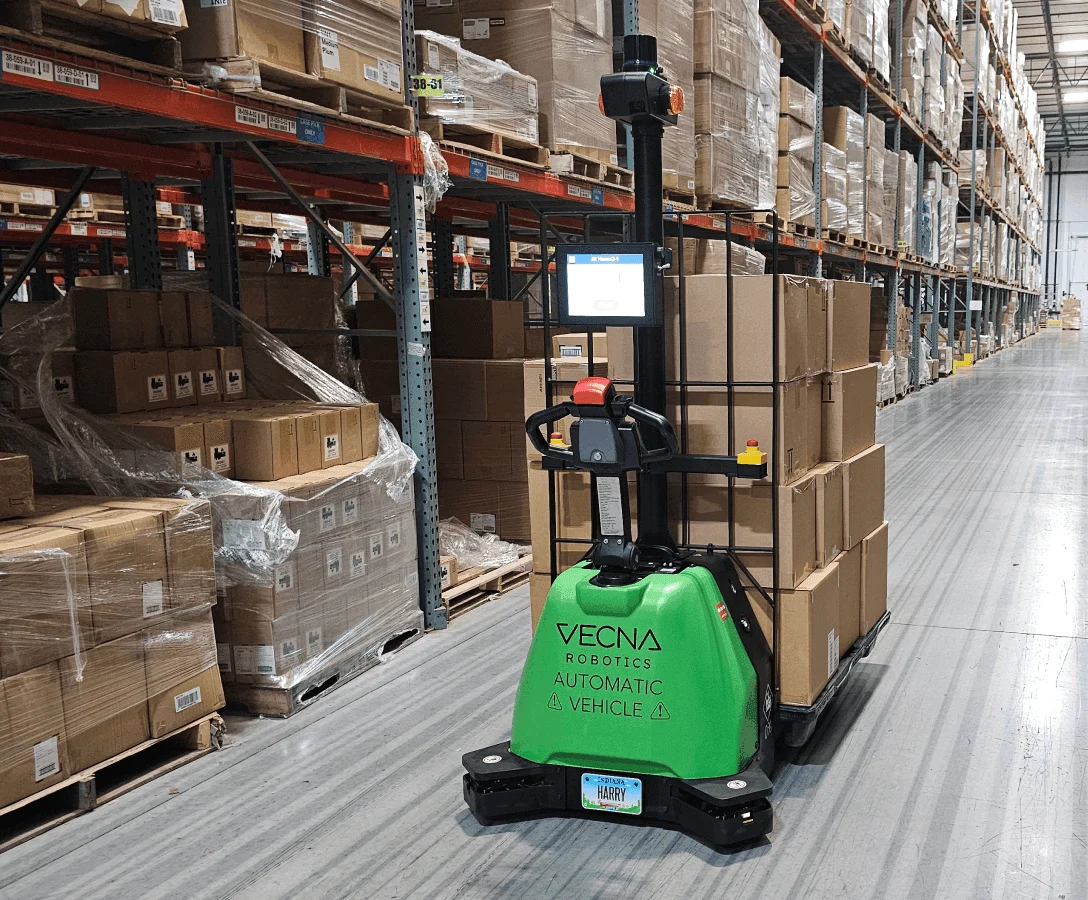
In a pivotal moment for the North American logistics and supply chain sectors, Waltham, Massachusetts-based Vecna Robotics has announced the successful closure of a $31 million Series D funding round. This capital infusion arrives at a critical juncture: as the United States government tightens the reins on foreign-made technology, domestic robotics manufacturers are experiencing an unprecedented surge in demand.
The investment, led by Unless with continued backing from stalwarts such as Drive Capital, Tiger Global, Highland Capital Partners, and Tectonic Ventures, is earmarked to scale commercial operations and fast-track the development of next-generation autonomous systems. As the industry grapples with a new federal policy that restricts the procurement of specific foreign-made robots, Vecna’s recent windfall underscores a broader shift in national industrial policy—a move toward reclaiming autonomy in the critical infrastructure of warehouse automation.
The Catalyst: A Shifting Regulatory Landscape
The recent surge in interest surrounding U.S.-based robotics firms is not merely a result of market organic growth; it is the direct consequence of a decisive intervention by the U.S. Federal Communications Commission (FCC). In July, the FCC introduced a sweeping prohibition on the sale and importation of various foreign-made robotic systems, citing pressing national security concerns and a strategic desire to foster a self-reliant domestic supply chain.
While the official announcement was brief, its implications for the logistics industry are seismic. For years, U.S. distribution centers have relied heavily on cost-effective, imported Autonomous Mobile Robots (AMRs) and Automated Guided Vehicles (AGVs) for routine tasks such as sortation, goods-to-person picking, and pallet transport. The new regulatory framework effectively severs the supply line for these models, leaving many logistics firms in a state of operational uncertainty.
Industry analysts suggest that this policy is the most significant government intervention in the warehouse automation market in decades. By restricting foreign competition, the federal government has effectively signaled that warehouse technology is no longer just a business efficiency tool—it is a component of national infrastructure that requires domestic oversight.
Vecna Robotics: Scaling to Meet the "American-Made" Mandate
Vecna Robotics, which has long championed the development of "U.S.-built" automation, finds itself at the center of this industrial pivot. CEO Karl Iagnemma noted that the company experienced a palpable shift in market sentiment within hours of the FCC’s ruling.
"Within 72 hours of the FCC announcement, we had a surge of inquiries from customers, both asking about our products and also looking in part to understand how to navigate the policy change," Iagnemma stated.
The $31 million in new capital is designed to capitalize on this urgency. Vecna plans to utilize the funds to expand its workforce, enhance its production capacity, and refine its current product portfolio. The company’s current offerings—which include a suite of autonomous forklifts, tuggers, and pallet jacks—are already widely utilized in high-volume environments. However, the company is now preparing to launch two highly anticipated product families: advanced systems for autonomous pallet stacking and de-stacking, and specialized robotics for the complex, labor-intensive task of trailer loading and unloading.
The Untapped Frontier: 15 Billion Square Feet of Potential
Beyond the regulatory tailwinds, Vecna’s growth strategy is predicated on the massive, largely untapped potential of the North American warehousing sector. According to Iagnemma, there are approximately 15 billion square feet of warehouse space across North America. Despite the rapid growth of e-commerce and the ongoing labor crisis, the vast majority of these facilities remain largely unautomated.
"Market penetration is still relatively modest," Iagnemma noted. "We are looking at a future where manual material handling is the exception rather than the rule."
For Vecna, the value proposition is rooted in "flexible automation." Unlike legacy systems that require expensive, fixed infrastructure like floor-mounted rails or complex sensor grids, Vecna’s robots are designed to work alongside human workers in existing, dynamic warehouse environments. By automating non-value-added travel—the time employees spend walking across large floors to transport goods—Vecna aims to significantly boost productivity without requiring companies to redesign their facilities from the ground up.
Chronology of the Domestic Automation Pivot
To understand how the market reached this point, one must look at the evolution of the automation sector over the last decade:
- 2015–2020: The Globalization Phase. North American companies aggressively sourced affordable, specialized robotics from international markets, primarily Asia. During this period, foreign vendors dominated the AMR market, offering plug-and-play solutions at price points that domestic startups struggled to match.
- 2020–2022: The Pandemic Wake-up Call. The COVID-19 pandemic exposed the fragility of global supply chains. For many American companies, the realization that they were dependent on foreign hardware for their domestic logistics operations sparked internal discussions about "reshoring" critical technologies.
- 2023–2024: The Regulatory Shift. The U.S. government shifted from passive observation to active intervention. The FCC ruling in July 2024 marked the formal end of the "laissez-faire" era for warehouse robotics, forcing a massive re-evaluation of procurement strategies among Fortune 500 retailers and logistics providers.
- Present Day: The "Series D" era. Companies like Vecna are now receiving the institutional support required to build the domestic manufacturing capacity necessary to fill the void left by restricted foreign vendors.
Supporting Data: Why Flexibility Matters
The current demand for Vecna’s technology is driven by three primary market forces:
- Labor Scarcity: Despite economic fluctuations, the labor market for warehouse roles remains tight. Companies are increasingly unable to hire enough personnel to manage high-turnover, repetitive tasks.
- Infrastructure Limitations: Most U.S. warehouses were built before the era of modern automation. Vecna’s ability to integrate into existing "brownfield" sites—without requiring structural renovations—is a significant competitive advantage.
- The CaseFlow Advantage: With the introduction of the CaseFlow platform, Vecna is moving into the high-complexity realm of piece-picking. By automating the most labor-intensive aspects of fulfillment, Vecna is addressing the bottleneck that most directly impacts end-customer delivery times.
Implications for the Future of U.S. Logistics
The implications of this shift are profound. By effectively nationalizing the supply chain for robotics, the U.S. government is attempting to ensure that if a geopolitical crisis occurs, the flow of goods within the country remains uncompromised.
However, this transition is not without its risks. The sudden exclusion of foreign vendors could lead to short-term supply shortages, as domestic manufacturers like Vecna ramp up their production capabilities. Logistics firms are now faced with the challenge of transitioning their existing fleets while simultaneously vetting new domestic providers.
For Vecna Robotics, the challenge will be to scale rapidly without sacrificing the reliability that has built their reputation. As they prepare to roll out their pallet-stacking and trailer-loading solutions, the eyes of the logistics world will be fixed on them. They are no longer just a robotics company; they are a key player in a national effort to ensure that the "backbone" of American commerce is built, maintained, and operated within its own borders.
In the words of industry observers, the era of "any robot, anywhere" has ended. We are entering an era of "sovereign automation," where the technology that moves goods is as critical to national security as the goods themselves. As Vecna moves into this next chapter, backed by $31 million in capital and a government-sanctioned mandate, the company is poised to become the standard-bearer for a new generation of American-built, enterprise-grade robotics.
About the Author