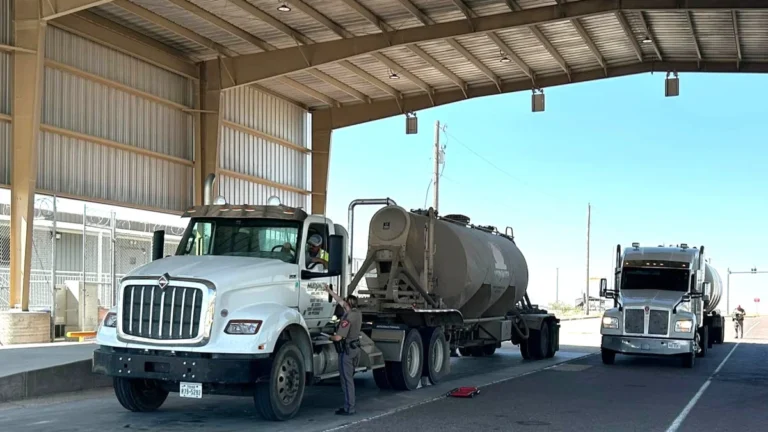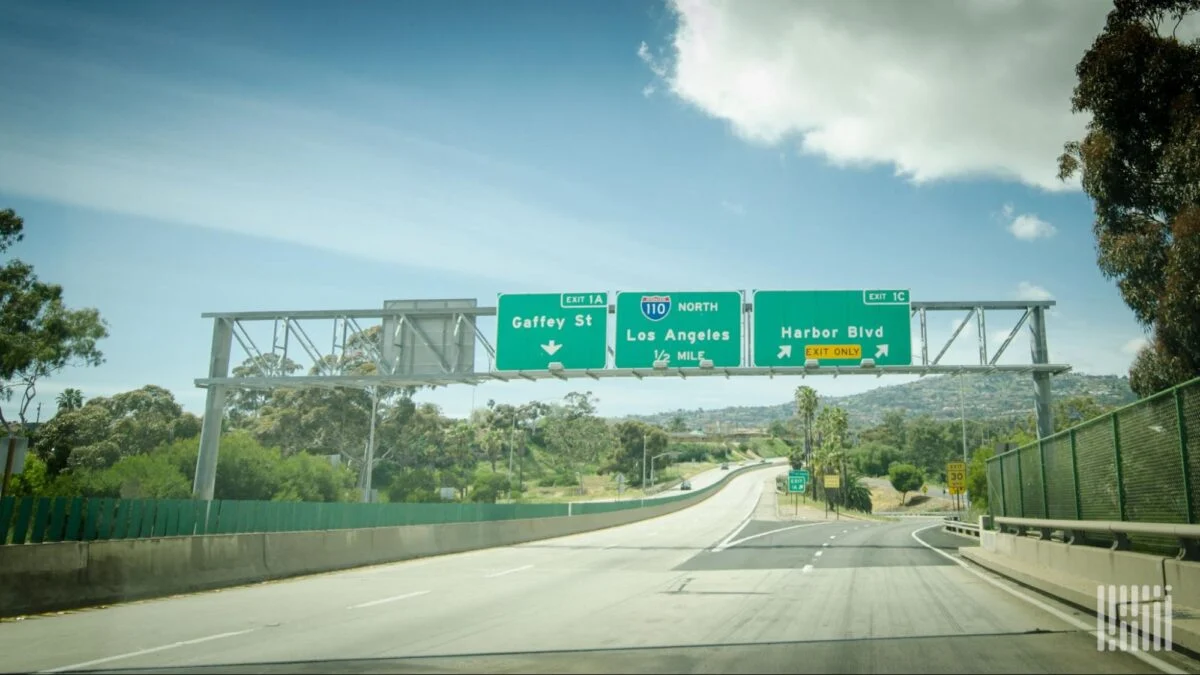
The U.S. trucking industry, already grappling with supply chain volatility and a persistent driver shortage, finds itself at the center of a complex legal showdown between the State of California and the Federal Motor Carrier Safety Administration (FMCSA). At the heart of the dispute is the issuance of non-domiciled Commercial Driver’s Licenses (CDLs), a credential primarily held by immigrants.
On Friday, the U.S. Court of Appeals for the District of Columbia became the theater for a pivotal hearing in California Department of Motor Vehicles vs. U.S. Department of Transportation. The case, which threatens the operational viability of thousands of drivers and the administrative authority of state agencies, centers on whether federal regulators overstepped their bounds by halting California’s ability to issue and renew these critical licenses.
The Core Conflict: A Question of Expiration Dates
While the implications of this case extend to broader federal efforts to tighten oversight of CDL holders nationwide—an issue affecting roughly 194,000 drivers—the courtroom arguments remained focused on granular administrative disputes.
The FMCSA’s central grievance against the California DMV is that the state issued non-domiciled CDLs that remained valid long after the license holder’s legal authorization to remain in the United States had expired. The federal agency contends that this creates a systemic security and regulatory vulnerability.
"It seems rather absurd that a credential for years and years—five years, eight years—could be issued with a document that expires tomorrow," argued Simon Jerome, the Justice Department attorney representing the FMCSA. The federal government asserts that the validity of a commercial license must be inextricably linked to the expiration date of an immigrant’s legal presence documentation.
California, conversely, maintains that federal law contains no such explicit restriction. In its legal brief, the state argued that the FMCSA is attempting to impose a new rule through an enforcement action rather than through the formal, transparent rulemaking process. "FMCSA pointed to no federal rule requiring CDLs to expire on or before the date of the driver’s legal presence documents," California’s counsel stated, suggesting that the federal agency is unilaterally redefining state compliance standards after the fact.
Chronology of a Regulatory Standoff
The friction between California and federal regulators did not emerge overnight; it is the culmination of a multi-year audit process and failed negotiations.
- The FMCSA Audit: Following a comprehensive audit of California’s CDL program, the FMCSA flagged significant discrepancies in how the state processed non-domiciled applicants.
- The Finding of Non-Compliance: The federal agency concluded that California was failing to adequately verify the "period of lawful presence" for license holders, leading to the issuance of thousands of licenses that exceeded federal requirements.
- The "Pause" and Financial Penalties: Frustrated by what it characterized as a lack of cooperation, the FMCSA instituted a "pause" on the issuance of new or renewed non-domiciled CDLs in California. Furthermore, the federal government withheld approximately $160 million in highway funding from the state, citing a failure to rectify the identified administrative deficiencies.
- The Courtroom Escalation: Unable to reach a resolution, the California DMV took the federal government to the U.S. Court of Appeals, seeking to lift the "pause" and recover its standing, while the FMCSA maintained that the state’s recalcitrance necessitated the drastic measures.
Supporting Data and Systemic Impact
The scale of the issue is significant. According to federal filings, nearly one-third of the non-domiciled CDLs issued by the California DMV—roughly 20,000 out of 65,000—were flagged as improperly issued because the expiration date of the license exceeded the applicant’s period of lawful presence.
The state did move to cancel thousands of these licenses in the wake of the audit. However, the legal dispute hinges on whether these remedial actions constituted "substantial compliance." California’s Deputy Attorney General, Kristen Kido, argued before the three-judge panel that the state has made good-faith efforts to align with federal expectations. She emphasized that the FMCSA’s "never-ending pause" is an extraordinary measure that punishes both the state and the thousands of drivers who are currently unable to renew their livelihoods.
Kido noted that "to decertify the state entirely would apply to all commercial licenses," a scenario that would be catastrophic for the California trucking economy. While the current "pause" is limited to non-domiciled licenses, the precedent it sets is a source of anxiety for state regulators nationwide.
Official Responses and Judicial Inquiry
During the oral arguments, the judges probed the nature of the cooperation between the state and federal agencies. The debate often descended into the minutiae of timelines and responsiveness.
A notable exchange occurred between Justice Department attorney Simon Jerome and Judge Cornelia Pillard regarding a document submission sent by the California DMV to the FMCSA on Christmas Eve. The exchange highlighted the tension: was the state’s delayed response a sign of defiance, or merely a byproduct of bureaucratic timing?
For the FMCSA, these administrative hurdles are symptomatic of a deeper problem. Jerome argued that the timing and responsiveness of the DMV are the "heart of this case." He questioned whether the federal government should have been expected to wait indefinitely while the state attempted to patch a program that was inherently broken.
Conversely, the DMV argues that the FMCSA is reading statutes in an overly expansive manner to justify a power grab. The state contends that a violation of a corrective schedule should not, in itself, be an independent basis for a finding of total non-compliance that results in the suspension of state authority.
Broader Implications for the Trucking Industry
The California DMV vs. U.S. DOT case does not exist in a vacuum. It is part of a growing trend of federal intervention in state-level credentialing.
The Lujan Precedent
Next week, the same court will hear oral arguments in Lujan vs. FMCSA, a case that mirrors many of the arguments presented in the California dispute. The Lujan case also challenges the federal agency’s authority to impose strict duration limits on non-domiciled CDLs based on immigration status. The outcome of these two cases will likely set the legal standard for how states manage commercial licenses for non-citizen residents across the country.
A National Shift
While California struggles with federal oversight, other states are navigating the same waters with varying degrees of success. North Carolina, for instance, recently received the "green light" from the Department of Transportation to resume issuing non-domiciled CDLs after implementing a series of federally mandated changes. This suggests that the FMCSA is willing to restore state authorities—but only after the states demonstrate absolute adherence to the new, stricter federal guidelines.
Economic and Operational Consequences
For the trucking industry, the implications are profound. If the courts rule in favor of the FMCSA, it could force a massive, nationwide overhaul of how CDLs are issued to non-citizens. While the government frames this as a matter of national security and regulatory consistency, industry advocates fear it will exacerbate the driver shortage.
Furthermore, the threat of withheld highway funding serves as a powerful, if controversial, cudgel. By linking the integrity of CDL issuance to infrastructure funding, the federal government has ensured that state departments of transportation are paying close attention to these administrative details.
Conclusion
As the D.C. Circuit Court of Appeals weighs the arguments, the trucking industry remains in a state of suspended animation. The conflict between California and the FMCSA represents a fundamental tension in American federalism: how much autonomy should states have in managing their internal administrative programs, and to what extent can the federal government intervene to enforce uniform national standards?
Whether the courts uphold the FMCSA’s "pause" or force a return to the negotiating table, one thing is certain: the era of lax oversight regarding non-domiciled CDLs is over. The federal government has signaled that it will use its full regulatory and financial weight to ensure that every commercial license in the U.S. is backed by verifiable, time-bound legal status. For thousands of drivers, the outcome of these cases will determine not just their ability to work, but the stability of their lives in the United States.
About the Author