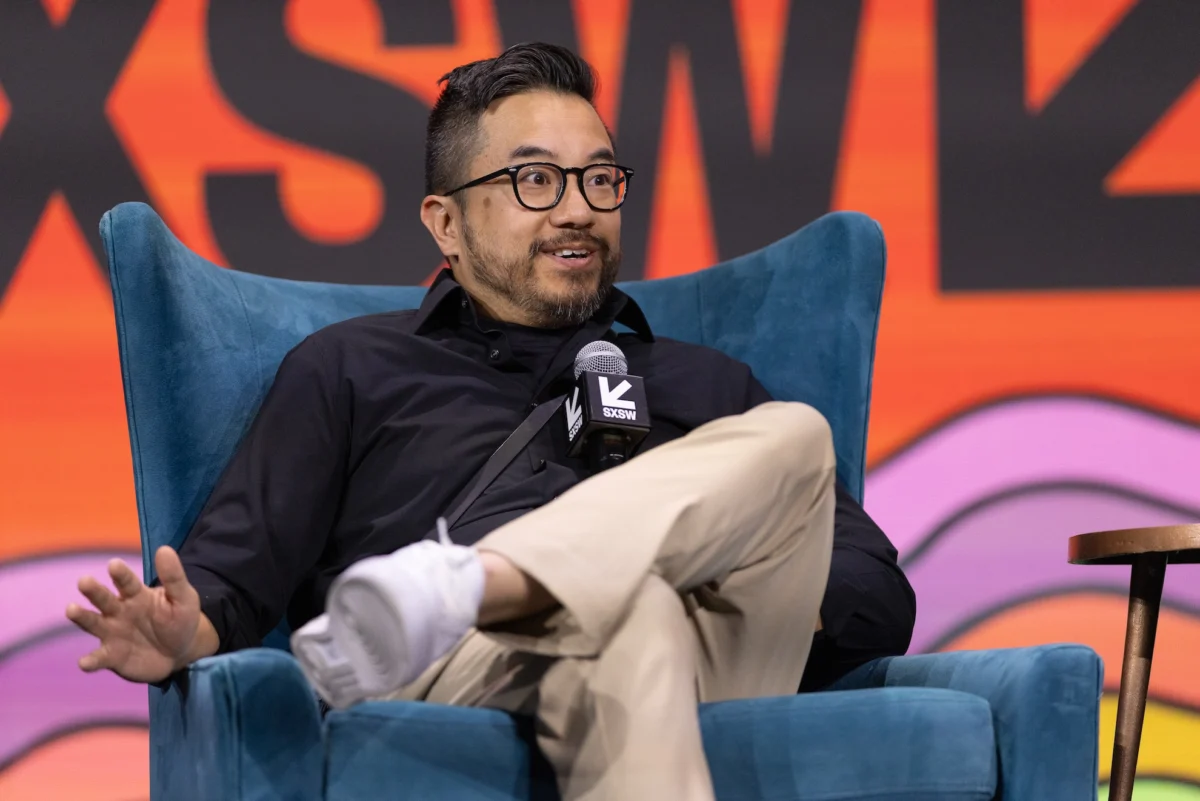
In a provocative stance that sets him at odds with some of the most influential voices in Silicon Valley, Y Combinator CEO Garry Tan has called for a radical "laissez-faire" approach to the controversial practice of AI model distillation. As frontier AI labs—the giants behind the world’s most powerful large language models (LLMs)—intensify their lobbying for regulatory intervention against the extraction of knowledge from their proprietary systems, Tan argues that the industry should embrace, rather than suppress, these techniques.
At the heart of this dispute is a technical process known as "distillation." By extensively prompting a high-capability frontier model, researchers can effectively "teach" a smaller, more efficient model to replicate the reasoning capabilities and knowledge base of the larger original. While frontier labs characterize this as an illicit threat to intellectual property and national security, Tan believes it is an essential mechanism for democratizing intelligence and preventing a monopolistic "doomer" scenario where a single, monolithic entity controls the future of human intelligence.
The Mechanics of Distillation and the "Illicit" Allegations
Distillation is a cornerstone of modern machine learning. It is a legitimate, widely practiced technique used by developers to shrink massive, power-hungry models into nimble versions capable of running on local hardware or edge devices. However, the line between "training optimization" and "theft" has become increasingly blurred.
Anthropic’s Stance
This week, Anthropic published its second comprehensive report on what it terms "illicit distillation attacks." The report alleges that state-backed or state-affiliated Chinese labs are systematically hiding their identities to bypass rate limits and safety protocols. According to Anthropic, these actors rely on fraudulent accounts and stolen credentials to repeatedly query frontier models, effectively "mining" them for their underlying intelligence.
Anthropic CEO Dario Amodei has been one of the most vocal proponents of a regulatory crackdown. His position is clear: the intellectual property embedded in models that cost billions to train must be protected, and the act of unauthorized distillation represents a significant risk to both the proprietary interests of U.S. firms and broader national security concerns regarding the proliferation of advanced AI capabilities.
A Chronology of the Conflict
The friction over model distillation has escalated rapidly over the past eighteen months, evolving from a technical concern into a geopolitical and regulatory battleground.
- Mid-2025: The first widespread reports emerge of smaller, open-weight models appearing on platforms like Hugging Face that exhibit reasoning patterns suspiciously similar to leading proprietary models like Claude or GPT-4.
- Early 2026: Anthropic and other frontier labs begin implementing sophisticated "anti-scraping" and "anti-distillation" detection layers within their API interfaces.
- March 2026: Garry Tan, speaking on his own experimentation with AI, highlights the power of open-weight systems, framing them as a necessary counterweight to closed-system dominance.
- July 2026: A landmark $1.5 billion copyright settlement involving AI labs and content creators is approved, signaling the legal complexity of how AI models are trained on human data.
- September 2026: Anthropic releases its second threat intelligence report, specifically labeling unauthorized distillation as an "illicit attack" and renewing calls for government intervention.
- September 11, 2026: In a CNBC interview, Garry Tan publicly breaks rank with the "frontier" consensus, arguing that the government should "do nothing" to curb distillation and suggesting that the U.S. should actively foster an "American distillation regime."
Garry Tan’s Argument: A "Public Good" Perspective
Garry Tan, the commander of the world’s most prolific startup accelerator, has positioned himself as a staunch defender of the open-source and open-weight AI ecosystem. His arguments against the regulation of distillation are built upon a foundation of skepticism regarding the moral high ground currently occupied by the major labs.
The Irony of Intellectual Property
Tan points to a fundamental hypocrisy in the AI industry: the proprietary labs that are currently lobbying against distillation are the same companies that built their empires by "vacuuming up" the entirety of human knowledge. Many of these labs ingested copyrighted material, books, news articles, and personal data without explicit permission from the original creators.
"Proprietary AI labs didn’t ask permission when they ingested as much human knowledge as they could," Tan told TechCrunch. "Controlling what users and customers do with API calls to closed-weight models feels constraining. There’s a role government can play here to normalize the fact that access to intelligence that was trained on broad public access data should itself also be more a form of a public good than something locked away behind restrictive terms of service."
The "Doomer" Scenario
For Tan, the true danger to society is not the distillation of models, but the consolidation of power. He posits that if regulators allow the largest labs to legally block the creation of competitive, open-weight models, we are effectively inviting a dystopian future.
"The nightmare scenario—the doomer scenario for AI—is that there is just one company," Tan explained. "It has the best access to capital. It has the best AI researchers. It runs away with it and suddenly there is one company that is monolithic. And that would be bad."
Implications for the AI Ecosystem
The divide between the "frontier-only" approach and the "open-weight" philosophy creates a complex landscape for developers, investors, and policymakers.
For Developers and Startups
If distillation is restricted, the barrier to entry for AI startups becomes significantly higher. Smaller companies that cannot afford the hundreds of millions of dollars required to train a foundational model from scratch rely on distillation to bridge the gap. By allowing developers to learn from the best, the industry creates a competitive landscape that prevents any single firm from having a permanent, insurmountable lead.
For National Security and Regulation
The U.S. government is caught in a bind. On one hand, they want to prevent strategic adversaries from stealing the "crown jewels" of American AI innovation. On the other hand, the U.S. policy of promoting innovation and competition favors the open-weight model, which has consistently proven to be a engine for rapid technological advancement.
If the government moves to criminalize distillation, it may inadvertently weaken the domestic open-source community, forcing talented developers to either migrate to proprietary platforms or leave the U.S. ecosystem entirely.
The Future of "Open" vs. "Closed"
The debate over distillation is merely the first salvo in a much larger war over the ownership of intelligence. If we accept the premise that models trained on public data should be treated as a public good, then the "distillation" of these models is not a crime—it is the natural evolution of information sharing in the digital age.
However, if the frontier labs succeed in establishing a legal precedent that protects the "reasoning patterns" of their models as trade secrets, we may see the end of the open-source AI era as we know it.
Conclusion: A Call for Balance
Garry Tan’s intervention serves as a necessary reminder that the regulatory path chosen today will define the structure of the economy for the next century. While the protection of intellectual property is a valid concern, the danger of creating a monopolistic environment dominated by a few "AI giants" poses a more existential threat to democratic competition.
As the industry looks toward the next generation of LLMs, the question remains: should intelligence be a gated resource, or should it be the foundational layer upon which the next wave of human innovation is built? For Tan, the answer is clear: we should embrace the distillation of knowledge, foster an American open-weight ecosystem, and ensure that the immense power of AI remains accessible to all, rather than the exclusive domain of a powerful few.
About the Author