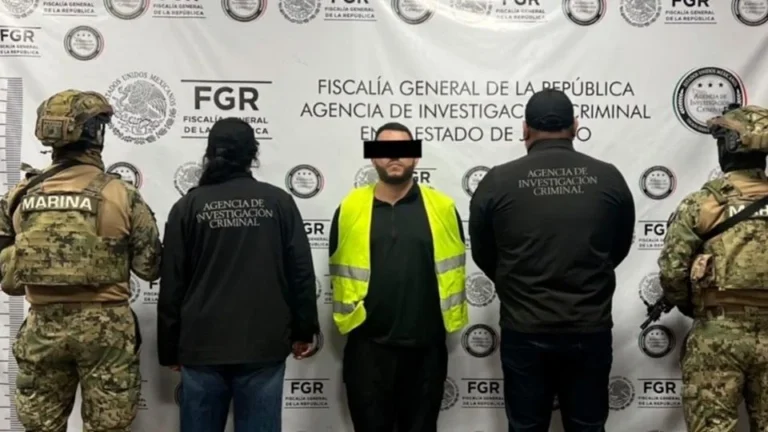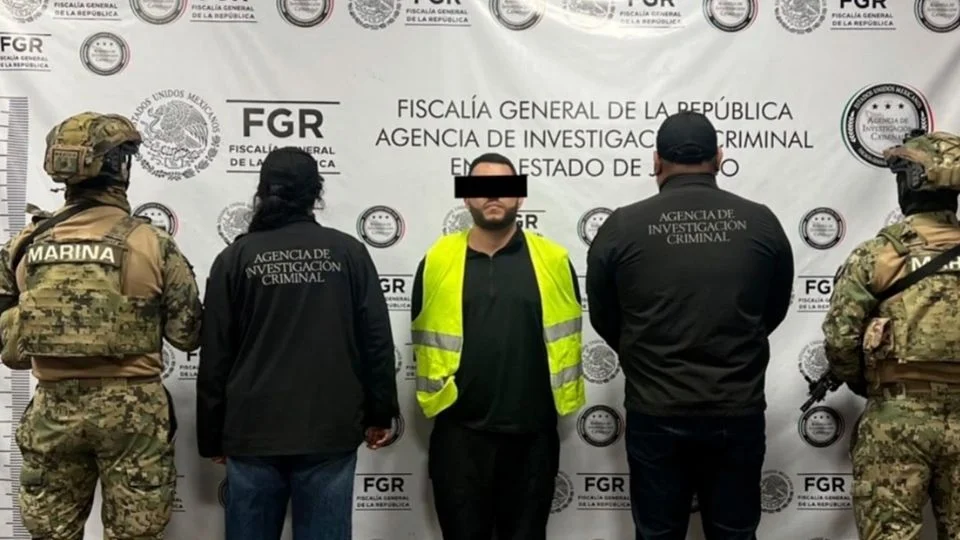
ZAPOPAN, JALISCO — In a high-stakes intelligence operation that highlights the deepening cooperation between North American security agencies, Mexican authorities have successfully apprehended a high-level logistics coordinator accused of fueling the synthetic drug crisis in the United States.
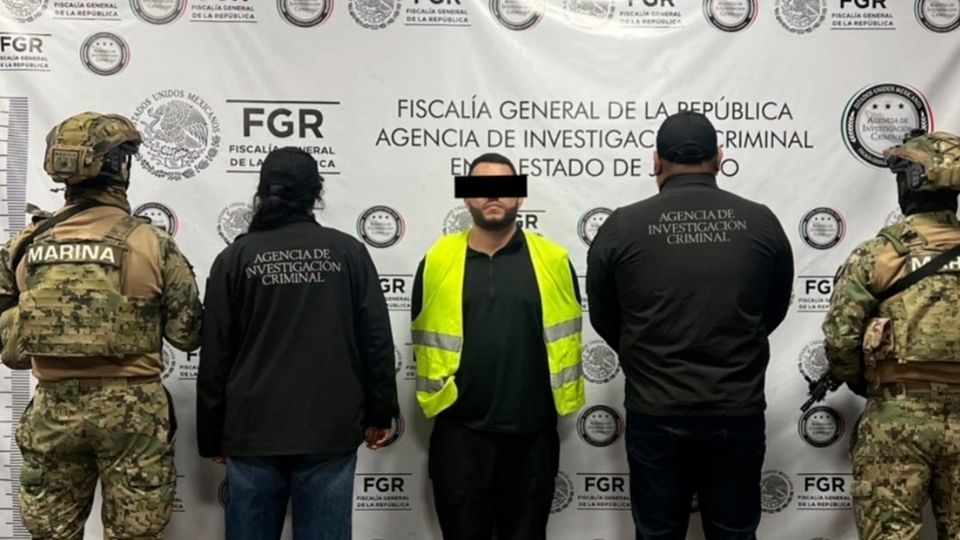
Ángel Guerrero Carrillo, known by the alias “El Canguro,” was taken into custody on Sunday in Zapopan, Jalisco. According to Mexico’s Security Cabinet, the arrest was the result of a precise, intelligence-sharing operation involving the Secretariat of the Navy (SEMAR), the Attorney General’s Office (FGR), and the Secretariat of Security and Citizen Protection (SSPC).
Guerrero Carrillo is alleged to be a pivotal member of the Beltrán Leyva Organization’s (BLO) most formidable faction, led by the notorious kingpin Fausto Isidro Meza Flores, commonly known as “Chapo Isidro.” For years, investigators claim, Guerrero Carrillo functioned as a clandestine architect of supply chain networks, orchestrating the transportation, distribution, and sale of deadly synthetic narcotics—specifically fentanyl—into the metropolitan corridors of Seattle and Tacoma, Washington.
The Anatomy of the Arrest
The tactical operation in Zapopan was not merely an arrest but a significant disruption of the Beltrán Leyva faction’s logistical spine. During the raid, authorities recovered a cache of evidence that underscored the nature of the suspect’s operations: a firearm, various ammunition, 50 individual doses of methamphetamine, a bag of raw methamphetamine, 15 fentanyl pills, a substantial amount of cash, and a mobile device now serving as a focal point for digital forensic analysis.
“With investigation, intelligence, and international cooperation, we continue to weaken the logistical capacity of criminal organizations,” the Mexican Security Cabinet stated in a press briefing following the apprehension.
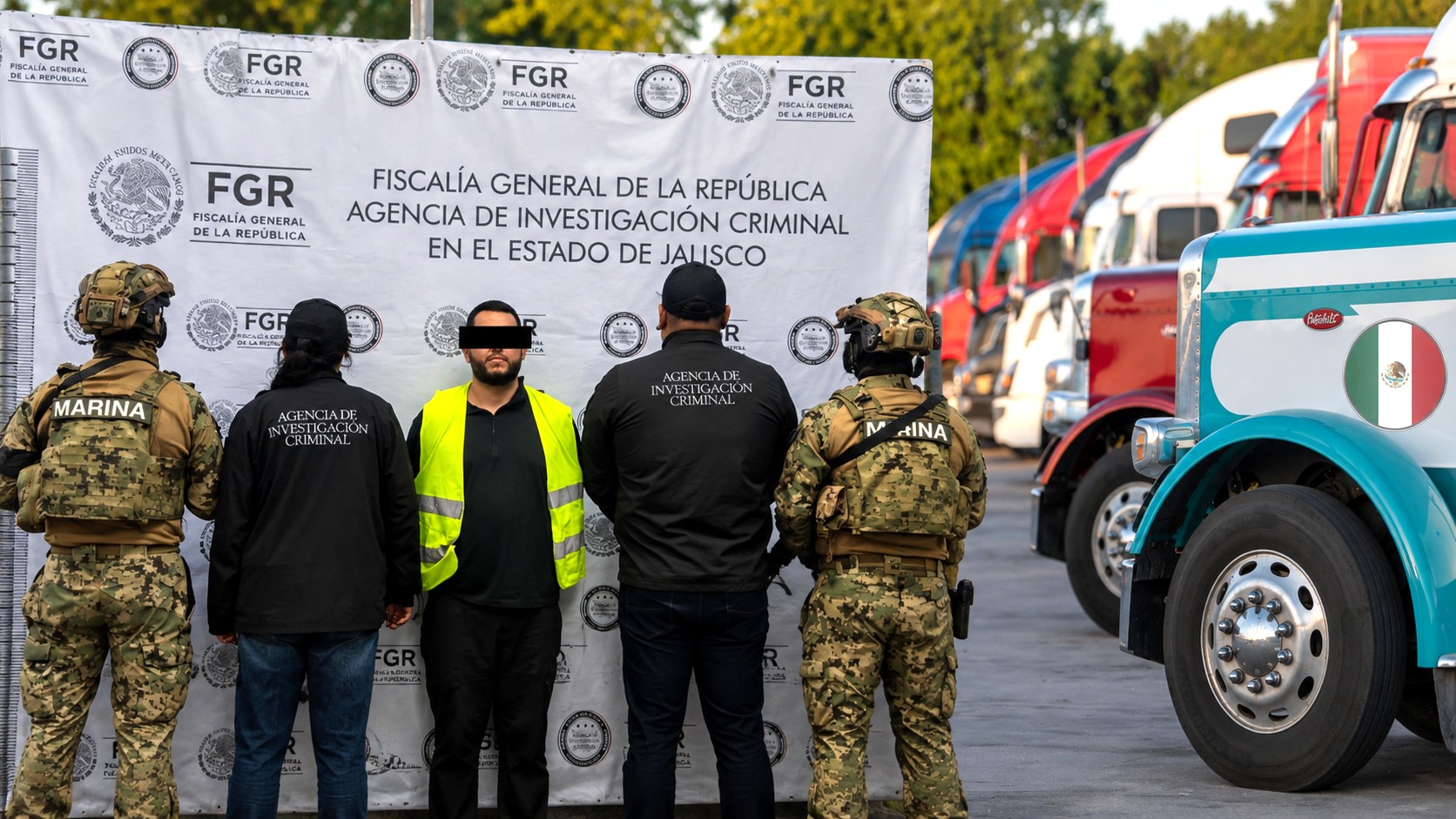
While the specific transit routes—such as which border crossings were utilized or whether Guerrero Carrillo employed commercial freight fleets to move his illicit cargo—remain under wraps as part of an ongoing investigation, the arrest marks a strategic victory. By targeting the logistics operator rather than the street-level dealers, U.S. and Mexican authorities are attempting to dismantle the infrastructure that keeps the Pacific Northwest’s illicit market supplied.
A Decadal History: The Chapo Isidro Connection
To understand the significance of “El Canguro’s” arrest, one must look at the historical trajectory of the Meza Flores organization. U.S. federal records reveal that the connection between the Chapo Isidro faction and the Washington state drug market is not a recent phenomenon; it is a mature, decade-long partnership.
The roots of this pipeline can be traced back to at least 2010. A 2017 federal court opinion, arising from a landmark FBI investigation, provides a window into how this organization systematically infiltrated the Pacific Northwest. Information provided by a confidential informant to the FBI’s Washington field office proved instrumental in identifying a sophisticated distribution cell based in Guasave, Sinaloa.
This cell worked in lockstep with the remnants of the Hector Beltrán Leyva organization to facilitate a steady flow of cocaine, methamphetamine, heroin, and marijuana across the U.S. border. The logistics were often mundane, designed to blend into the background of American commerce.
In a notable 2010 surveillance operation, the FBI monitored a used-car dealer in Centralia, Washington. Agents watched as a Chevrolet Impala was loaded onto a transport truck. Upon conducting a covert search of the vehicle, they discovered $56,000 in bundled cash and two detailed drug ledgers. The case identified Panfilo Flores Apodaca—the uncle of Chapo Isidro—as a primary logistics coordinator for the organization, confirming that the network relied on established, albeit criminal, transportation channels.
Supporting Data: The Treasury Department’s Mapping of the Pipeline
The U.S. Department of the Treasury has consistently identified Washington state as a primary destination for the Beltrán Leyva Organization. In December 2023, the Office of Foreign Assets Control (OFAC) levied heavy sanctions against 15 Mexican nationals and two corporations tethered to the BLO.
The Treasury report painted a harrowing picture of a global supply chain. According to OFAC, high-ranking leaders like Oscar Manuel Gastelum Iribe (alias “El Musico”) and Pedro Inzunza Noriega oversee the acquisition of narcotics from production hubs in Colombia, Ecuador, Costa Rica, Honduras, and Guatemala. From these points, the drugs are moved through Mexico via air, land, and sea, before being dispersed across the U.S.
The reach of this network is expansive. Treasury documents list California, Arizona, Oregon, Washington, Illinois, Nevada, Pennsylvania, Ohio, and Massachusetts as key distribution hubs. By April 2025, subsequent Treasury assessments reaffirmed that the BLO, under the continued leadership of Chapo Isidro, had pivoted heavily toward the mass production and distribution of fentanyl. Chapo Isidro currently faces multiple federal indictments in the Southern District of California and the District of Columbia.
The Evolution of Trafficking: From Passenger Cars to Semi-Trucks
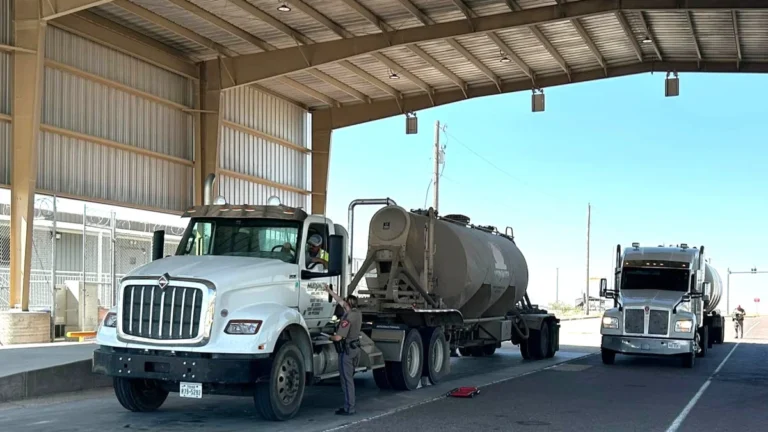
One of the most concerning trends identified by federal prosecutors is the increased reliance on commercial tractor-trailers to move massive quantities of fentanyl.
In a California-based investigation targeting a distribution cell linked to the BLO, federal agents utilized wiretaps and undercover operations to track the movement of illicit goods. In January 2023, authorities intercepted communications regarding a massive shipment of fentanyl. Upon stopping the suspect tractor-trailer, agents discovered eight duffel bags containing roughly 327 pounds of fentanyl pills—an estimated 1.4 million individual doses.
A follow-up interception in May 2023 yielded another 483,000 pills hidden within a semi-truck. While investigators have not publicly linked the specific arrest of Guerrero Carrillo to these exact truck seizures, the pattern is undeniable.
The Western District of Washington’s U.S. Attorney’s Office announced in August 2025 that they had dismantled a separate Sinaloa Cartel-connected organization that used semi-trucks to move narcotics up the West Coast. These operations functioned with a degree of sophistication that involved truck drivers as co-conspirators, moving product from the Tacoma area as far north as Whidbey Island and Arlington.
Implications for Global and Regional Security
The arrest of Guerrero Carrillo is a microcosm of the broader struggle against transnational criminal organizations. By removing a key logistical node, authorities have temporarily paralyzed a specific supply channel, but the structural resilience of organizations like the Beltrán Leyva faction remains a significant hurdle.
1. Intelligence Sharing as a Deterrent
The seamless coordination between the Mexican Secretariat of the Navy and U.S. law enforcement serves as a model for future operations. Intelligence sharing has become the most effective tool in the arsenal, allowing agencies to map out the "who" and "where" before shipments even reach the border.
2. The Vulnerability of Logistics
Logistics is the Achilles’ heel of any cartel. Because the illicit drug trade requires the same infrastructure as legitimate trade—warehousing, cross-border shipping, and local transport—it is inherently vulnerable to disruption. By focusing on the "logistics operators," law enforcement can create bottlenecks that drive up costs for the cartels and reduce the volume of drugs reaching U.S. streets.
3. Future Challenges
Despite the success in Zapopan, the demand for synthetic opioids in the Pacific Northwest remains high. As long as the financial incentive exists, criminal networks will continue to innovate, seeking new ways to exploit the vulnerabilities in the commercial supply chain. The use of legitimate freight companies and independent owner-operators remains a persistent challenge for border protection and domestic law enforcement.
Conclusion
The arrest of Ángel Guerrero Carrillo is a pivotal development in the fight against the fentanyl crisis in Washington state. While he is only one man, his role as a logistics coordinator for the Chapo Isidro faction puts him at the center of a decade-long effort to flood the U.S. market with synthetic narcotics.
As the legal proceedings against Guerrero Carrillo unfold, the focus will likely shift to the digital evidence recovered during his arrest. For the residents of Seattle and Tacoma, the operation provides a rare glimpse into the complex, often invisible logistics that dictate the safety of their communities. The success of this mission underscores a critical reality: the war on drugs is increasingly a war on logistics, and the battleground is as much in the shipping lanes and highways as it is on the front lines of the border.
About the Author