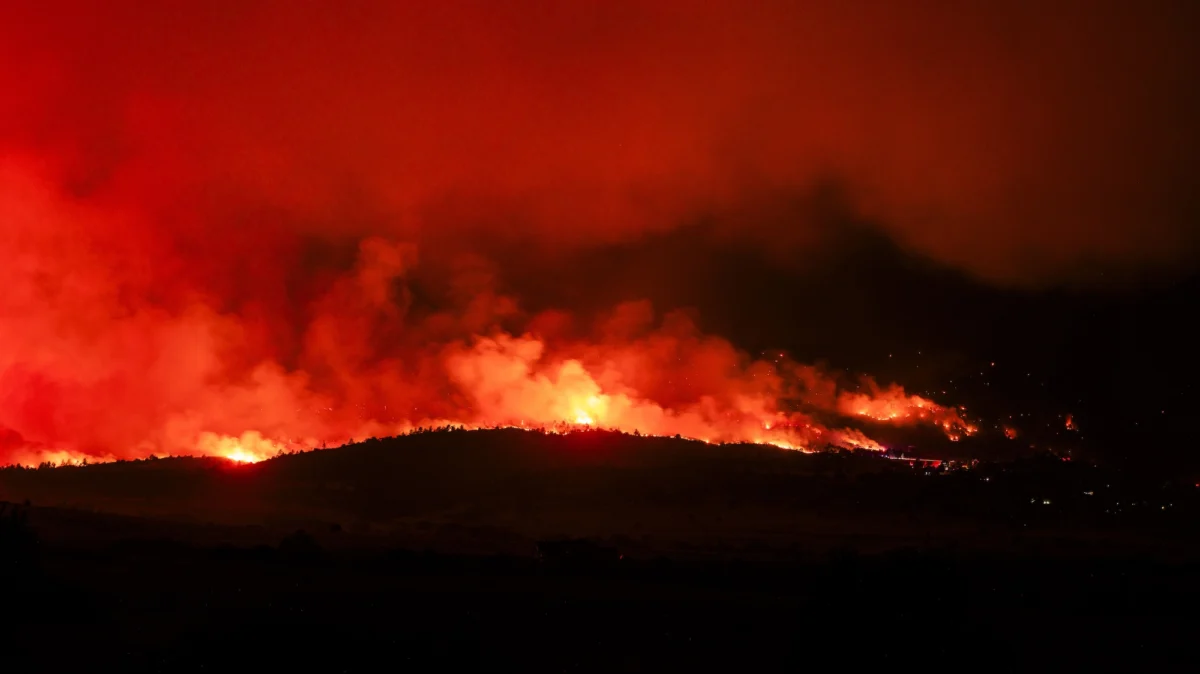
As the 2026 fire season continues to ravage the American West, a growing chasm has emerged between the federal government’s stated policy of "aggressive suppression" and the harrowing reality on the ground. Exhausted, understaffed, and increasingly pushed into high-risk environments, federal wildland firefighters are warning that the current administrative approach is not only unsustainable—it is lethal.
The crisis, underscored by record-breaking acreage burned and a historic spike in life-threatening entrapments, has ignited a fierce debate over whether the current federal strategy is a necessary response to a changing climate or a dangerous gamble with the lives of those on the front lines.
The Main Facts: A System at the Breaking Point
The statistics of the 2026 wildfire season paint a grim portrait of a landscape in crisis. By mid-September, over 54,400 individual blazes had consumed more than 8.4 million acres of land—a figure representing 149 percent of the 10-year average.
The human toll has been equally severe. Fourteen on-duty fatalities have been recorded this year, a somber figure that includes the tragic loss of three firefighters battling Colorado’s Knowles fire, with a fourth member of the same crew succumbing to injuries weeks later. These deaths occurred during what experts describe as an "entrapment"—a scenario where firefighters are caught in the path of a fire, unable to reach safety. Data from the Wildland Fire Lessons Learned Center confirms that entrapments have hit their highest frequency in two decades.
Despite these grim markers, the Trump administration has doubled down on a directive mandating "fast and full suppression." This policy shift demands that federal crews move to extinguish every fire immediately, moving away from ecological management strategies that once allowed certain fires to burn in remote areas to reduce future fuel loads.
Chronology of a Mounting Disaster
The 2026 fire season did not begin in chaos, but it quickly devolved into a logistical nightmare.
- Early Spring (April): Firefighters reported being deployed to near-nonstop assignments, leaving little time for the recovery necessary to maintain high levels of vigilance.
- Mid-Summer (July): US Forest Service Chief Tom Schultz testified before a congressional subcommittee, asserting that the agency was "fully staffed and equipped to respond aggressively" to all ignitions.
- August Peak: The nation reached "Preparedness Level 5" (PL5)—the highest state of emergency—for 48 consecutive days, nearly doubling the 10-year average for sustained peak deployment. During this window, the frequency of entrapments surged, leading to the deadliest incident in 13 years at the Knowles fire.
- September Developments: While national preparedness levels briefly dipped to PL3 and PL4, the exhaustion of the workforce remains the primary concern as thousands of personnel remain committed to containment efforts across the Western United States.
Supporting Data: The Math of Fatigue
The argument for a fundamental breakdown in the system rests on the widening gap between resources and environmental conditions. Experts compare the current state of firefighting to the economic concept of inflation.
"Firefighting capacity is kind of like wages, and the fire environment is like inflation—it has not kept up," noted one fire captain based in the Pacific Northwest.
The data supports this frustration. The federal government’s $6 billion suppression budget is reportedly nearing depletion with significant portions of the fire season still ahead. Furthermore, the loss of experienced personnel—specifically those in critical leadership roles like task force leaders and division supervisors—has created a "brain drain" that is impossible to fill in a single season. When these roles go unfilled, agencies are forced to utilize "temporary supervisory structures," which many argue compromises the safety and decision-making capacity of the entire unit.
The Clash of Official Narratives
There is a stark, almost surreal contradiction between the rhetoric emanating from Washington and the testimonies of those on the fire line.
The Administrative Stance
The Trump administration, through the directives of Agriculture Secretary Brooke Rollins and Interior Secretary Doug Burgum, maintains that aggressive intervention is the only way to protect American communities. The policy of total suppression is framed as a moral imperative: if a fire can be put out, it must be put out. From the perspective of agency leadership, the current, more volatile fire environment requires a "direct attack" strategy to prevent the loss of homes and critical infrastructure.
The Frontline Reality
Nine anonymous firefighters, speaking to The Guardian and other outlets, described a culture of exhaustion where safety protocols are increasingly sidelined by the pressure to meet political expectations of "full containment."
"Accidents have been through the roof," one firefighter reported. Another, a veteran helicopter crew member, admitted to opting out of missions this year, citing that the directives were "ill-advised" and far too dangerous given the current conditions. These individuals argue that they are being set up for failure by a leadership that refuses to acknowledge the reality of the burnout crisis.
Implications: A Future in the Balance
The implications of this policy shift extend far beyond the current season. By prioritizing immediate suppression of every fire, the government may be creating a feedback loop that ensures more catastrophic fires in the future.
1. Ecological Backfire
Forest ecologists like Timothy Ingalsbee, executive director of Firefighters United for Safety, Ethics and Ecology, argue that the "full suppression" mandate leaves vast amounts of vegetation—fuel—on the ground. In a warming climate, this creates a "perfect firestorm" for future seasons, where fires will burn even hotter and more unpredictably.
2. The Loss of Institutional Knowledge
The most concerning long-term implication is the attrition of the workforce. When seasoned professionals leave because they feel they can no longer ensure the safety of their crews, the entire institution loses the decades of experience required to make complex, split-second decisions on the fire line. "We’re going to kill people trying to put out those last couple percent, and we’re going to spend a lot of money doing it," warned retired fire chief Bobbie Scopa.
3. Legislative Pushback
The urgency of the situation has caught the attention of federal lawmakers. In a bipartisan letter, Senators Michael Bennet, Alex Padilla, Ron Wyden, Adam Schiff, and John Hickenlooper challenged the heads of the USDA and the Department of the Interior. They explicitly stated that the practice of using temporary supervisors and pushing crews beyond safe limits is "exceptionally concerning" given the record fatality rates.
Conclusion: A Call for Strategic Realism
As the climate crisis continues to intensify, the "old ways" of fighting fire—centered on total control and aggressive, direct engagement—are increasingly clashing with the reality of the modern, arid, and rapidly warming American landscape.
The current situation is not just a test of the nation’s fire suppression capabilities, but a test of its management philosophy. For the thousands of men and women currently on the front lines, the message is clear: they are not just fighting the flames; they are fighting an administrative machine that they believe has lost touch with the realities of the forest. Without a shift toward strategic prioritization, sustainability, and a renewed commitment to the physical and mental health of the workforce, the "perfect firestorm" of 2026 may serve as the blueprint for a long and increasingly tragic era of American wildfires.
About the Author