Introduction: The Architecture of Public Opinion
In an era defined by rapid technological shifts and shifting geopolitical landscapes, the ability to accurately measure public sentiment is more critical than ever. The Pew Research Center remains a cornerstone of this effort, providing data-driven insights that inform policymakers, academics, and the public. This report details the comprehensive methodology behind two pillars of the Center’s 2026 research output: the Spring 2026 Global Attitudes Survey and the American Trends Panel (ATP). By maintaining rigorous standards in sampling, data collection, and weighting, these initiatives offer a reliable window into the complexities of human opinion.
Main Facts: Understanding the Research Framework
The 2026 research cycle represents a multi-modal approach to capturing global and domestic trends. The Spring 2026 Global Attitudes Survey serves as a primary instrument for international comparative analysis, utilizing a diverse array of data collection methods, including telephone, face-to-face, and online interviews. The Center collaborates with premier research organizations—Gallup, Langer Research Associates, and the Social Research Centre—to ensure that findings reflect national samples across varying socioeconomic contexts.

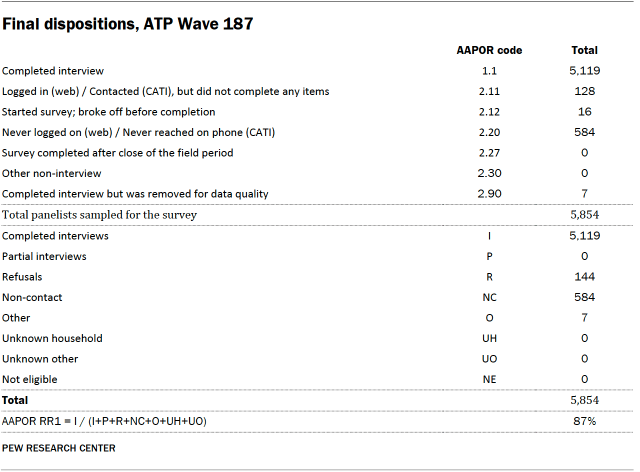
Domestically, the American Trends Panel (ATP) provides a more granular look at the U.S. populace. Waves 187 and 195 of the ATP, conducted in February and June 2026 respectively, form the backbone of the Center’s U.S.-focused reporting. With response rates reaching 87% and 86% for these waves, the ATP continues to be a gold-standard benchmark for nationally representative, random-sample polling in the United States.
Chronology: The 2026 Data Collection Lifecycle
The data collection process is a highly choreographed endeavor, particularly for the American Trends Panel. The 2026 calendar for the ATP was divided into two distinct waves, each following a strict protocol of recruitment, testing, and execution.
Wave 187 (February 2026)
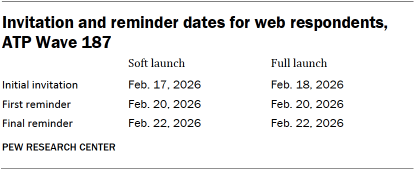
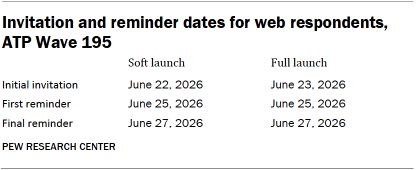
- February 17: Soft launch begins with 60 panelists; initial postcard notifications mailed.
- February 18: Full launch for all remaining English- and Spanish-speaking online panelists.
- February 17–23: Official field period for data collection.
Wave 195 (June 2026)
- June 22: Soft launch begins with 60 panelists; postcard notifications distributed.
- June 23: Full launch for the broader panel.
- June 22–28: Official field period for data collection.
This structured approach ensures that the data is not only current but also consistent. By utilizing both soft and full launches, researchers are able to identify and mitigate potential technical issues, ensuring the integrity of the data before the full sample is engaged.
Supporting Data: Ensuring Precision and Representation
Reliable polling is not merely about asking questions; it is about ensuring that the respondents accurately mirror the population they represent.
Sampling and Recruitment
Since 2018, the ATP has employed address-based sampling (ABS). By leveraging the U.S. Postal Service’s Computerized Delivery Sequence File, the Center reaches 90% to 98% of the U.S. population. Within selected households, the "next-birthday" method is used to randomly select an individual participant, minimizing selection bias.
Oversampling for Inclusivity
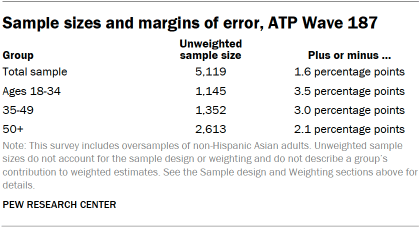
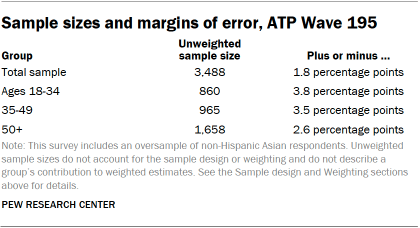
To provide precise estimates for smaller demographic subgroups, such as non-Hispanic Asian adults, the Center utilizes oversampling. These groups are then statistically weighted back to their correct proportions in the U.S. population. This method allows researchers to avoid the "erasure" of minority voices that often occurs in standard random sampling.
Data Quality and Cleaning
Quality control is an iterative process. Researchers monitor for "satisficing"—a behavior where respondents provide low-effort answers, such as selecting the first or last option on every question. In Wave 187, seven respondents were removed due to such patterns; in Wave 195, two were removed. This rigorous scrubbing ensures that the final dataset is composed of high-quality, thoughtful responses.
Weighting Mechanisms
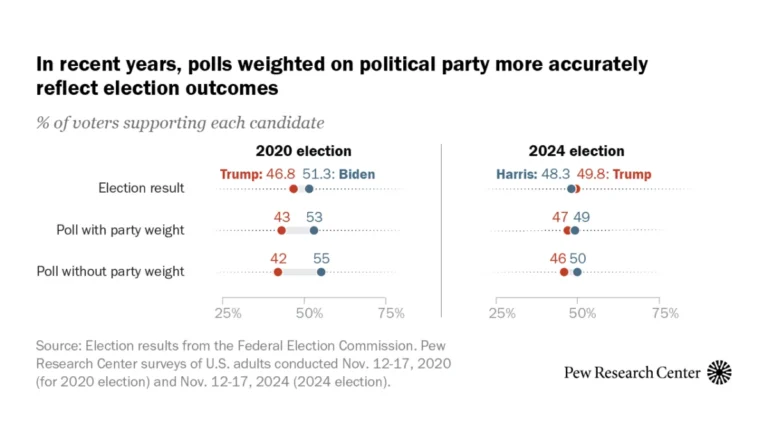
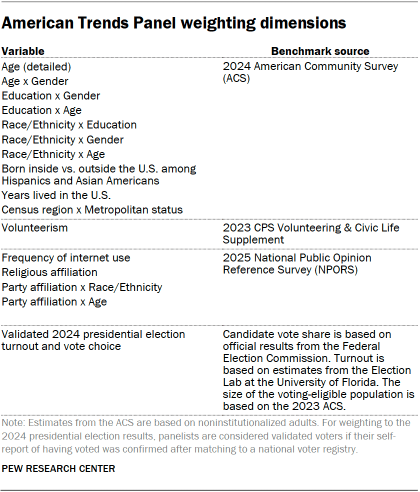
The weighting process is a multi-stage correction. First, base weights reflect the probability of recruitment. These are then calibrated against population benchmarks (age, gender, education, race, and political affiliation). Finally, the weights are trimmed at the 1st and 99th percentiles to reduce variance, ensuring that no single respondent exerts an undue influence on the final result.
Official Responses: Standardizing Global Variables
When conducting international research, the challenge lies in standardizing data across vastly different cultures and economies. Pew Research Center utilizes several frameworks to bridge these gaps:
- Ideological Scales: Recognizing that "left" and "right" carry different meanings globally, the Center utilizes varied scales to categorize political ideology, allowing for comparative analysis across nations.
- Educational Standardization: To compare educational attainment, the Center employs the United Nations’ International Standard Classification of Education (ISCED). This allows for a meaningful comparison between a university graduate in a developing nation and one in a high-income nation.
- Economic Classification: Utilizing World Bank per-capita gross national income data, the Center classifies countries into "high" or "middle" income. This categorization is essential for understanding how economic development correlates with public attitudes on complex issues like globalization, democracy, and national identity.
Implications: The Future of Public Opinion Research
The meticulous methodology employed by the Pew Research Center has profound implications for the credibility of public discourse. In a digital age where "fake news" and algorithmic bias threaten to distort public perception, the reliance on transparent, rigorous, and representative survey data is a vital public service.
Strengthening Democracy
By capturing the nuances of how Americans feel about the functionality of their democracy compared to their peers in other high-income nations, the Center provides a roadmap for reform. When policymakers understand that dissatisfaction is linked to specific institutional factors rather than just partisan friction, they are better equipped to propose meaningful solutions.
Navigating Global Change
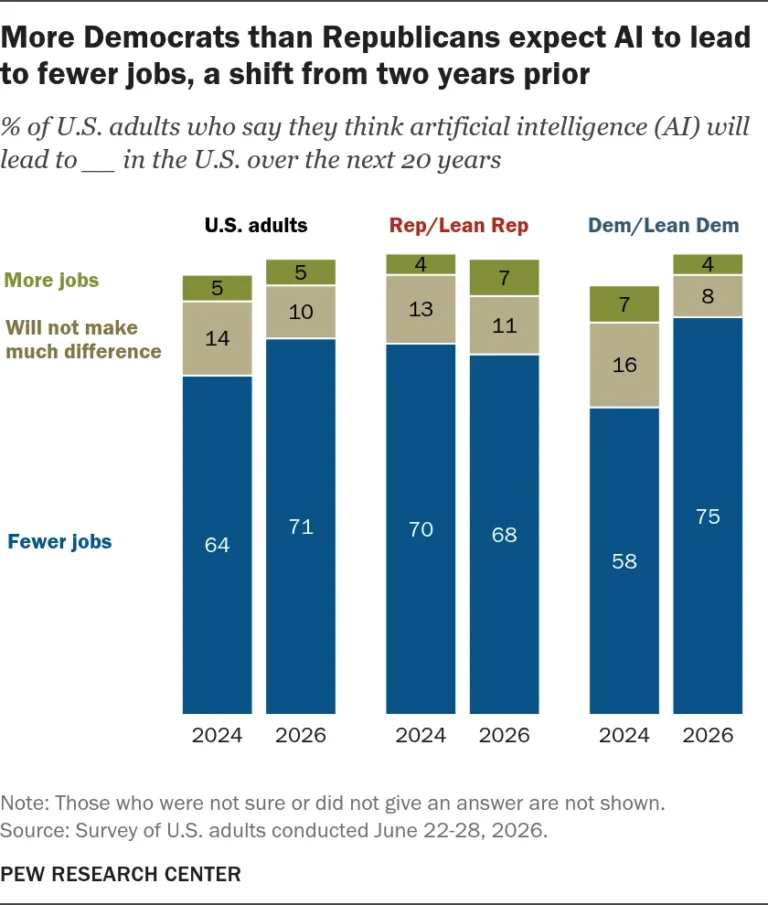
The Center’s methodology for studying international views—such as attitudes toward China or the rapid rise of Artificial Intelligence—enables global stakeholders to see past the noise of headlines. By categorizing respondents by ideology, education, and income, the Center reveals that public opinion is rarely a monolith. It is, instead, a tapestry of diverse perspectives shaped by material conditions and cultural frameworks.
The Human Element
Ultimately, the Center’s commitment to providing detailed methodological disclosures—as seen in its detailed reporting on incentive structures ($5–$20 ranges), interview modes (web vs. telephone), and data quality protocols—serves as a reminder that survey research is a human-centric endeavor. The use of financial incentives, for instance, acknowledges that participation is a form of labor, and that researchers have a responsibility to reach harder-to-reach populations to ensure a truly democratic representation of views.
As the Center moves forward, the integration of new technologies into its survey architecture will undoubtedly face new challenges. However, the foundational commitment to transparency, random sampling, and rigorous weighting ensures that regardless of the tools used—be it SMS, web, or telephone—the results will remain a vital, evidence-based touchstone for the global community. Through this commitment, Pew Research Center does not just track opinion; it upholds the standard by which all public debate is measured.
About the Author