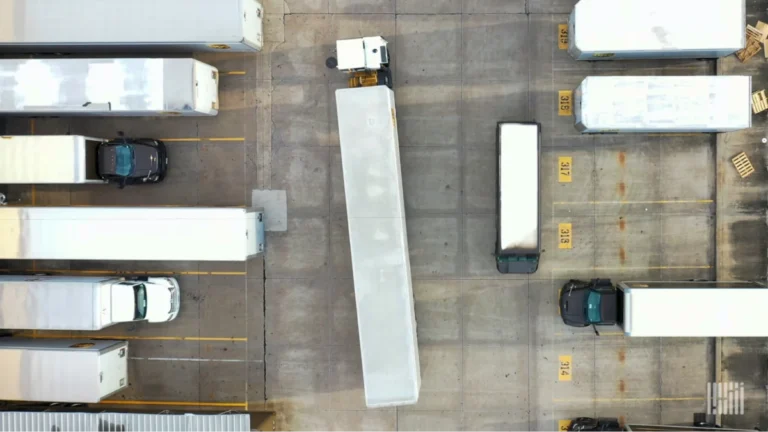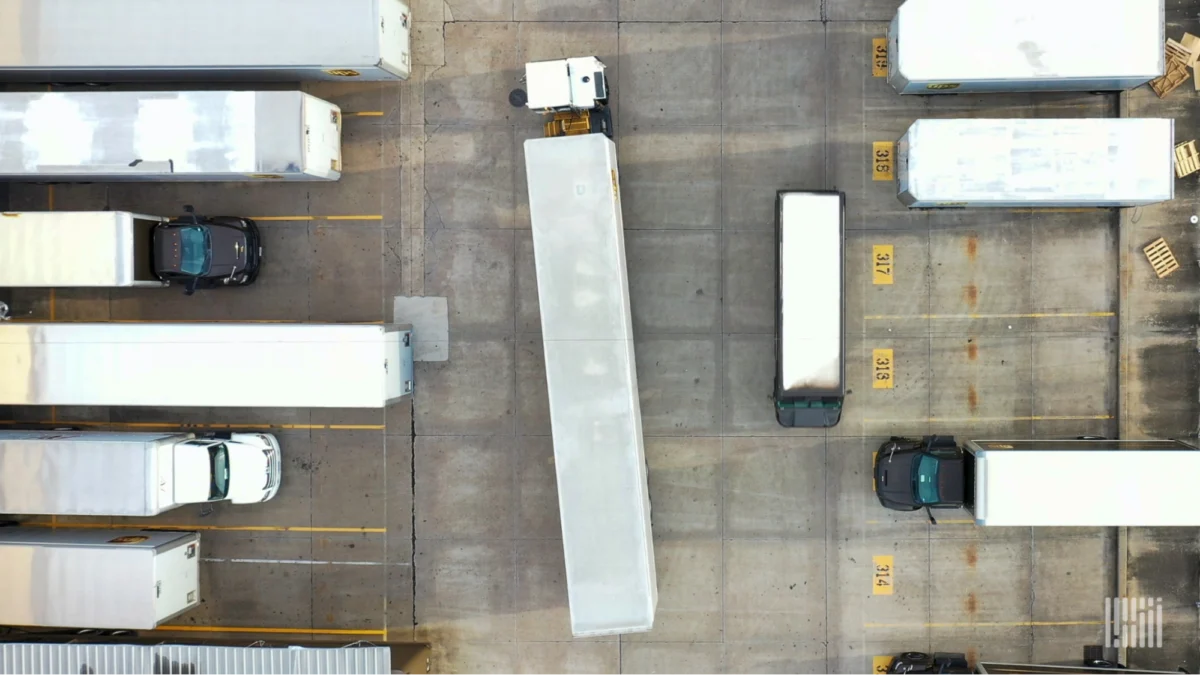
The modern supply chain is often depicted as a high-speed, global network of container ships, transcontinental freight trains, and automated distribution centers. Yet, behind the scenes, a massive inefficiency persists—one that costs shippers, carriers, and retailers billions of dollars annually. The most challenging area in freight is not the open highway or the high-tech warehouse floor; it is the "fence line"—the chaotic, analog, and often bottlenecked space of the shipping yard and loading dock.
As global supply chains demand greater transparency and speed, YardFlow, a logistics technology provider, is making significant strides in digitizing this final frontier. Following a successful 26-site pilot, the company has announced a full-scale rollout across a major beverage giant’s entire network of over 200 facilities. This move represents a shift toward standardized, data-driven yard management, promising to turn one of the most unpredictable parts of the freight journey into a predictable, high-performance asset.
The Chronology of the Analog Crisis
To understand the necessity of YardFlow’s intervention, one must look at the standard operating procedure that has defined North American logistics for decades. For most of the 20th and early 21st centuries, the "yard" has operated on paper.
The process begins with a driver arriving at a distribution center. They join a line of idling trucks, eventually reaching a small window to speak with a dock coordinator. The coordinator prints a bill of lading (BOL), staples it to other documents, hands it through a pane of glass, receives a signature, and files the copy into a physical box. This ritual, repeated millions of times daily, is the primary cause of "utilization entropy."
As the box fills up, it is relegated to a warehouse corner or long-term storage to satisfy legal statute of limitations. This archival process is not merely a waste of space; it is a financial ticking time bomb. Roughly 60 days later, when payment disputes arise—such as a retailer claiming a shortage of pallets in a massive, lump-sum invoice payment—dock coordinators are forced to act as amateur detectives. They must enter the warehouse, locate the correct box, and hunt for a two-month-old signature.
This manual, reactive workflow acts as a significant drag on operational efficiency. It forces skilled coordinators to split their focus between high-level yard orchestration and mundane tasks like replacing printer ink or digging through filing cabinets.
Supporting Data: From Paper to Profits
The efficacy of YardFlow’s digital transition is backed by measurable results. According to a performance analysis conducted during the initial 26-site deployment with their beverage-industry client, the shipper realized a nearly 5% increase in total freight throughput without adding a single employee to their headcount.
"That’s tens of millions of dollars of incremental profit," says Jake Koppinger, founder of YardFlow.
The system’s reliability has been equally critical. With nearly 2 million shipments processed across its network, the platform maintains a 99.9% uptime record. For a facility that operates 24/7, this level of stability is not just a luxury; it is a necessity for maintaining a "three-nines" operational standard. By removing the friction of paper-based workflows, YardFlow has effectively digitized the "driver journey," turning the chaotic check-in process into a seamless digital handshake.
Why Yard Automation Starts with the Human Element
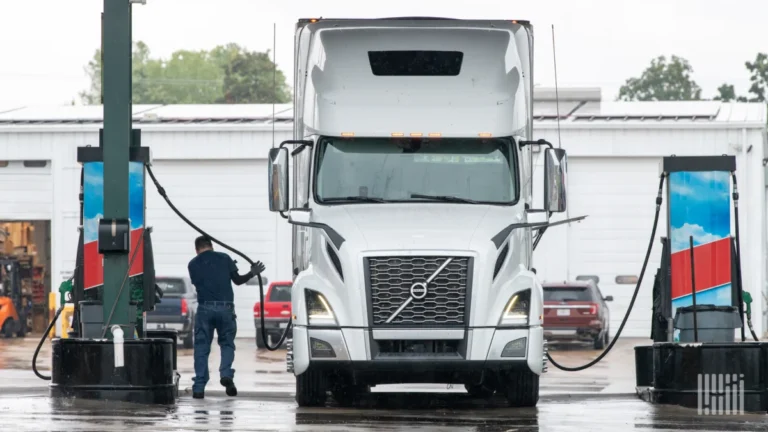
One of the most persistent hurdles in supply chain technology is the "app fatigue" experienced by long-haul truck drivers. Recognizing this, Koppinger designed YardFlow with a non-negotiable constraint: no mandatory app downloads.
"If you have any issues where truck drivers are asked to download an app to get a digital bill of lading, and they don’t have it, or they are stuck there without connectivity, it causes massive operational disruption," Koppinger explains. By utilizing optional QR codes and browser-based interfaces, YardFlow ensures that the technology facilitates, rather than hinders, the driver’s movement.
The organizational challenge, however, is even more complex. Large-scale retailers and CPG companies often function as federations of independent kingdoms. A single warehouse may generate hundreds of millions of dollars in revenue, granting it the autonomy to operate with unique, site-specific "tribal knowledge." This makes executive-level reporting nearly impossible, as different facilities measure their Key Performance Indicators (KPIs) through incompatible lenses.
YardFlow’s strategy is to identify the "lowest common denominator"—the fundamental truth that every yard, regardless of size or geographic location, shares: a driver arrives, checks in, moves to a location, completes a task, and departs. By standardizing this heartbeat, the company provides executives with a unified view of their entire network for the first time.
The "Eye in the Sky": Building a Digital Twin
Having mastered the driver journey, YardFlow has expanded into sophisticated yard management systems (YMS). This evolution involves integrating machine vision cameras at gates and on yard spotters (jockey trucks).
This technology addresses the fundamental problem of accountability. "If I tell a yard spotter to move a trailer from dock three to spot four, the system has to trust that it happened," says Koppinger. "But if you have an eye in the sky to validate that movement, you have a cross-check."
These cameras serve several functions:
- Digital Twin Creation: By tracking the movement of every trailer in real-time, the system creates a virtual map of the yard, reducing the time spent searching for misplaced assets.
- Security and Identity Verification: Gate cameras read arriving and departing truck and trailer plates, cross-referencing them against DOT and MC numbers to mitigate cargo theft and identity fraud.
- Automated Validation: The system confirms the physical location of inventory, ensuring that the data in the Warehouse Management System (WMS) matches the physical reality of the lot.
Implications for the Future: Preparing for Autonomy
Koppinger emphasizes that for many shippers, the desire to jump straight into "AI-driven" solutions has led to pilot fatigue. Many companies invest in high-concept technology only to find that it fails to scale because the underlying processes are still manual.
"Let’s get the operations fixed," Koppinger argues. "Let’s standardize your processes and protocols. Let’s get everything digitized so that you can then be in a position to start layering in these other layers of automation."
The endgame is an autonomous yard. As autonomous trucking technology matures, the industry will face a critical transition period where human drivers, autonomous trucks, and robotic yard jockeys must coexist. This transition will be impossible if the yard is still running on paper.
"You’re not going to be handing paperwork to an autonomous truck," Koppinger notes. "You’ve got to be able to orchestrate an autonomous truck in through the gate, through the yard, and communicate in the language that the truck speaks."
By acting as the "brain" that sits in the middle of these disparate systems, YardFlow is positioning itself as the bridge between the legacy era of clipboards and the future of fully autonomous logistics. For the beverage giant currently rolling out the software to its smallest facilities, the goal is standardization. By ensuring the smallest yard operates with the same digital precision as the largest, the company is creating a resilient, scalable network capable of weathering the inevitable disruptions of the global supply chain.
In an industry often obsessed with the "sizzle" of new AI tools, YardFlow’s commitment to the "steak"—the unglamorous but essential work of digitizing the dock—serves as a reminder that the most significant gains in logistics are often found not in high-concept algorithms, but in the systematic elimination of paper, friction, and wasted time.
About the Author