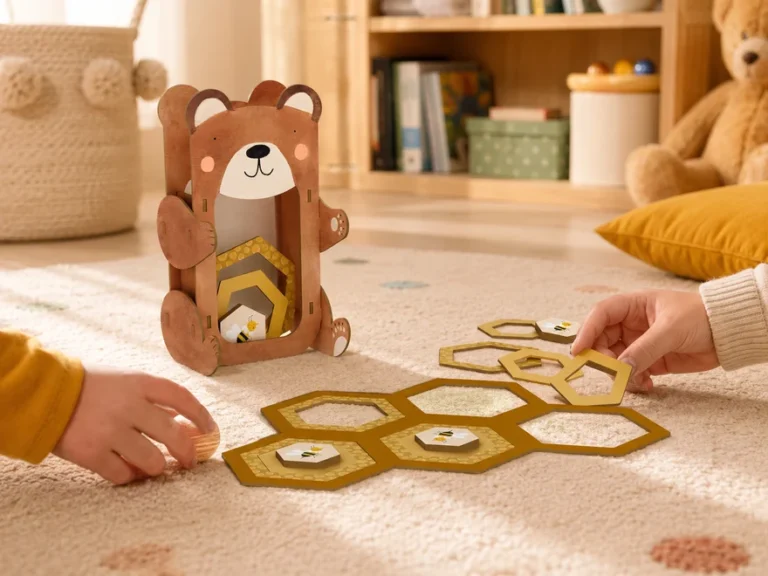
How can a single, naturally occurring geometric form evolve into a comprehensive design principle—one that dictates not only the aesthetic soul of a game but its very narrative arc and modes of player interaction? This is the central question posed by Bee Smart, an innovative board game that bridges the gap between biological inspiration and educational play.
Developed by designer Matteo Paglieri during an intensive workshop at the Master for Children program at the Istituto Europeo di Design (IED) in Rome, Bee Smart is more than a toy; it is a masterclass in cohesive product design. By synthesizing storytelling, physical materiality, and mechanical logic, the project proves that effective design for children does not merely decorate a narrative—it allows players to inhabit it.
The Genesis: A Classroom Concept Turned Market Reality
The journey of Bee Smart began as a student-led exploration of primary geometric shapes. Under the guidance of design mentors at IED, Paglieri sought to move beyond the superficial application of motifs, aiming instead for a structural integration of form and function. Through a series of rapid prototyping iterations, the project quickly caught the eye of Sassi Junior, a publishing house renowned for its commitment to educational games.
Recognizing the project’s potential to marry pedagogical value with high-quality, sustainable production, Sassi Junior selected the concept for its catalogue. The transition from a student design prototype to a mass-manufactured, commercially viable product serves as a testament to the efficacy of the "educational-industrial pipeline"—an environment where classroom experimentation directly feeds into the manufacturing sector. As the game prepares for its global market release, it stands as a case study for how design education can produce tangible, industry-ready solutions.
The Narrative Foundation: Building the Hive
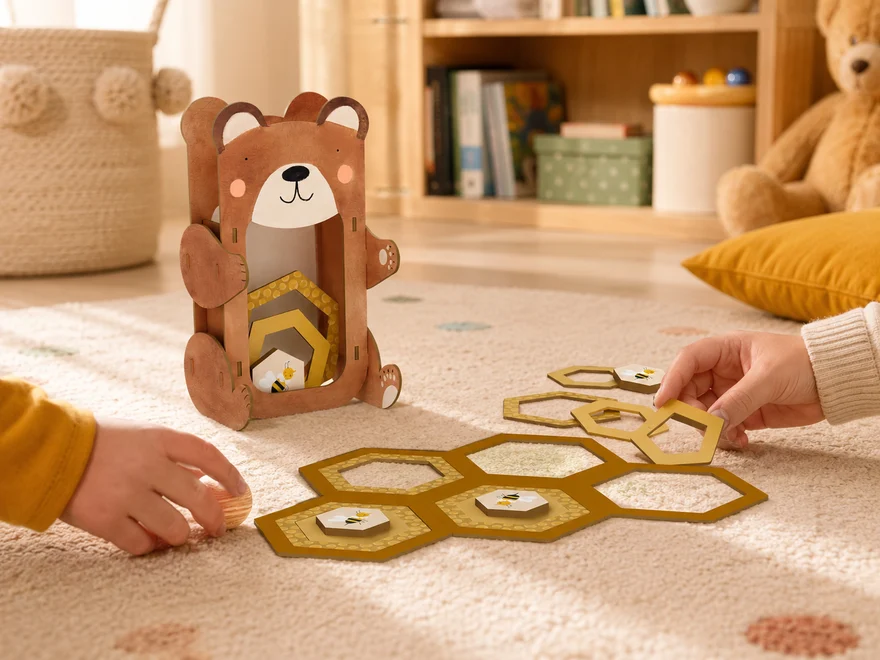
The premise of Bee Smart is as intuitive as it is engaging. It taps into the universal childhood fascination with the natural world. The narrative is simple: a colony of bees is laboring to construct their hive and store honey, while a mischievous, greedy bear lurks in the periphery, eager to pilfer their hard-earned spoils.
This objective provides an immediate, low-barrier entry point for young players. The goal is clear, the stakes are tangible, and the mechanics are tied directly to the narrative: players must collaborate to assemble the hive piece by piece, filling the honey cells before the bear’s intervention. By aligning the objective (building the hive) with the physical action (placing pieces), the game ensures that the story is not something read in a rulebook, but something lived through every turn.
When a Story Becomes a Physical System
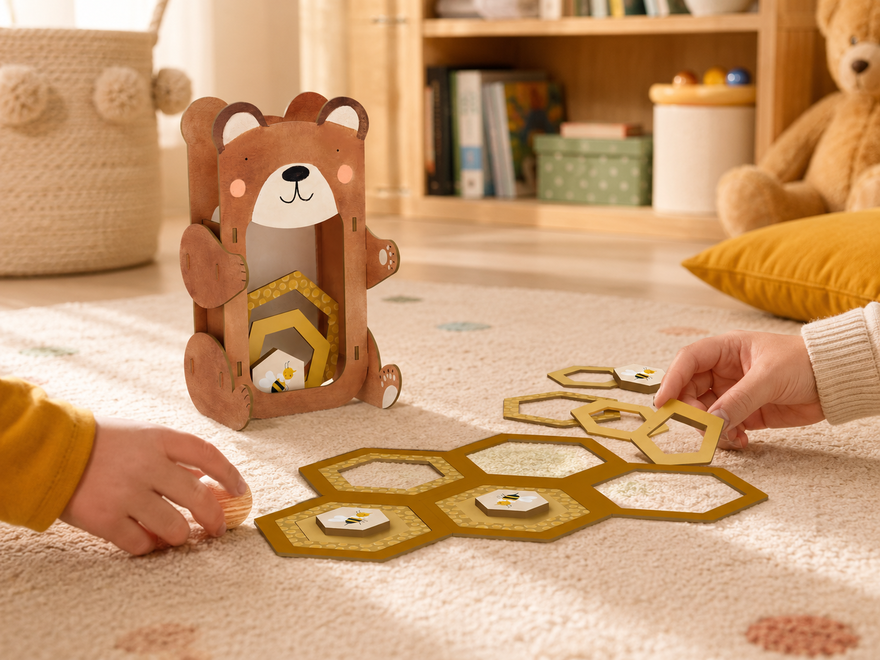
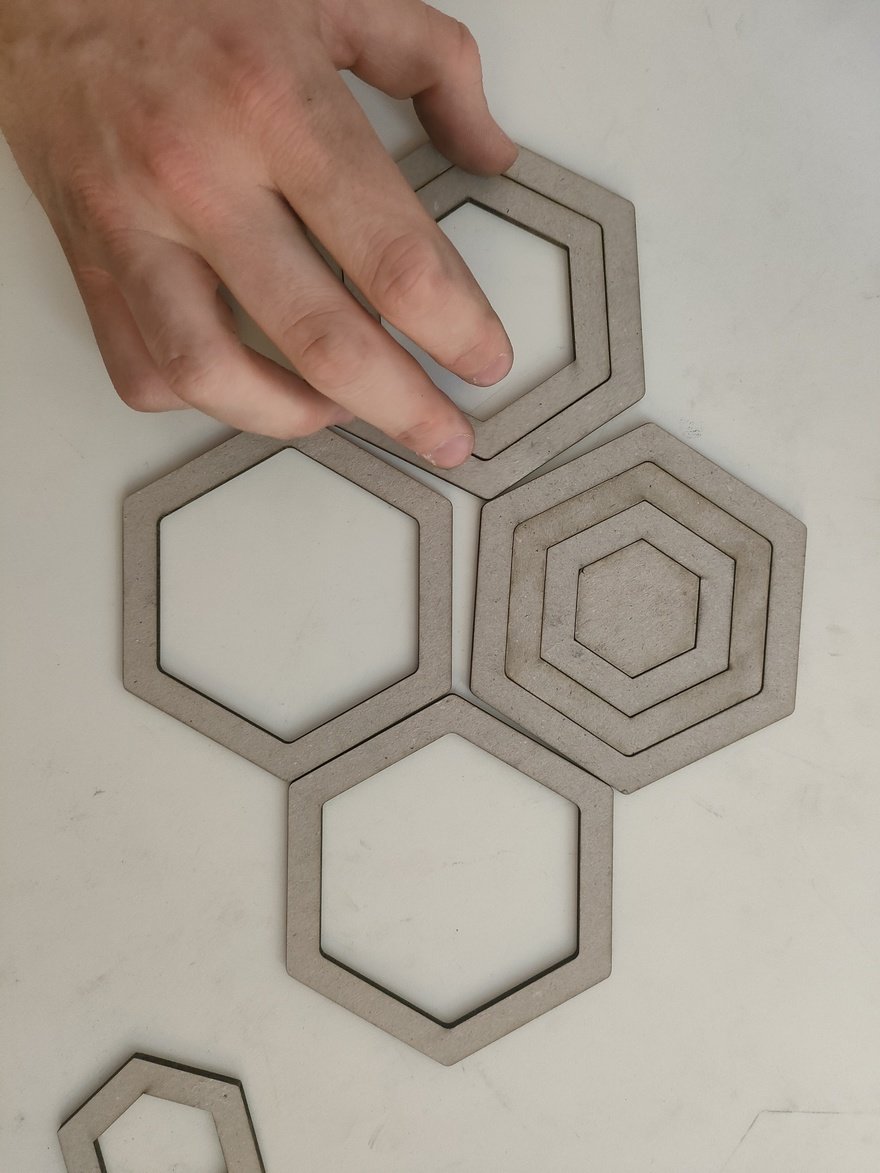
The hallmark of Bee Smart is its treatment of the hexagon. While the hexagonal cell is a standard visual shorthand for a beehive, in this game, it is elevated to a structural mandate. It is not an illustration; it is the fundamental building block of the game’s reality.
The Hexagon as a Design Tool
In many products, shapes serve as decorative elements, layered over a pre-existing structure. In Bee Smart, the hexagon is the engine. It determines the geometry of the hive, the dimensions of the game board, and the physical constraints of the pieces children must manipulate. This is a critical distinction in design: a shape that organizes function is far more powerful than a shape that merely communicates a theme. By utilizing the hexagon, the game communicates the "why" of its design while simultaneously providing the "how" of its play.
Materiality and Volumetric Assembly
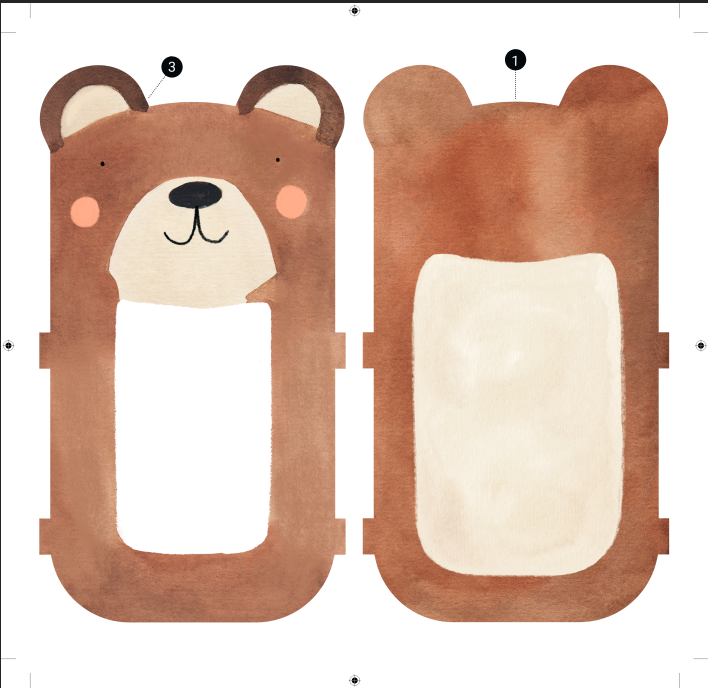
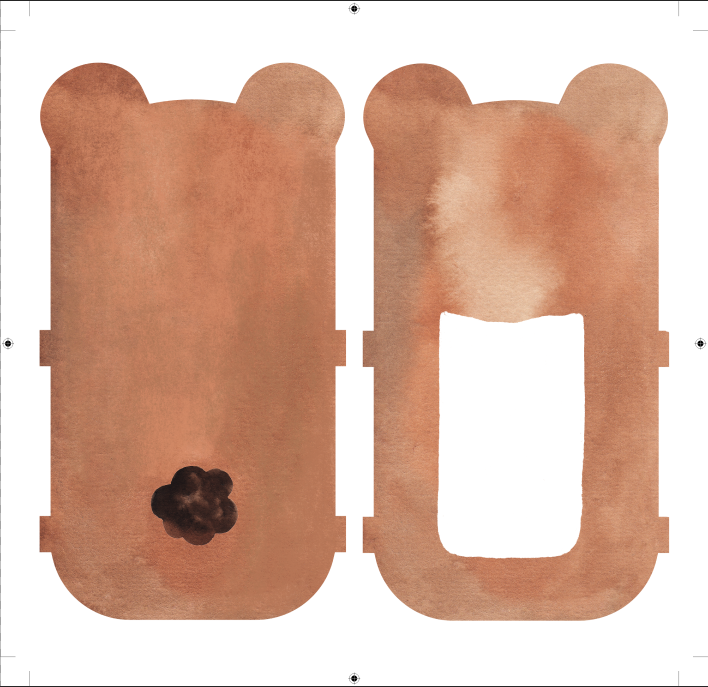
The physical components of the game are purposefully tactile. Crafted primarily from pressed, sustainable cardboard, the components offer an accessible, warm, and environmentally conscious experience. The three-dimensional bear, for instance, is constructed from simple, interlocking flat cardboard pieces. This design choice teaches children the principles of 3D construction—taking a 2D material and, through slot-based engineering, creating a volumetric object. It is a sophisticated, yet deceptively simple, approach to manufacturing that avoids complex, resource-heavy processes while delivering a high-quality, durable character.
Cognitive and Social Development: The Educational Implications
For the target audience—children aged three and above—Bee Smart is not just a game; it is an environment for cognitive development. The designers have meticulously embedded educational goals into the mechanical flow of the play.
Geometry and Fine Motor Skills
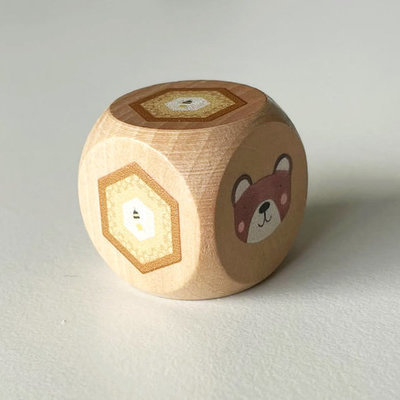
The act of playing requires children to engage in spatial reasoning. As they identify which honey cells fit into the larger hexagonal structure, they are practicing shape recognition, size sorting, and spatial orientation. These "simple" tasks are foundational for mathematical and geometric understanding. Simultaneously, the game acts as a trainer for fine motor skills. The coordination required to handle the wooden die, grasp the cardboard hexagons, and slot them into place with precision bridges the gap between visual perception and physical execution.
Social and Emotional Learning
Beyond individual cognition, Bee Smart functions as a social laboratory. Because the game is cooperative, it necessitates communication and negotiation. Players must observe one another’s actions, wait for their turns, and align their strategies toward a common goal.
The inclusion of the bear introduces a crucial element: the possibility of losing. In a culture that often sanitizes the gaming experience, Bee Smart offers a healthy introduction to the concept of failure. Learning to cope with the "greedy bear" and the potential loss of honey provides children with a safe space to experience frustration, process disappointment, and practice resilience—all within the supportive framework of a group.
The Philosophical Shift: Designing Through Nature
Perhaps the most significant contribution of Bee Smart to the field of product design is its methodology. Many designers represent nature by mimicking its look; few design by applying its internal logic. By choosing the honeycomb as a generative principle, the team behind Bee Smart moved from aesthetic imitation to structural inspiration.
This leads to a profound question for the next generation of designers: What happens when we stop treating nature as a visual library and start treating it as a system of relationships and behaviors? In Bee Smart, the hexagon serves as a bridge. Children recognize the shape as a part of the natural world, but through the process of play, they internalize the properties of that shape—its symmetry, its tessellation, and its efficiency. They learn about the hive not because they were told about it, but because they had to "think like a bee" to build it.
Conclusion: Designing the Conditions for Interaction
Ultimately, the success of Bee Smart lies in its understanding that a game is not merely a set of rules. A game is a system of interaction. By carefully curating the materials, the geometry, the narrative, and the social stakes, the design team has created a product that acts as an active participant in the user’s experience.
The transformation of a simple idea—a student’s sketch during a workshop—into a tangible product in the hands of children is a testament to the power of thoughtful, iterative design. Bee Smart demonstrates that when designers move beyond surface-level aesthetics and focus on how a shape can dictate action, they create more than a toy. They create a vessel for discovery, a tool for growth, and a bridge to the natural world.
As the industry looks toward more sustainable and cognitively enriching toys, Bee Smart provides a blueprint. It reminds us that at its best, product design for children has a singular, noble mission: to transform a visual idea into an action, an action into a game, and a game into a lasting experience of discovery.
About the Author