Main Facts: The New York Summit
In a pivotal diplomatic effort to stabilize the world’s most consequential bilateral relationship, U.S. Treasury Secretary Scott Bessent and Chinese Vice Premier He Lifeng are scheduled to convene in New York this Sunday. The day-long summit, hosted at the Manhattan headquarters of JPMorgan Chase, represents a critical precursor to the upcoming high-level meeting between President Donald Trump and President Xi Jinping in Washington later this week.
Joining Secretary Bessent at the negotiating table will be U.S. Trade Representative Jamieson Greer. The talks, which are slated to commence at 10:30 a.m. ET, are designed to serve as a functional "pre-summit" to clear the legislative and economic thickets that have long hindered progress. While market analysts cited by Investing.com suggest that expectations for a sweeping, historic breakthrough remain tempered, the primary objective is to forge a series of modest, concrete agreements that can effectively de-escalate current trade friction and establish a floor for economic cooperation.
Chronology: The Road to Manhattan
The current round of talks is the culmination of months of geopolitical tension and strategic posturing. To understand the gravity of Sunday’s session, one must trace the recent history of U.S.-China relations:
- May Summit in Beijing: The foundation for these discussions was laid during the presidents’ meeting in Beijing earlier this year. At that time, both nations agreed to address specific trade imbalances, including Chinese pledges to increase annual purchases of U.S. agricultural products by $17 billion and to finalize orders for over 200 Boeing aircraft.
- The November Deadline: A major catalyst for Sunday’s urgency is the impending expiration of the current U.S.-China trade truce on November 10. Without a formal extension or a new framework, the lapse of this agreement could trigger a rapid escalation in tariffs.
- The Pre-Summit Preparation: Throughout the past week, trade envoys have been working behind the scenes to narrow the gap on non-strategic goods tariffs. The inclusion of a Chinese delegation of corporate leaders—led by Vice Premier He—signals that Beijing is looking to move beyond government-to-government rhetoric and into tangible commercial commitments.
Agenda Items: Navigating the Trade Thicket
The agenda for Sunday is dense, covering a spectrum of legacy trade disputes and modern technological challenges.
The Trade Truce and Tariff Reform
At the heart of the discussions is the potential renewal of the trade truce. Negotiators are tasked with addressing the long-standing issue of tariffs on non-strategic goods. The U.S. side remains focused on the $17 billion agricultural purchase commitment, which has seen uneven implementation. For China, the priority remains the reduction of retaliatory tariffs that have hindered its export-heavy manufacturing sector.
Critical Minerals: A Fragile Supply Chain
The supply of critical minerals has emerged as a major point of contention. Under the previous truce, China committed to restoring consistent supply chains for rare-earth magnets and other essential minerals vital to the U.S. defense and technology sectors. However, a senior U.S. official signaled on Friday that Beijing’s performance has been "not up to par," suggesting that quotas or bureaucratic delays may still be inhibiting the free flow of these materials. Sunday’s session will likely involve a rigorous audit of these supply lines to ensure national security needs are met.
The AI Frontier: Guardrails for the Future
For the first time, Artificial Intelligence (AI) has been elevated to a primary agenda item. Secretary Bessent has underscored the need for a sophisticated approach to both "open-weight" and "closed-weight" AI models.
The U.S. objective is to establish international guardrails that prevent the most powerful AI systems from falling into the hands of malign non-state actors. This is a complex challenge, as U.S. companies have shown an increasing interest in Chinese open-weight AI models due to their cost-efficiency compared to high-end closed-weight systems developed by firms like OpenAI and Anthropic. The discussion will likely revolve around whether the U.S. and China can establish a shared safety protocol for AI development, even as they compete for technological supremacy.
Supporting Data and Market Context
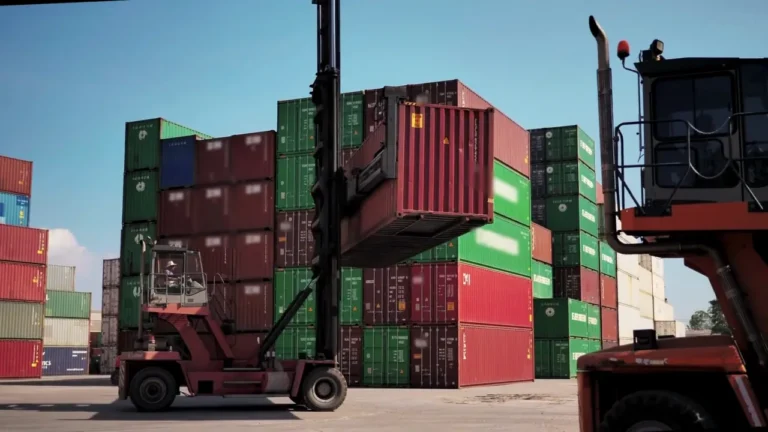
The urgency of these talks is underscored by broader economic data. According to the IndexBox Market Intelligence Platform, U.S. container imports have recently reached their third-highest monthly level on record. This high volume of trade indicates that the U.S. economy remains deeply intertwined with Chinese manufacturing, making the stabilization of trade policies essential to preventing supply chain shocks.
Furthermore, the participation of corporate delegations from China reflects a desire to normalize trade environments for firms that have been caught in the crossfire of the trade war. Businesses are currently operating in a state of "wait-and-see," as the uncertainty surrounding the November 10 truce deadline has led to a cautious approach to inventory management and long-term capital investment.
Official Responses and Strategic Outlook
The U.S. position, championed by Secretary Bessent, emphasizes "strategic stability." By addressing the technical aspects of AI safety and the granular details of mineral supply chains, the Treasury Department hopes to create a climate where trade can continue without the constant threat of tariff spikes.
From the Chinese perspective, the Ministry of Commerce has signaled that Vice Premier He’s presence—alongside a group of influential industry leaders—is a testament to Beijing’s willingness to engage in pragmatic economic diplomacy. While the Chinese state media has remained cautious, the focus on "economic and trade consultations" suggests that Beijing is prioritizing the removal of barriers to its own economic recovery, specifically regarding its export sectors.
Implications: What to Expect
The implications of the New York meeting are twofold:
- Immediate De-escalation: If the parties can agree on a renewal or a successor to the trade truce, the markets are expected to respond with a degree of relief. The removal of the immediate threat of new tariffs would provide a much-needed boost to global manufacturing confidence.
- Technological Governance: The AI discussions could set a global precedent. If the U.S. and China can align on even the most basic safety guardrails for AI, it would provide a framework that other nations could follow, potentially preventing a "race to the bottom" regarding AI safety protocols.
However, analysts warn that these talks are unlikely to solve the fundamental ideological differences between the two powers. The focus on "modest measures" over "sweeping breakthroughs" suggests that both sides are opting for a period of managed competition rather than an attempt to reset the entirety of their relationship.
Conclusion
As officials gather at JPMorgan’s Manhattan headquarters, the world will be watching closely. The meeting serves as a high-stakes stress test for U.S.-China relations. With the global economy balancing on the thin edge of recovery and the rapid advancement of AI threatening to disrupt the status quo, the ability of Secretary Bessent and Vice Premier He to find common ground will have ramifications that extend far beyond the day’s proceedings. Whether this Sunday leads to a new era of cooperation or simply manages to keep the status quo intact, the outcomes will provide the essential context for the upcoming presidential summit in Washington, setting the tone for the final months of the year and into the next decade.
About the Author