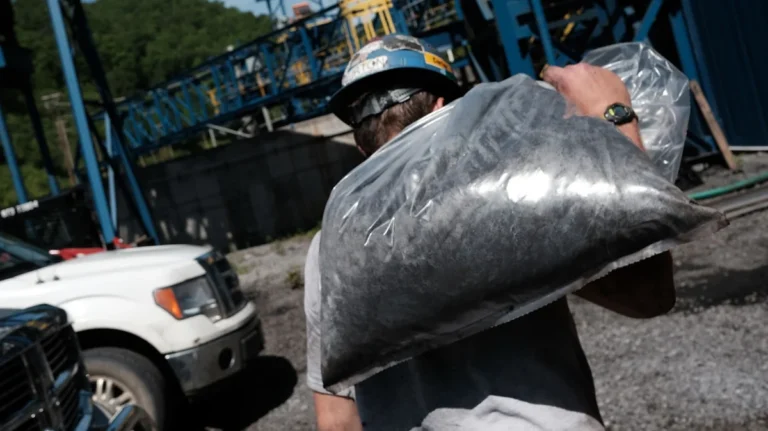
For nearly four decades, Josh Armes descended into the subterranean darkness of coal mines across West Virginia and Virginia. He was a laborer in an industry that powered the American dream, a man who spent 38 years extracting the fossil fuels that fueled the nation’s growth. Today, at 74, his life has shrunk to the radius of an oxygen tube in his home in Grundy, Virginia.
Armes is living with coal workers’ pneumoconiosis (CWP), commonly known as black lung disease—an irreversible, progressive, and fatal condition caused by the inhalation of toxic coal and silica dust. His reality is a testament to a systemic failure: while he gave his lungs to the coal industry, he is now being forced to fight for the very benefits designed to support him. For the past 12 years, Armes has been trapped in a Kafkaesque legal limbo, battling coal operators in an appeals process that seems designed to outlast the very miners it is meant to serve.
His story is not an anomaly; it is a symptom of a deepening crisis in the American coalfields. As black lung cases reach a 50-year high, the path to federal compensation has become a gauntlet of red tape, legal obstruction, and administrative indifference.
The Anatomy of a Systemic Failure
The Federal Black Lung Program was established in 1969 with a clear moral mandate: to provide medical and monetary support to those whose health was sacrificed for energy production. However, for families like the Armes, the program has evolved into a hostile, adversarial environment.
The process is notoriously arduous. To receive benefits, a miner must provide extensive medical evidence, a burden of proof that falls squarely on the shoulders of the sick and their families. This often involves thousands of dollars in out-of-pocket medical testing and the necessity of retaining specialized legal counsel to navigate complex federal hearings.
Crystal Armes, Josh’s daughter, describes the process as a war of attrition. “The burden of proof lies on the coal miner to prove that he has black lung,” she says. “We have appealed it and appealed it and appealed it. He does have black lung. Hopefully, soon we will be awarded the benefits again. But I’m not holding my breath.”
The emotional and physical toll is compounded by the financial strain of the appeals process. When benefits are awarded, coal companies frequently trigger automatic appeals, effectively stripping the funds away and forcing the miner to begin the battle anew. In some instances, beneficiaries are even forced to pay back money they received while their initial claims were active, leading to crushing debt.
Chronology of a Crisis: From Hope to Legal Limbo
The trajectory of the current crisis can be mapped through both individual struggle and shifting federal policy:
- 1969: The Federal Coal Mine Health and Safety Act establishes the Black Lung Benefits Program, recognizing the severe occupational health risks inherent in mining.
- 2013–2014: Josh Armes, having retired after 38 years, is diagnosed with CWP. He begins receiving federal benefits. In 2014, those benefits are challenged by a coal operator, triggering a 12-year legal battle that remains unresolved.
- 2013–2024: A decade-long surge in cases is documented by the National Institute for Safety and Occupational Health (NIOSH). During this period, 40 percent of all approved claims are disputed by coal operators.
- April 2024: A new federal silica dust rule is passed, aimed at lowering the exposure limits that have led to the current spike in aggressive, early-onset black lung.
- June 2024: Congressional Republicans block the funding necessary to implement and enforce the silica rule.
- Late 2024–2026: The Trump administration’s Mine Safety and Health Administration (MSHA) moves to “indefinitely delay” the rule, citing pending judicial reviews, while requesting an abeyance to pause court action.
Supporting Data: A Half-Century High
The resurgence of black lung is not merely anecdotal; it is a statistical reality confirmed by the latest research. According to data published in the American Journal of Respiratory and Critical Care Medicine, approximately 32.5 percent of veteran underground coal miners in Central Appalachia are suffering from CWP. This prevalence rate has not been seen since 1978.
The shift in the nature of the disease is equally alarming. Experts attribute the surge to the increasing prevalence of silica dust—a byproduct of cutting through rock to reach thinner coal seams. Silica is significantly more toxic than coal dust, causing faster, more severe lung scarring.
The Government Accountability Office (GAO) report released in May 2026 highlights the extreme inefficiency of the current claims process. Among 53,000 claims closed between 2013 and 2024, the median duration of an appealed claim was three years or longer. In extreme cases, 11 claims took over a decade to reach a resolution. The report explicitly noted that miners in all studied groups expressed a common belief: that coal operators are intentionally “waiting for them to die” or “waiting for them to give up” to avoid fulfilling their financial obligations.
Official Responses and the Policy Standoff
The political response to the crisis has been characterized by sharp divisions. Democratic senators—including Mark Warner, John Hickenlooper, Tim Kaine, and John Fetterman—have been vocal critics of the current system, introducing legislation to increase accessibility and reduce the burden on miners.
Conversely, the current administration has maintained a stance of non-interference. When asked for comment, the White House deferred to the Department of Labor. A spokesperson for the MSHA stated: “Until pending litigation and rulemaking on respirable crystalline silica are resolved, MSHA continues to vigorously enforce the existing permissible exposure limit of 100 micrograms per cubic meter.”
Critics argue this limit is woefully inadequate given the current medical understanding of silica toxicity. Rebecca Shelton, director of policy for the Appalachian Citizens’ Law Center, did not mince words regarding the administration’s delay: “If the administration actually cared about protecting coal miners from black lung, we’d have a strong silica rule in place right now. Instead, they are hiding behind a ridiculous legal process to delay action while miners get sick and die.”
Implications: The Moral Cost of Energy
The implications of this ongoing battle extend far beyond the borders of Virginia and West Virginia. It raises fundamental questions about corporate responsibility and the social contract between the state, the industry, and the laborer.
For the United Mine Workers of America (UMWA), the issue is one of basic human rights. Brian Sanson, president of UMWA International, argues that a company’s profit margins should never supersede a worker’s right to breathe. The union continues to demand the immediate unfreezing of the silica dust rule, noting that every day of delay results in more miners contracting a fatal, incurable disease.
For individuals like Josh Armes, the implications are deeply personal. After a lifetime of physical labor, his retirement has become an exercise in frustration and poverty. His daughter, Crystal, sums up the frustration felt by an entire generation of mining families: “We’re hardworking, everyday Americans who go to work every day, pay our taxes, and try to do the right thing. And then, we can’t get what was promised to us.”
As the legal battles continue, the silence of the regulators remains deafening. For the miners in the dark, the air is not just thin—it is filled with the dust of a broken promise. Until the federal government chooses to prioritize health over the administrative convenience of coal operators, the epidemic of black lung will continue to claim the lives of those who spent theirs building the nation’s infrastructure.
About the Author