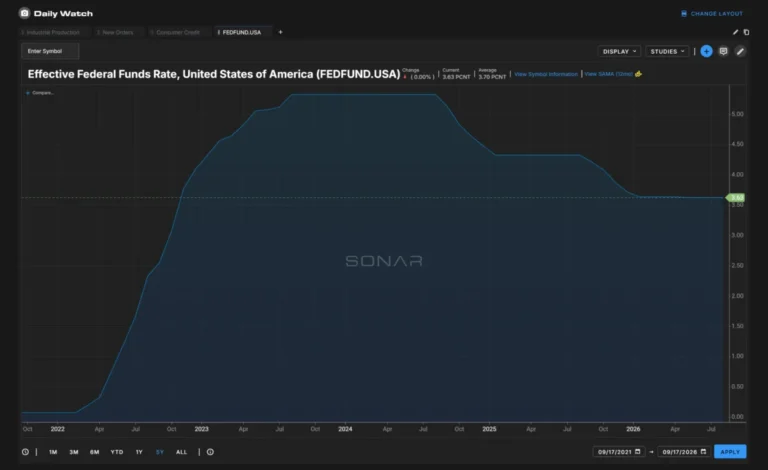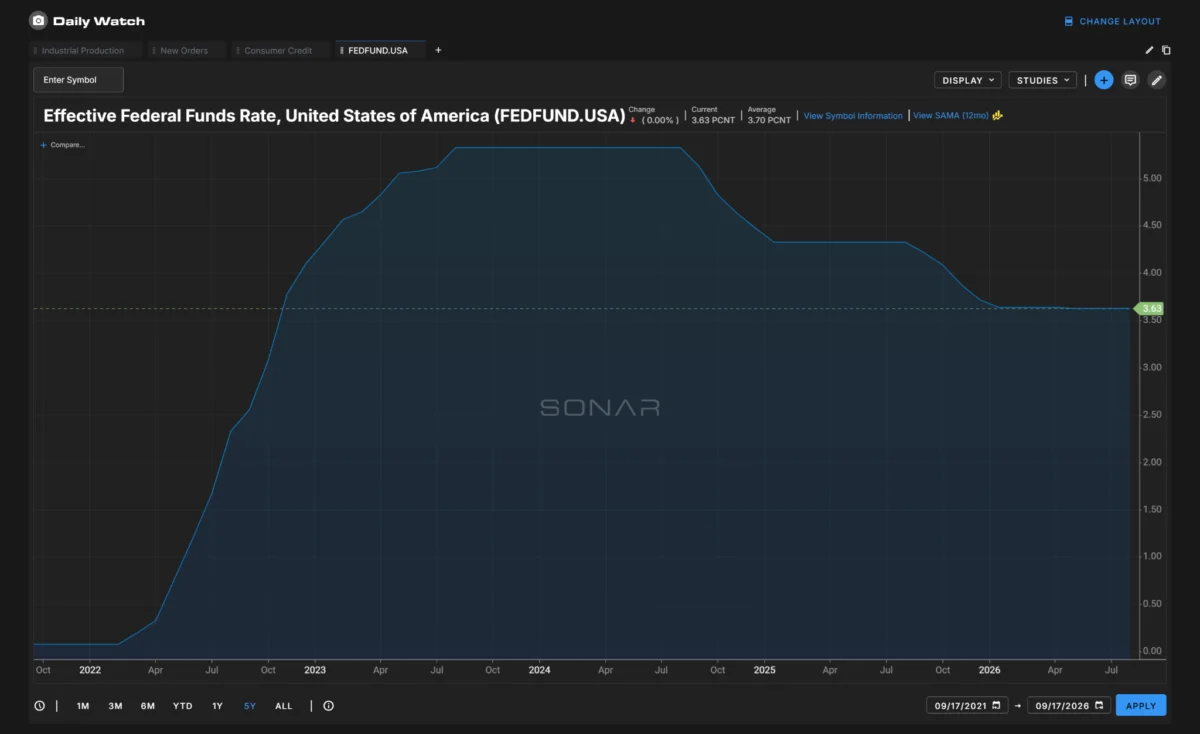
On September 16, 2026, the Federal Open Market Committee (FOMC) signaled a pivotal shift in U.S. monetary policy, announcing a 25-basis-point increase to the federal funds target range, bringing it to 3.75%–4.00%. This move marks the end of a recent cycle of monetary easing and represents a hawkish recalibration in response to persistent, stubborn inflation. Fed Chair Kevin Warsh, framing the decision with sobering clarity, characterized current inflation levels as “too high and has been for too long,” underscoring the central bank’s determination to prioritize price stability over near-term growth.
For the logistics and transportation sector—an industry uniquely sensitive to the cost of capital, equipment financing, and consumer demand—this policy shift is not merely an academic exercise in macroeconomics. It is a fundamental alteration of the financial landscape in which carriers, shippers, and brokers operate.
The Dual Mandate and the FOMC’s Strategic Tilt
The Federal Reserve’s operations are governed by a dual mandate from Congress: to achieve maximum sustainable employment and to maintain price stability. The FOMC, a 12-member body consisting of seven Governors and five rotating regional Reserve Bank presidents, meets eight times annually to calibrate the federal funds rate. This rate serves as the benchmark for overnight loans between banks, effectively setting the "base cost" of money in the American economy.
In its September decision, the FOMC determined that the economy has reached a junction where the risks of unchecked inflation outweigh the risks of a slight slowdown in economic growth. While the labor market remains resilient—a key component of the dual mandate—the Personal Consumption Expenditures (PCE) Price Index continues to outpace the Fed’s 2% target. Consequently, the committee has opted for a restrictive stance, signaling that the era of "easy money" has, at least temporarily, come to a close.
The Plumbing of Policy: How the Target Range Becomes Reality
To understand the mechanics of this hike, one must look past the headlines and into the "plumbing" of the financial system. The FOMC does not set market rates by fiat; it sets a target range and uses four specific "administered rates" to force market behavior within those bounds.
The Floor: IORB and ON RRP
- Interest on Reserve Balances (IORB): Raised from 3.65% to 3.90%, this is the primary tool for banks. Because banks can earn this risk-free return by keeping funds at the Fed, they have no incentive to lend to other market participants for less.
- Overnight Reverse Repo (ON RRP): Raised from 3.50% to 3.75%, this serves as the floor for non-bank entities, such as money market funds, government-sponsored enterprises (GSEs), and primary dealers. By providing a risk-free overnight option, the Fed prevents these entities from driving rates below the target range.
The Ceiling: Discount Rate and SRF
- Primary Credit (Discount) Rate: Moved to 4.00%, this provides a backstop for banks that need liquidity.
- Standing Repo Facility (SRF): Also moved to 4.00%, this acts as a critical release valve for the repo market, allowing depository institutions and primary dealers to borrow against high-quality collateral (like Treasuries) if liquidity conditions tighten.
The Effective Federal Funds Rate (EFFR)—the volume-weighted median of actual trades—tends to settle just below the IORB. By shifting these rates in lockstep, the Fed has effectively reset the floor and ceiling of the entire U.S. credit market, ensuring that the cost of capital increases across the board.
Interest as the Price of Time: The Economic Transmission
At its core, an interest rate is the "price of time." It represents what a saver demands to postpone consumption and what a borrower pays for the privilege of accessing capital today. When the Fed raises rates, it increases the hurdle rate for every investment decision in the country.
When the cost of borrowing rises, the transmission to the real economy follows a predictable path:
- Cost of Funds: Banks pass higher borrowing costs to consumers and corporations.
- Consumption/Investment Slowdown: Businesses delay capital expenditures (CapEx), and consumers curtail spending on big-ticket items.
- Inflationary Pressure: Reduced demand for goods and services, relative to a fixed supply, helps to tame price increases.
- Currency Effects: Higher U.S. yields attract foreign capital, strengthening the dollar, which subsequently lowers the cost of imported goods—a crucial mechanism for cooling imported inflation.
Implications for the Freight and Logistics Industry
For the logistics sector, the Fed’s decision creates a multifaceted ripple effect that touches every node of the supply chain.
Inventory and Shipper Behavior
Higher interest rates increase the "carrying cost" of inventory. In a low-rate environment, shippers might hold excess inventory as a hedge against supply chain disruptions. With rates rising, the financial burden of financing that inventory grows. Expect a push toward "leaner" supply chains and more frequent, smaller shipments. While this may initially dampen volume, it creates a "bullwhip" effect: if supply chains become too thin, any disruption could lead to massive, desperate spikes in freight demand later.
Equipment and Fleet Capital
The logistics industry is capital-intensive. Carriers financing new tractors, trailers, and warehouse automation are facing significantly higher debt-servicing costs. This discourages fleet renewal and slows the growth of capacity. For small, thinly capitalized carriers, the impact is more immediate: rising costs for fuel float and payroll financing can push these operators out of the market entirely, leading to a capacity contraction that may eventually tighten spot rates.
The Housing and Construction Nexus
The housing market is among the most interest-rate-sensitive sectors. As mortgage rates rise in sympathy with the Fed, demand for construction materials and appliances will inevitably soften. Flatbed carriers, who rely heavily on building materials and large-scale industrial goods, are often the first to feel this cooling effect, serving as a bellwether for the broader transportation market.
Global Trade and the Dollar
The strength of the U.S. dollar, bolstered by higher domestic interest rates, creates a double-edged sword for global logistics. While it makes imports cheaper for U.S. consumers—potentially supporting container volumes at major ports—it makes American exports more expensive for foreign buyers. This dynamic shifts the balance of trade and necessitates agility in global freight planning.
Looking Ahead: Managing the Lag
The most critical takeaway for freight executives is the concept of the "lag." Monetary policy does not affect the economy instantaneously; there is a significant delay between a rate hike and the cooling of real-world demand.
As we look toward the remainder of 2026, the industry must prepare for a environment of higher capital costs and shifting demand patterns. The "freight cycle" rarely moves in perfect sync with the "interest rate cycle," and those who plan their capacity and capital allocations with this disconnect in mind will be best positioned to survive the transition.
For industry leaders, staying informed on these macroeconomic currents is no longer optional—it is a competitive necessity. Whether it is through real-time data monitoring via tools like the SONAR platform or active participation in upcoming industry forums, the ability to pivot alongside the Federal Reserve’s policy shifts will define the winners of the next fiscal year.
Upcoming Industry Opportunities
As the industry navigates these financial headwinds, collaboration and knowledge-sharing are more vital than ever. The following events provide platforms for leaders to discuss compliance, freight technology, and strategy:
- Brokerage Compliance Symposium (October 26, 2026): A deep dive into the legal and operational challenges facing brokers, including fraud exposure, insurance gaps, and regulatory shifts in the current climate.
- F3 Awards Dinner (October 26, 2026): Celebrating the innovators and "Shippers of Choice" who are defining the future of the supply chain.
- F3: Future of Freight Festival (October 27–28, 2026): The premier gathering for the industry, featuring technology demos, high-level networking, and keynotes on navigating the evolving economic landscape.
For more information on market trends and to track the pulse of the freight economy, visit gosonar.com.
About the Author