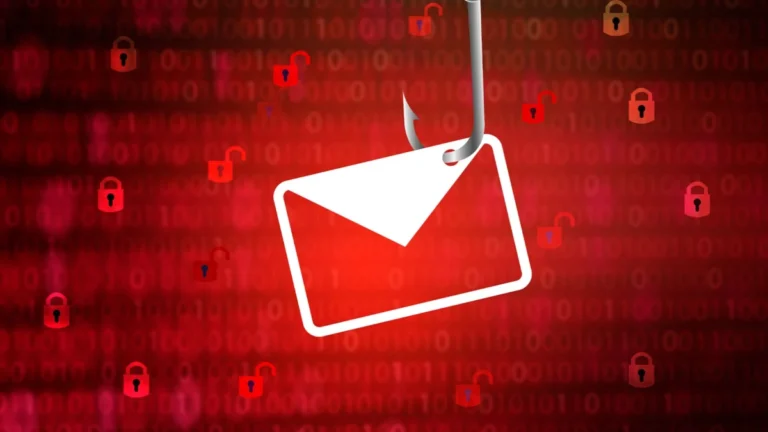
Microsoft has officially announced a significant security upgrade for its flagship collaboration platform, Microsoft Teams. Starting in November, the tech giant will roll out a sophisticated, AI-driven anti-phishing layer designed to identify and mitigate social engineering attacks in real-time. This move comes as a direct response to a surge in malicious activity targeting corporate communication channels, where hackers have increasingly exploited the platform’s external messaging capabilities to distribute ransomware and gain unauthorized access to internal network infrastructure.
The New Frontier: AI-Powered Vigilance
The forthcoming security update, detailed in Microsoft’s latest 365 roadmap, focuses on "first contact" scenarios—the high-risk moment when an external entity initiates a conversation with an employee. By utilizing advanced machine learning models to analyze conversation context, the system will be able to detect subtle indicators of malicious intent, such as impersonation, suspicious link structures, and the delivery of malicious files.
Unlike traditional signature-based detection systems, which rely on databases of known threats, this AI-powered approach is designed to spot behavioral anomalies. It operates silently in the background, monitoring for social engineering tactics that might otherwise bypass legacy security filters. When the system identifies a high-probability threat, it will automatically flag the conversation, providing users with clear warnings to exercise caution.
Microsoft has been careful to address privacy concerns regarding the monitoring of corporate communications. The company emphasized that this capability is strictly limited to security enforcement. "This capability is used only for security protection and not for productivity, summarization, advertising, user monitoring, or other non-security purposes," the company stated. Furthermore, to maintain data sovereignty and compliance, Microsoft confirmed that message content is not retained by the detection system for model training or secondary analytical purposes.
A Chronology of Escalation: How Teams Became a Target
The decision to integrate AI into Teams is not a sudden pivot but a necessary evolution following years of increasing pressure from threat actors. The platform’s rapid adoption during and after the global pandemic made it a high-value target for cybercriminals, who quickly realized that corporate employees often trust internal communication tools more than external email.
2023: The Year of Sophisticated Impersonation
The trajectory of Teams-based attacks became clear early last year when cybersecurity firm Sophos documented campaigns where hackers masqueraded as IT support staff. By initiating contact through Teams, these attackers convinced employees to download malicious software under the guise of "system updates" or "technical troubleshooting."
The Rise of Scattered Spider
As the year progressed, the threat landscape darkened. The FBI and various cybersecurity authorities issued warnings regarding the "Scattered Spider" hacking collective. This group gained notoriety for their ability to infiltrate organizations by abusing legitimate collaboration tools, specifically Slack and Microsoft Teams. By gaining access to a single user account, they could effectively "pivot" through an organization, leveraging the trust inherent in the platform to escalate their presence and eventually deploy ransomware.
2024: A Continued Battle for Trust
The start of 2024 brought further warnings, most notably from Check Point Research. The team uncovered a campaign involving "guest invitations" that were weaponized to deliver fake billing and subscription notifications. These scams were designed to mirror official Microsoft communications so accurately that many users were tricked into clicking malicious links that led to credential harvesting sites.
Most recently, Arctic Wolf Labs released data following an analysis of over 400 incidents, confirming that attackers are not exploiting software vulnerabilities, but rather the very features designed to foster collaboration.
The Structural Flaw: Abusing "External Access"
The central challenge Microsoft faces is that the most dangerous attack vector is not a bug, but a feature. Microsoft Teams ships with "external access" (federation) enabled by default. This capability allows any user in one Microsoft 365 tenant to reach out to a user in another, provided both organizations have not explicitly restricted this in their administrative settings.
Security researchers at Arctic Wolf have pointed out that this design choice is the "gift that keeps on giving" for threat actors. Because this communication happens over encrypted, trusted channels, it often bypasses traditional perimeter defenses like email gateways. Attackers have effectively turned a tool designed for global connectivity into a conduit for social engineering.
While organizations have always had the ability to disable external access, many choose to keep it enabled to facilitate communication with vendors, partners, and clients. Microsoft’s new AI tool aims to provide a middle ground: keeping the doors open for legitimate business while using artificial intelligence to act as a "bouncer" that filters out the malicious actors hidden in the crowd.
Supporting Data and Industry Implications
The shift in focus from email to messaging platforms is supported by broader industry trends. According to recent cybersecurity reports, phishing attempts via SMS (smishing) and messaging applications have seen a 40% year-over-year increase. The efficiency of these attacks is high; the "human element" remains the weakest link in corporate security, and the professional context of Teams makes it the ideal environment for high-stakes social engineering.
For IT decision-makers, the implementation of this AI layer represents a shift in strategy. Instead of attempting to lock down communication platforms—which can stifle productivity and innovation—organizations are increasingly relying on "smart" defenses that can distinguish between a legitimate vendor inquiry and a sophisticated phishing attempt.
The deployment of this feature, which will take place across November and December, will be automatic. For many IT administrators, this is a welcome update, as it reduces the administrative burden of managing granular external access policies while simultaneously elevating the baseline security posture for all users within their tenant.
Future Outlook and Strategic Considerations
Looking ahead, the success of this AI-powered detection will depend on the "false positive" rate. In an enterprise environment, blocking legitimate communication can be as disruptive as a security breach. Microsoft will likely spend the initial months of the rollout tuning the model to ensure that it only flags truly malicious content.
Furthermore, this development highlights a broader trend: the "AI vs. AI" arms race. As Microsoft uses AI to detect phishing, attackers are increasingly using Generative AI to craft more convincing, error-free, and personalized messages to bypass these very filters. The coming year will likely see a rapid evolution in these models, with both defensive and offensive AI becoming more nuanced.
For businesses currently using Microsoft Teams, the key takeaway is that the platform is no longer just a communication tool; it is a critical security perimeter. Organizations should view this upcoming update as a baseline protection rather than a complete solution. A comprehensive security strategy must still include robust user awareness training, the enforcement of Multi-Factor Authentication (MFA), and the implementation of a "Zero Trust" model that assumes even authenticated internal users might be compromised.
As Microsoft rolls out these defenses, the industry will be watching closely. If successful, this AI-powered approach could set a new standard for how major SaaS (Software as a Service) providers protect their users from the realities of modern social engineering. For now, the message from Redmond is clear: the era of blind trust in internal messaging is over, and artificial intelligence is the new gatekeeper of the corporate workspace.
About the Author