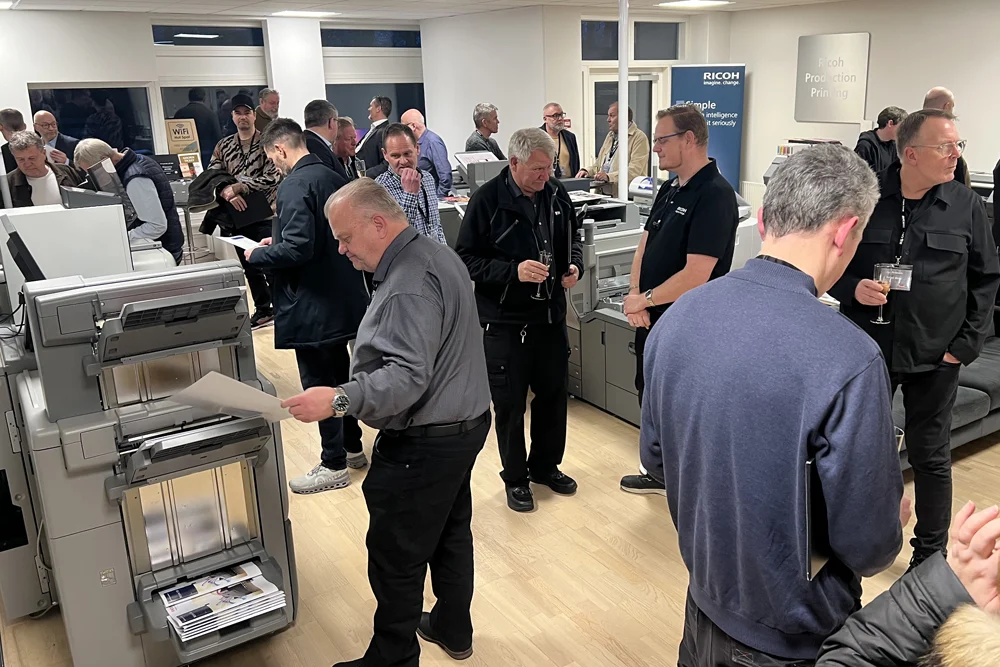
COPENHAGEN & HORSENS, Denmark – [Date of Publication, e.g., October 20, 2026] – Ricoh Danmark is set to host a pivotal seminar series aimed at revolutionizing digital print production through advanced post-press finishing techniques. Featuring industry luminary Andy Cuff from Duplo, these exclusive events promise to equip graphic production businesses with the knowledge and tools to enhance efficiency, boost flexibility, and unlock unprecedented opportunities in a rapidly evolving market. The seminars, scheduled for early November 2026 in Vallensbæk and Horsens, underscore Ricoh’s commitment to fostering innovation and operational excellence within the Danish printing sector.
The initiative comes at a crucial time for print service providers, who face mounting pressures to deliver faster turnaround times, offer greater personalization, and manage diverse print runs with impeccable quality. Effective post-press finishing, often overlooked in the broader production chain, is emerging as a critical differentiator and a key driver of profitability. Ricoh Danmark, in collaboration with leading finishing solution providers, is addressing this need head-on, offering a comprehensive deep dive into how "nearline" and "offline" solutions can transform a printing operation from a mere producer to a value-added service provider.
Attendees will gain invaluable insights into optimizing their production workflows, exploring cutting-edge technologies from Duplo, Ideal, and Komfi, and engaging in vital peer-to-peer discussions. This seminar series is meticulously designed for professionals dedicated to digital print production, post-press operations, and overall production optimization, offering a unique platform to glean inspiration and practical strategies for creating greater value and efficiency.
Unlocking Efficiency: The Core Message of Ricoh’s Seminar Series
The upcoming seminar series, spearheaded by Ricoh Danmark, is poised to be a landmark event for the Danish graphic arts industry. Its central theme revolves around the profound impact of strategic post-press finishing – particularly nearline and offline configurations – on modern print production. The overarching goal is clear: to inspire print service providers to rethink their finishing processes not as an afterthought, but as an integral component of a streamlined, profitable, and future-proof production ecosystem.
The "What": A Deep Dive into Post-Press Optimization
At its heart, the seminar focuses on the "how" and "why" of effective post-press finishing. Attendees will discover how intelligent implementation of finishing solutions can drastically cut down on bottlenecks, reduce waste, and significantly shorten delivery times. The sessions will move beyond mere machinery demonstrations, delving into the strategic implications of integrating advanced cutting, creasing, folding, binding, laminating, and embellishment technologies. The emphasis will be on how these solutions can foster greater agility, allowing businesses to respond swiftly to changing market demands, offer a wider array of services, and ultimately capture new revenue streams.
The concept of "nearline" finishing, a key focus, refers to automated finishing equipment that operates independently but is closely integrated with the digital printing press, often sharing job data and workflow instructions. This approach offers significant flexibility, allowing for batch processing, specialized finishing tasks, and greater overall throughput compared to fully inline systems, while still retaining a high degree of automation. "Offline" finishing, while requiring more manual intervention between printing and finishing, provides maximum flexibility for highly specialized or complex jobs, often involving different equipment or a dedicated finishing department. The seminar will explore the optimal balance and strategic deployment of both configurations to maximize production efficiency and versatility.
The "Who": A Confluence of Industry Expertise
Ricoh Danmark, a prominent provider of digital printing solutions, acts as the host and facilitator, bringing together leading experts and technologies. The headline speaker, Andy Cuff from Duplo, is recognized for his extensive experience and profound understanding of finishing technologies. Duplo is a global leader in automated precision finishing equipment, known for its innovative solutions that streamline post-press operations for digital and offset print. Cuff’s insights are expected to be a major draw, offering attendees a wealth of practical advice and strategic perspectives.
Beyond Duplo, the seminar will feature introductions to solutions from Ideal and Komfi. Ideal is renowned for its precision cutting and trimming systems, essential for achieving professional and consistent document finishes. Komfi specializes in lamination and foiling equipment, enabling print businesses to add protective and premium embellishments that enhance the perceived value and durability of printed materials. The presence of these key players underscores the comprehensive nature of the seminar, covering a broad spectrum of finishing needs.
The "Why": Addressing Modern Print Challenges
The rationale behind these seminars is rooted in the current landscape of the graphic arts industry. Print service providers are grappling with:
- Cost Pressures: The need to reduce operational costs while maintaining high quality.
- Demand for Versatility: Clients require shorter runs, personalized content, and a wider range of product types (brochures, books, direct mail, packaging prototypes).
- Speed to Market: The expectation for rapid turnaround times, from order placement to delivery.
- Quality and Consistency: The imperative to deliver flawless output, regardless of job complexity or volume.
Inefficient post-press operations can negate the speed and flexibility advantages offered by modern digital presses. Bottlenecks in finishing can lead to delayed deliveries, increased labor costs, and reduced customer satisfaction. By showcasing how effective finishing solutions can mitigate these challenges, Ricoh aims to empower businesses to enhance their competitive edge, expand their service portfolios, and ultimately drive greater profitability. The seminar is not just about selling machines; it’s about providing a strategic framework for business growth.
A Structured Path to Post-Press Mastery: The Seminar Chronology
The Ricoh Danmark seminar series is structured to provide a comprehensive and engaging learning experience, blending expert presentations with practical insights and invaluable peer interaction. Each session is carefully designed to guide participants through the complexities and opportunities within the post-press landscape.
Event Schedule: A Deep Dive into Innovation
The afternoon sessions, spanning approximately two and a quarter hours, are meticulously planned to maximize knowledge transfer and engagement. The agenda for both locations—Vallensbæk and Horsens—will follow a similar, dynamic structure:
- 13:45 – 14:00: Welcome and Introduction: Attendees will be greeted, and Ricoh Danmark representatives will set the stage, outlining the day’s objectives and the critical importance of post-press optimization in today’s print market. This segment will frame the discussions, highlighting the shift from a pure production mindset to one focused on value creation through finishing.
- 14:00 – 14:45: Keynote Address by Andy Cuff (Duplo): The centerpiece of the seminar, Andy Cuff’s presentation will delve into the strategic advantages of effective finishing solutions. He is expected to share his extensive experience, offering practical case studies and demonstrating how companies have successfully integrated nearline and offline technologies to bolster their production flow, enhance flexibility, and open doors to new service offerings. His insights will likely cover best practices, common pitfalls to avoid, and future trends in finishing automation.
- 14:45 – 15:15: Exploring Solutions: Ideal and Komfi: This segment will introduce participants to the specific capabilities and benefits of solutions from Ideal and Komfi. Experts will provide an overview of their respective product lines, such as Ideal’s precision cutters and Komfi’s laminating and foiling machines. The focus will be on how these technologies complement digital print workflows, enabling businesses to produce a wider range of high-quality, value-added products efficiently.
- 15:15 – 15:45: Practical Examples and Industry Experiences: This section will bring theory to life with real-world applications. Ricoh Danmark and its partners will present practical examples and share experiences from within the industry. This could include demonstrations of specific finishing workflows, discussions on how various challenges were overcome, or testimonials from businesses that have successfully implemented advanced finishing solutions. The aim is to provide tangible evidence of the benefits discussed earlier.
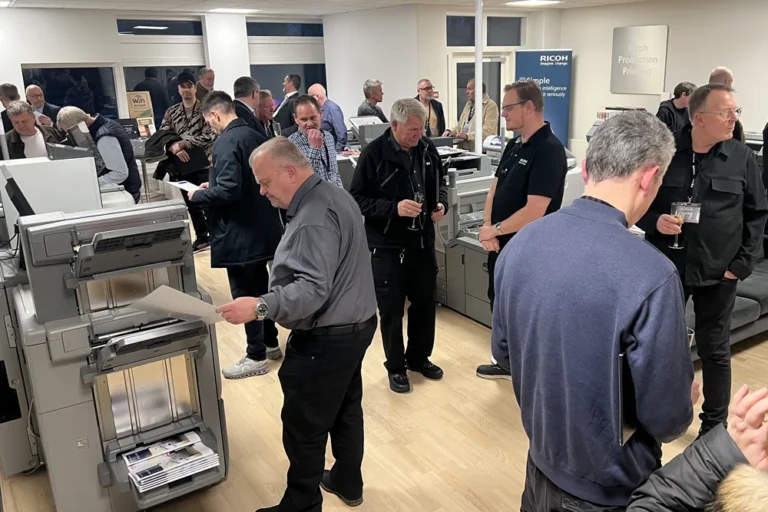
- 15:45 – 16:00: Open Dialogue and Networking: This crucial concluding segment fosters an interactive environment. Participants will have the opportunity to engage in an open dialogue, discussing their current challenges, specific needs, and sharing their own experiences within post-press. This peer-to-peer exchange is often cited as one of the most valuable aspects of such seminars, allowing for direct problem-solving, idea generation, and the building of valuable industry connections. Light refreshments will likely accompany this session, further encouraging informal networking.
Historical Context: The Evolution of Post-Press in Digital Printing
The significance of these seminars is amplified when viewed through the lens of print history. For decades, post-press finishing was largely a manual, labor-intensive process, often seen as a necessary evil rather than a strategic asset. With the advent of digital printing, the landscape began to shift dramatically. Digital presses brought unprecedented speed, flexibility for short runs, and variable data capabilities. However, the finishing stage often became a bottleneck, slowing down the entire production process and undermining the advantages of digital printing.
Initially, early digital finishing solutions were rudimentary, struggling to keep pace with the speed and versatility of the presses. Over time, however, manufacturers like Duplo, Ideal, and Komfi invested heavily in R&D, developing sophisticated automated systems capable of handling the diverse output of digital presses. The evolution has moved from purely manual tasks to semi-automated, then to inline and nearline solutions, each iteration aiming to reduce touchpoints, increase accuracy, and accelerate turnaround times. Today, advanced finishing is not just about cutting or binding; it’s about adding value through embellishments, intricate folds, and personalized touches, transforming a printed piece into a premium product. This seminar series reflects the culmination of this evolution, presenting the cutting edge of what’s possible.
Future Trends: Preparing for Tomorrow’s Print Demands
Looking ahead, the future of post-press is characterized by increasing automation, greater integration with end-to-end digital workflows, and an expanding role in personalization and customization. Trends such as artificial intelligence (AI) and machine learning (ML) are beginning to influence finishing equipment, enabling predictive maintenance, optimized job scheduling, and even adaptive finishing processes. The demand for sustainable printing practices also extends to finishing, with a focus on energy-efficient machinery and reduced material waste.
Furthermore, the lines between printing and finishing are blurring, with more intelligent systems communicating seamlessly to ensure optimal quality and efficiency. The growth of e-commerce and the associated demand for personalized packaging and direct mail are also driving innovation in finishing, requiring solutions that can handle highly variable data and complex designs with speed and precision. By focusing on nearline and offline strategies, Ricoh’s seminar series directly addresses these future trends, preparing businesses to adapt, innovate, and thrive in an increasingly dynamic print market. Participants will leave with a clear understanding of how to leverage current technologies to stay competitive and strategically position themselves for future advancements.
Data-Driven Insights: The Strategic Imperative of Advanced Post-Press
The decision by Ricoh Danmark to host a dedicated seminar series on post-press finishing is firmly rooted in compelling industry trends and strategic business advantages. Supporting data from various market analyses consistently highlights the growing importance of efficient finishing for the overall health and profitability of print service providers.
Industry Context: Digital Print and the Finishing Bottleneck
According to recent market reports (e.g., Future of Global Print Markets to 2030 by Smithers, or similar hypothetical industry analyses), the digital printing market continues its robust growth trajectory, driven by demand for shorter print runs, variable data printing, and personalized communications. While digital press technology has advanced rapidly, achieving unprecedented speeds and quality, the finishing stage has often lagged, creating a significant bottleneck.
- Growth of Digital: Digital printing is projected to continue expanding its share of the overall print market, valued at hundreds of billions globally, with annual growth rates often exceeding 5-7% in specific segments like transactional and promotional print.
- Short Runs and Customization: The average print run length is decreasing, and the demand for personalized and customized print products is escalating. This necessitates finishing solutions that can handle frequent job changes, variable data, and complex individual requirements without significant setup times or material waste.
- Time-to-Market Pressure: Customers expect increasingly faster turnaround times. A digital job printed in minutes can lose its efficiency advantage if it takes hours or days to finish.
This context underscores the critical need for advanced finishing solutions that can match the agility and speed of digital presses. Businesses that fail to optimize their post-press operations risk losing competitive advantage, incurring higher labor costs, and experiencing reduced customer satisfaction due to delays.
Benefits of Nearline/Offline Finishing: Quantifiable Advantages
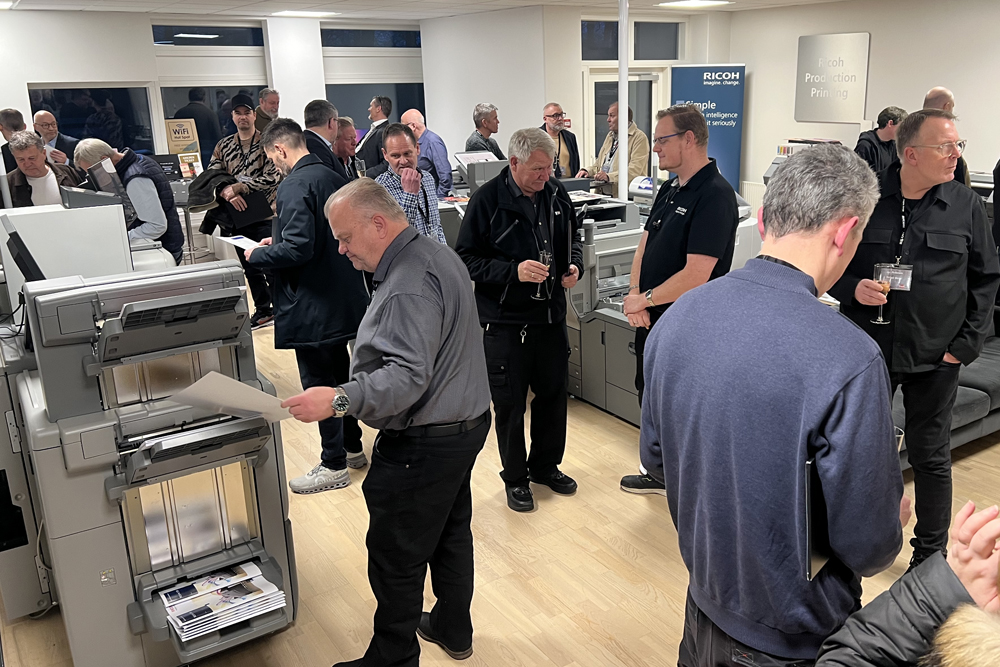
The seminar’s focus on nearline and offline finishing is deliberate, as these configurations offer a multitude of tangible benefits that directly address the industry’s challenges:
- Enhanced Efficiency and Throughput: Nearline systems, by automating tasks such as cutting, creasing, folding, and binding, drastically reduce manual handling and processing time. This leads to higher throughput and faster job completion. For example, a print shop might reduce the time spent on a typical booklet job from several hours of manual collation and stapling to minutes with an automated Duplo system.
- Increased Flexibility and Versatility: Unlike fully inline systems which are often dedicated to a specific type of finishing, nearline and offline solutions offer unparalleled flexibility. They can handle a wider range of substrates, formats, and finishing styles. This allows print service providers to offer a broader portfolio of services, from complex personalized direct mail to high-end perfect-bound books or custom-shaped labels. This flexibility translates directly into new revenue opportunities.
- Cost Reduction: Automation minimizes labor costs associated with manual finishing. Furthermore, precision equipment from Ideal reduces material waste by ensuring accurate cuts and fewer errors. Reduced setup times mean less downtime and more productive operational hours.
- Improved Quality and Consistency: Automated systems deliver a higher degree of accuracy and consistency than manual processes. This is crucial for maintaining brand integrity and meeting client expectations for premium print products. Komfi’s laminating solutions, for instance, ensure a uniform finish, protecting prints and enhancing their visual appeal.
- Reduced Bottlenecks: By streamlining the finishing process, nearline solutions prevent bottlenecks that can stall an entire production schedule. This ensures a smoother workflow from print to delivery.
- Expanded Service Offerings: The ability to offer intricate finishes (e.g., selective varnishing, die-cutting, perfect binding, advanced folding patterns) allows businesses to differentiate themselves and command higher prices for value-added services.
Company Profiles: Pillars of Innovation
- Ricoh Danmark: As a leading provider of digital printing systems, Ricoh’s involvement highlights its holistic approach to print production. Beyond selling presses, Ricoh understands the importance of the entire workflow, including post-press, in delivering comprehensive solutions to its clients. Their commitment extends to education and partnership, helping customers leverage technology for business growth.
- Duplo: A global innovator in automated finishing solutions, Duplo is synonymous with precision and efficiency. Their range includes booklet makers, multi-finishers, perfect binders, and slitter/cutter/creasers. Andy Cuff’s expertise represents the forefront of applying these technologies to solve real-world production challenges.
- Ideal: Known for its robust and precise cutting machines, Ideal is a trusted name in post-press. Their guillotine cutters are essential for achieving clean, accurate trims on a wide variety of printed materials, ensuring a professional final product.
- Komfi: Specializing in lamination and foiling machines, Komfi enables print businesses to add protective layers and luxurious embellishments. Their solutions are vital for producing durable, high-impact printed materials that stand out in the market.
Hypothetical Case Study: The "PrintPro Solutions" Success Story
Consider "PrintPro Solutions," a medium-sized Danish print shop that struggled with manual finishing, particularly for its growing volume of digitally printed short-run brochures and personalized direct mail. Their finishing department was a constant bottleneck, leading to late deliveries and overtime costs. After investing in a nearline slitter/cutter/creaser and an automated booklet maker, similar to those offered by Duplo:
- They reduced finishing time for a standard 24-page brochure from 3 hours (manual cutting, folding, stapling) to just 20 minutes (automated process).
- Labor costs for these jobs dropped by 70%.
- Their capacity for personalized direct mail increased by 150%, allowing them to take on new, lucrative contracts.
- Customer satisfaction scores improved due to faster turnaround and consistent quality.
This hypothetical scenario illustrates the tangible benefits that Ricoh’s seminar aims to highlight, demonstrating how strategic investment in post-press can translate into significant operational improvements and business growth.
Voices from the Industry: Official Responses and Strategic Vision
The forthcoming seminar series by Ricoh Danmark is not merely an informational event; it represents a strategic initiative, underpinned by the insights and perspectives of key industry leaders. The official responses from Ricoh and its partners highlight a shared vision for advancing the capabilities of the graphic arts sector.
Steen Berner Vevest on the Power of Nearline:
Steen Berner Vevest, Sales Manager at Ricoh Danmark, articulates the fundamental philosophy driving these seminars. His statement, "There are many advantages to nearline finishing, which we will try to clarify at this seminar. It’s not just about machines, but also about how nearline solutions can optimize the production flow," offers a profound insight into Ricoh’s holistic approach.
Expanding on Vevest’s perspective, the "many advantages" he refers to encompass a spectrum of benefits that go beyond simple automation. These include:
- Strategic Resource Allocation: Nearline solutions allow businesses to allocate skilled labor to more complex, value-added tasks rather than repetitive finishing operations. This maximizes human capital and fosters a more engaged workforce.
- Scalability and Flexibility: Unlike fully inline systems which are tied to a specific press, nearline equipment can be shared across multiple digital presses or even integrated with offset output, offering greater scalability and maximizing equipment utilization. This flexibility is crucial for businesses facing fluctuating demand and diverse job requirements.
- Reduced Risk and Downtime: Should a nearline finishing unit require maintenance, the printing press can continue to operate, directing output to alternative finishing methods or stockpiling for later processing. This modularity reduces the risk of complete production shutdowns.
- Enhanced Problem-Solving: By separating printing from finishing, operators can address issues at each stage independently, leading to faster troubleshooting and higher overall quality control.
Vevest’s emphasis that it’s "not just about machines" is particularly telling. It underscores Ricoh’s understanding that technology alone is insufficient. True optimization arises from a strategic integration of technology into an intelligent workflow. Nearline solutions, when implemented thoughtfully, become catalysts for an entirely re-engineered production process – one that is agile, efficient, and responsive to market demands. For Ricoh, the seminar is a platform to demonstrate this strategic thinking, helping customers not just buy equipment, but build a competitive production infrastructure.
Andy Cuff on Transformative Finishing:
While a direct quote from Andy Cuff isn’t provided in the original text, his role as a keynote speaker from Duplo suggests a focus on the transformative potential of smart finishing. A plausible statement from Cuff, aligned with industry trends and Duplo’s mission, might be:
"The digital print revolution has brought incredible speed and personalization to the front end of production. However, for many, the true bottleneck remains in the finishing department. Our goal at Duplo, and what I aim to share at these Ricoh seminars, is how intelligent, automated finishing solutions can not only eliminate these bottlenecks but also unlock entirely new creative possibilities. It’s about empowering print businesses to move beyond mere commodity production and to deliver value-added, customized products that command higher prices and build stronger client relationships. The right finishing strategy can turn a cost center into a profit engine."
This hypothetical quote captures the essence of how finishing experts view their contribution – not just as providers of machinery, but as enablers of business transformation and growth.
Ricoh’s Broader Vision: Partnership and Innovation:
These seminars align perfectly with Ricoh’s overarching strategy for the graphic arts industry. Ricoh positions itself not merely as a vendor but as a strategic partner to print service providers. This partnership model is built on several pillars:
- Education and Knowledge Transfer: Ricoh invests in educating its customer base about industry best practices, emerging technologies, and strategic business opportunities. These seminars are a prime example of this commitment.
- Holistic Solutions: Recognizing that a printing press is only one part of the equation, Ricoh focuses on providing end-to-end solutions that encompass workflow software, finishing equipment, and ongoing support.
- Fostering Community and Collaboration: By creating platforms for dialogue and experience exchange, Ricoh encourages peer learning and the development of a stronger, more resilient industry ecosystem. Steen Berner Vevest specifically highlights the "best part" of these seminars being the opportunity for participants to exchange ideas and experiences, underscoring the value placed on community and collective learning.
In essence, Ricoh’s official response through these seminars is a declaration of its commitment to empowering its clients, fostering innovation, and driving the long-term success of the Danish graphic arts industry. It’s about looking beyond the immediate sale and focusing on the enduring value that intelligent technological integration can bring.
Strategic Implications: Shaping the Future of Print Production
The Ricoh Danmark seminar series on advanced post-press finishing carries significant implications for individual print businesses and the broader graphic arts industry in Denmark. By focusing on critical aspects of efficiency, flexibility, and value creation, these events are set to influence operational strategies and market positioning for years to come.
Impact on Individual Print Businesses:
For print service providers attending these seminars, the implications are direct and transformative:
- Enhanced Competitiveness: Businesses that adopt advanced nearline and offline finishing solutions will gain a distinct competitive edge. They will be able to offer faster turnaround times, more diverse product offerings, and superior quality, differentiating themselves from competitors still reliant on less efficient methods. This allows them to capture market share and attract new clients seeking premium services.
- New Revenue Streams: The ability to execute complex and specialized finishes (e.g., personalized books, intricate die-cut packaging, luxurious laminated covers) opens up entirely new revenue opportunities. Instead of referring these jobs to external specialists, print shops can bring them in-house, increasing profitability and control over the entire production process.
- Operational Excellence: Implementing the strategies and technologies discussed will lead to significant improvements in operational efficiency. Reduced manual labor, fewer errors, and streamlined workflows translate into lower operational costs, improved margins, and a more productive work environment. This fosters a culture of continuous improvement and innovation within the organization.
- Talent Retention and Development: Investing in modern, automated equipment can make a print shop a more attractive workplace. It allows employees to engage with advanced technology, develop new skills, and focus on more creative and strategic tasks, rather than repetitive manual labor. This can aid in talent retention and attraction in an industry facing skill shortages.
- Strategic Decision-Making: The insights gained from Andy Cuff and other experts will empower business owners and production managers to make more informed strategic decisions regarding technology investments, workflow optimization, and market positioning. This shift from reactive problem-solving to proactive strategic planning is crucial for long-term success.
Industry-Wide Implications for the Danish Graphic Arts Sector:
Beyond individual businesses, the widespread adoption of advanced post-press strategies, catalyzed by events like Ricoh’s seminar, will have broader implications for the Danish graphic arts industry:
- Raising Industry Standards: As more businesses embrace efficient finishing, it will collectively raise the benchmark for quality, speed, and versatility across the industry. This will push all players to innovate and upgrade, leading to a more dynamic and competitive market.
- Strengthening the Digital Print Ecosystem: The seminar’s focus on integrating finishing with digital print reinforces the maturity and robustness of the digital print ecosystem. It signals that digital printing is no longer just about the press itself, but about the entire value chain, from design to delivery.
- Fostering Collaboration and Knowledge Sharing: The "open dialogue" and networking opportunities are critical for fostering a collaborative industry environment. Print professionals can share best practices, discuss common challenges, and collectively identify solutions, strengthening the industry as a whole.
- Adapting to Global Trends: By staying abreast of global trends in finishing technology and workflow optimization, the Danish graphic arts industry can remain competitive on an international stage, attracting business and showcasing its capabilities.
- Sustainability and Resource Optimization: More efficient processes often equate to more sustainable ones. Reducing waste, optimizing energy consumption of machinery, and extending the lifespan of products through quality finishing contribute to a more environmentally responsible industry.
Reinforcing the Call to Action:
The dates and locations – Vallensbæk on Tuesday, November 3, 2026, and Horsens on Wednesday, November 4, 2026, both from 13:45-16:00 – are strategically chosen to maximize accessibility for professionals across Denmark. The imperative for registration, clearly linked through Ricoh’s website, is not merely an administrative step but an invitation to future-proof one’s business.
This seminar series transcends a simple product showcase; it is a strategic investment in the intellectual capital and operational capabilities of the Danish print industry. By facilitating the exchange of ideas, showcasing cutting-edge solutions, and providing expert guidance, Ricoh Danmark is playing a vital role in ensuring that print service providers are not just surviving but thriving in an era of rapid technological change. The implications are clear: those who attend will be better equipped to innovate, optimize, and differentiate, positioning themselves at the forefront of the evolving print landscape.
Registration is now open, and interested parties are encouraged to secure their place promptly via the official Ricoh Danmark event page. This is an opportunity not to be missed for any print professional serious about enhancing their production and unlocking new avenues for growth.
About the Author