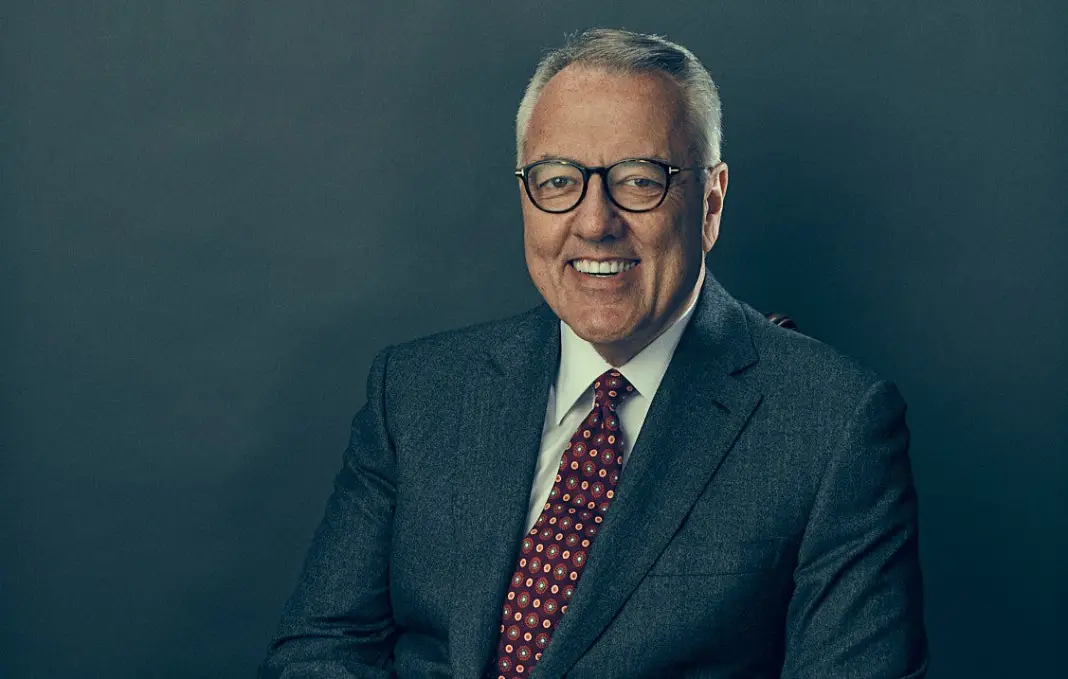
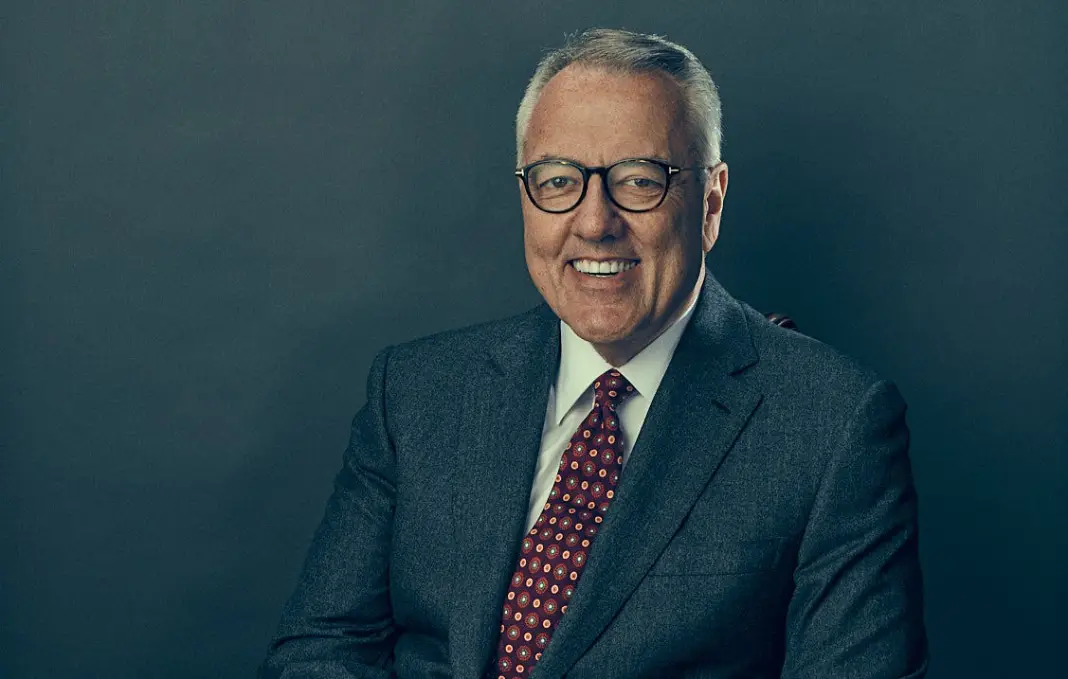
In the high-stakes theater of American corporate leadership, few transformations are as dramatic or as enduring as the one orchestrated by Greg Brown. Nineteen years ago, Motorola was a bloated, struggling conglomerate defined by a handset business that had lost its luster and a balance sheet hemorrhaging over a billion dollars a year. Today, under Brown’s steady hand, Motorola Solutions (MSI) has emerged as a premier "compounder" of value, a $66.5 billion titan focused with monastic discipline on the mission-critical world of public safety and enterprise security.
For his role in navigating one of the most perilous corporate turnarounds in modern history—and for his visionary pivot toward the infrastructure that keeps first responders, governments, and military units connected—the Chief Executive selection committee has named Greg Brown the 2026 CEO of the Year.
The Crucible: A Midnight Reckoning
The turning point for Greg Brown did not occur in a boardroom, but in the quiet, agonizing hours of a 3 a.m. sleepless night in 2008. As the newly minted CEO, Brown was grappling with the weight of an empire in decay. He had already slashed 15,000 jobs, frozen pensions, and initiated a reverse stock split. The iconic Motorola Razr—the device that once defined a generation—had been eclipsed by the smartphone revolution, and the handset division was bleeding cash.
Caught between a restless board, an aggressive activist investor in Carl Icahn, and the genuine fear that the company might not survive the year, Brown was near his breaking point. His wife, Anna, delivered the hard truth that shifted his perspective: "You have no idea how bad this is… there are 75,000 people working for you waiting for you to lead. Eat the elephant one bite at a time and get going."
Brown didn’t look for a miracle; he looked for reality. He began by doing what he knew best: practicing radical, ruthless honesty. He acknowledged that the handset business was a millstone, not a crown jewel, and he moved to separate the company from its past to save its future.
A Chronology of Reinvention
The story of Motorola Solutions is a masterclass in strategic divestiture and focus.
- 2003–2007: Brown joins Motorola to lead the Commercial, Government, and Industrial Solutions Sector (CGISS). He quickly identifies this segment—focused on custom, high-barrier-to-entry communications networks—as the true engine of the company.
- 2008: Brown assumes the CEO role. He immediately initiates the evaluation of strategic alternatives, including the spin-off of the handset division. Despite board pushback, he settles with Carl Icahn, transforming a potential adversary into a catalyst for faster decision-making.
- 2011: Motorola Mobility (the handset business) is officially spun out and subsequently acquired by Google for $12.5 billion. Motorola Solutions is left to focus exclusively on public safety.
- 2014: In a legendary leadership meeting, Brown confronts internal skepticism head-on. He presents the company’s poor historical performance and offers generous severance packages to those who cannot commit to his "North Star" of shareholder return. 15% of the room departs, clearing the way for a more unified culture.
- 2015–Present: Brown executes a series of over 60 acquisitions—including Avigilon, Airwave, and Silvus Technologies—each logically adjacent to the company’s mission.
Data-Driven Performance: The Power of Discipline
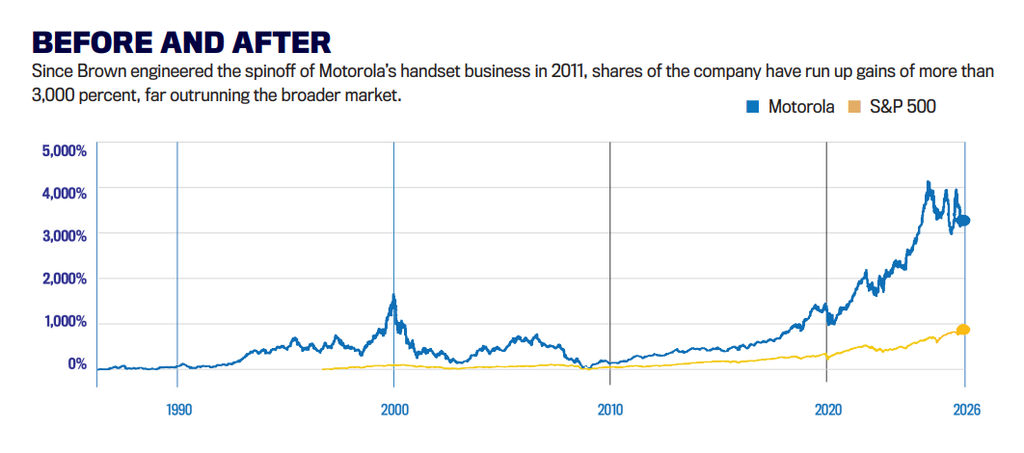
The results of Brown’s "less is more" philosophy are reflected in the numbers. Since the 2011 spin-off, Motorola Solutions has generated a total shareholder return of more than 1,500 percent, vastly outperforming the S&P 500’s 400 percent return over the same period.
The company currently commands $11.7 billion in annual revenue, with a business model built on high switching costs. Whether it is the 911 call center infrastructure for a major city, body cameras for police departments, or secure military communications, these systems are not commodities. They are vital, custom-engineered networks that represent a deep "moat" around the company’s market share. Brown’s refusal to chase "shiny objects" in favor of deep-tech public safety solutions has created a compounder that is the envy of the industrial sector.
Official Responses: Peer Recognition
The selection committee for the 2026 CEO of the Year highlights not just the financial success, but the character of the leadership behind it.
"Greg’s an exceptional leader who has navigated a challenging and complex environment to transform Motorola into a highly valued technology partner for public safety entities around the world," says Marillyn Hewson, former chair and CEO of Lockheed Martin.
Dave Ricks, chair and CEO of Eli Lilly, echoes this sentiment: "The fact that Motorola now sits at the core of public safety communications—protecting communities across the U.S. and around the world—is a testament to his vision and discipline. He is an outstanding choice for CEO of the Year."
The Future: AI as a Lifeline
Brown’s focus has now turned to the next frontier: artificial intelligence. However, he approaches AI with the same pragmatic, "realistic optimist" lens that characterized his earlier restructuring efforts.
He is currently deploying AI to assist 911 operators with real-time translation and threat detection. In a high-pressure scenario, an AI-enabled system can bridge a supervisor into a call the moment it detects a keyword like "weapon," potentially saving precious seconds that translate into thousands of lives saved annually.
Crucially, Brown has established the Motorola Technical Advisory Council (MTAC) and introduced "nutrition labels" for AI products, ensuring that the company maintains its ethical stance on data privacy. "We don’t own the data," Brown emphasizes. "That is very important in public safety. We are not like other companies where I can monetize it for other use cases."
Implications: The Legacy of a "Common" Man
Greg Brown’s path to the corner office was not paved with Ivy League pedigrees or engineering degrees. A graduate of Rutgers University, he credits his parents for his work ethic—his father’s demand for personal accountability and his mother’s boundless optimism.
Perhaps the most defining aspect of Brown’s leadership is his refusal to become an "ego-led" CEO. He maintains the personal phone numbers of nearly 1,000 employees and spends his time "peeling the onion"—asking questions, listening to front-line feedback, and identifying who is driving the firm versus who is blocking it.
"I only do two things as CEO: people and capital allocation," Brown says. His approach to people is rooted in the belief that he must be the "top people guy" in the organization. By fostering a culture of radical candor and continuous learning, he has turned Motorola from a stagnant relic into a vital, innovative partner for global public safety.
For other leaders, the lesson of Greg Brown is clear: Success is not found in the grandiosity of the empire, but in the precision of the mission. By ignoring the distractions of market trends and focusing exclusively on where the company can provide the most value—saving lives and securing communities—Brown has ensured that Motorola will not just survive for another century, but thrive.
As he looks toward the future, Brown remains as energized as ever. "If you said, ‘Would you rather go to the Amalfi Coast or work at Motorola?’—Motorola every time," he says. It is that infectious, genuine belief in the mission that has transformed a company on the brink of death into one of the most extraordinary business success stories of the 21st century.
About the Author