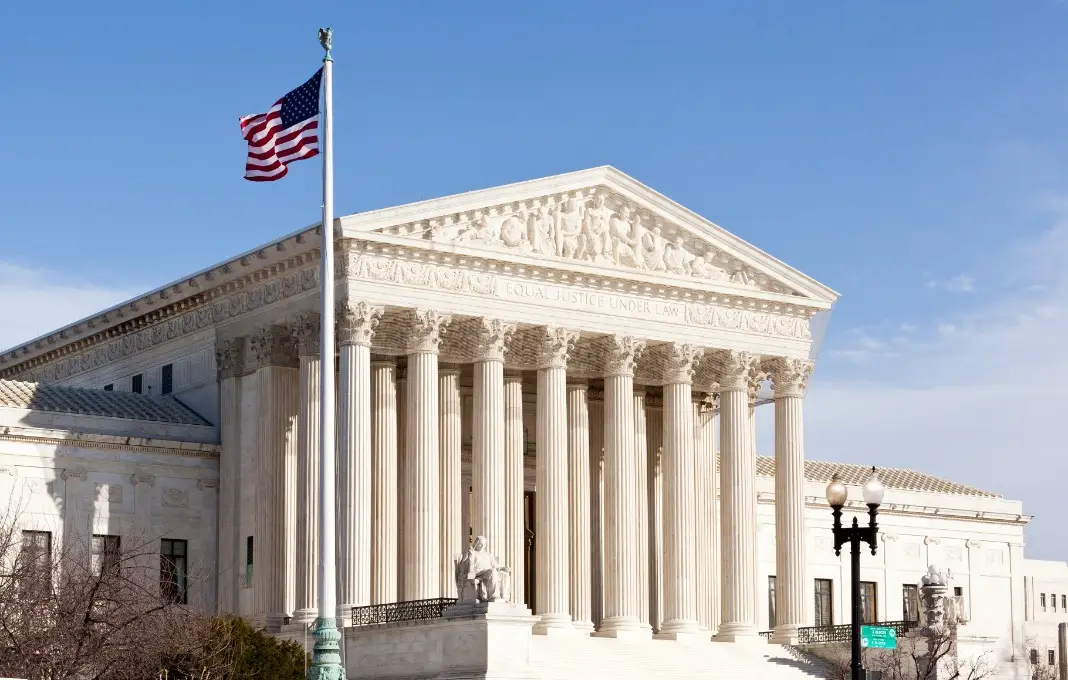
The United States Supreme Court is preparing for a term that promises to test the boundaries of state authority and the constitutional limits of government-imposed penalties. For decades, the Court has adhered to a philosophy of "judicial federalism," a doctrine that empowers individual states to serve as laboratories for democracy, crafting their own civil litigation frameworks and regulatory environments. However, two burgeoning legal battles—one involving the seizure of a private aircraft over a six-pack of beer and another concerning the climate-related liability of global energy giants—are forcing the justices to reconsider how much leeway states should have when their actions clash with federal interests and constitutional protections.
The Tension Between State Sovereignty and Constitutional Limits
The American legal system has long operated under the premise that 50 distinct state jurisdictions allow for a diversity of legal outcomes. This "experimentation" is intended to foster the most efficient and reasonable solutions to societal problems. However, the Court has historically been reluctant to intervene in matters of punitive damages and fines, preferring to leave the nuances of local law to the states.
The Court’s rare departures from this hands-off approach have been narrow. In 2003, in State Farm v. Campbell, the justices struck down a $145 million punitive damage award—45 times the actual damages—establishing a loose guideline that punitive damages should generally fall within a "single-digit ratio" to the actual harm suffered. Similarly, in 1996, the Court pushed back against a $4 million award stemming from a $4,000 paint job on a BMW. Despite these interventions, the Court has consistently avoided establishing a bright-line rule, leaving businesses and plaintiffs in a perpetual state of uncertainty.
As the new term approaches, the Court is poised to confront these traditions head-on. The stakes for the business community are immense: from the oil and gas sector, which faces an onslaught of climate litigation, to pharmaceutical corporations currently entangled in multi-billion-dollar opioid settlements. The core question is whether the Court will continue to prioritize state sovereignty or finally impose a rigid constitutional ceiling on what governments can extract from individuals and corporations.
Chronology: From the Magna Carta to Modern Climate Law
To understand the weight of the upcoming cases, one must look back to the origins of the Eighth Amendment’s Excessive Fines Clause. Its roots trace directly to the Magna Carta of 1215, which stipulated that a "free man shall be fined for a small fault only according to the magnitude of the fault."
Key Legal Milestones:
- 1215: The Magna Carta establishes the principle of proportionality in fines.
- 1800s: The Supreme Court upholds a Maine statute imposing a $5 fine for an under-length lobster, a penalty 100 times the value of the catch, to protect a vital state resource.
- 1996: BMW of North America, Inc. v. Gore. The Court warns against "grossly excessive" punitive damages but fails to set a numerical limit.
- 2003: State Farm v. Campbell. The Court articulates a "single-digit ratio" guideline, suggesting that high punitive awards often violate the Due Process Clause.
- 2024 (Pending): Jouppi v. Alaska and Suncor v. Boulder County reach the high court, setting the stage for a re-evaluation of state power.
The "Six-Pack" Case: Jouppi v. Alaska
Perhaps no case better illustrates the absurdity—and the constitutional gravity—of the current legal landscape than Jouppi v. Alaska. The facts of the case are deceptively simple: Pilot Ken Jouppi was accused of smuggling a six-pack of beer into a remote village where alcohol is strictly prohibited. The State of Alaska, citing a desire to prevent "grave societal harm" such as fetal alcohol syndrome and rampant alcoholism, moved to seize Jouppi’s $95,000 airplane.
For the state, this is a matter of enforcing public health mandates that have been in place since the territorial era. For Jouppi, the seizure is a catastrophic overreach. The pilot argues that he was unaware the beer had been secreted within his cargo load and that the forfeiture of a six-figure asset for an unintentional, minor violation is a violation of the Eighth Amendment’s Excessive Fines Clause.
Supporters of Jouppi argue that if the Court uses this case to enforce the "proportionality" principle derived from the Magna Carta, it could provide much-needed predictability for citizens facing draconian civil forfeiture laws. If the state can seize an airplane for a six-pack of beer, where does the power to penalize end?
The Climate Conundrum: Suncor v. Boulder County
While Jouppi focuses on the individual, Suncor v. Boulder County threatens to upend the global energy market. The case centers on whether Colorado counties—and by extension, local governments across the United States—have the standing to sue oil companies for the localized impacts of global climate change.
The energy industry, backed by an array of business coalitions, argues that these lawsuits are preempted by federal law. The core concern is the "patchwork" effect: if every county and municipality is permitted to sue energy producers for contributing to climate change, the result would be a regulatory and legal nightmare that could effectively bypass federal energy policy.
"If this is allowed to stand," a brief filed by the energy industry argues, "every locality in the country could sue essentially anyone in the world for contributing to global climate change."
The conservative majority on the Supreme Court faces a difficult dilemma. While they are ideologically inclined toward state sovereignty and skeptical of federal overreach, they are equally wary of allowing local courts to dictate national and international energy policy. However, the Court has a procedural "off-ramp." Because the Colorado Supreme Court has only reached a preliminary stage in the litigation, the U.S. Supreme Court could technically decline to exercise jurisdiction, allowing the case to move through the lower courts until a final judgment is reached.
Supporting Data and Economic Implications
The financial stakes of these cases are not merely hypothetical. In recent years, the legal system has seen a shift toward using civil litigation as a form of "de facto regulation."
- Opioid Litigation: Pharmaceutical companies have paid out over $50 billion to settle claims brought by state and local governments.
- Pollution Fines: Even minor regulatory violations—whether in labor, environmental, or safety compliance—can result in cumulative fines that threaten the solvency of mid-sized enterprises.
- Proportionality Gap: Research indicates that in jurisdictions without clear punitive damage caps, the variance in litigation costs for similar offenses can differ by as much as 400% between states.
For businesses, the uncertainty surrounding what constitutes an "excessive" fine or an "allowable" lawsuit is a major drag on investment. When the rules of the game can change based on the county in which a business operates, the efficiency of the national market suffers.
Official Responses and Judicial Outlook
Legal experts remain divided on how the Court will rule. Conservative scholars point to the originalist interpretation of the Eighth Amendment, suggesting that the founders intended to restrict the government’s ability to use fines as a tool for revenue generation or political retribution.
"The Court is looking for a way to rein in the ‘regulation by litigation’ trend," says one constitutional law professor. "Whether it is opioids or climate change, the justices are increasingly uncomfortable with the idea that a single local jury or a county judge can essentially set national policy."
However, others caution against the Court overstepping its bounds. "If the Court begins to micromanage state fines, they are effectively turning the Eighth Amendment into a general-purpose tool for federal judicial oversight of state law," says a legal analyst. "That is a departure from the conservative commitment to federalism."
Implications: A New Era of Litigation?
As the justices prepare for the upcoming term, the legal community is bracing for rulings that could reshape the relationship between the citizen, the corporation, and the state.
If the Court sides with Jouppi, it will send a strong signal that the "Excessive Fines" clause is a dormant giant, ready to be wielded against any government action that lacks proportionality. Such a ruling would provide a powerful defense for businesses and individuals alike, effectively capping the government’s ability to leverage civil penalties.
Conversely, if the Court declines to intervene in the Suncor case, it may signal a continued willingness to let the "laboratory of the states" continue its work, even when that work results in massive, industry-threatening litigation.
Ultimately, the Court’s decisions will answer a fundamental question: Is the American legal system a collection of independent states free to impose their own brand of justice, or is it a unified national entity bound by a supreme, proportional constitutional standard? The answer to that question will define the landscape of American law for the next generation.
About the Author