By [Your Name/Agency]
Reporting from Paris, France
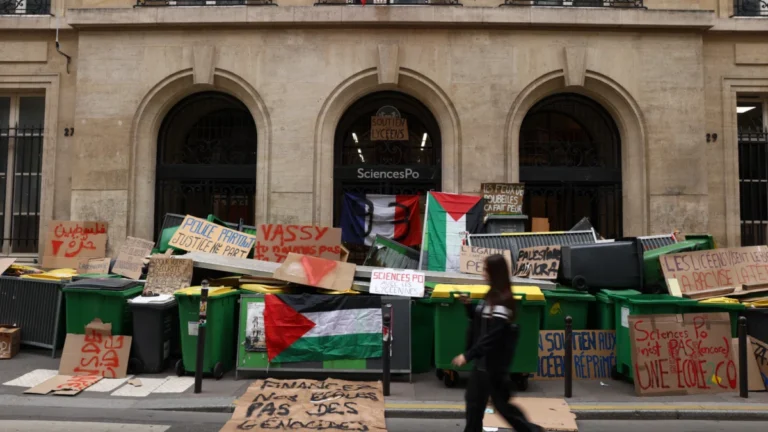
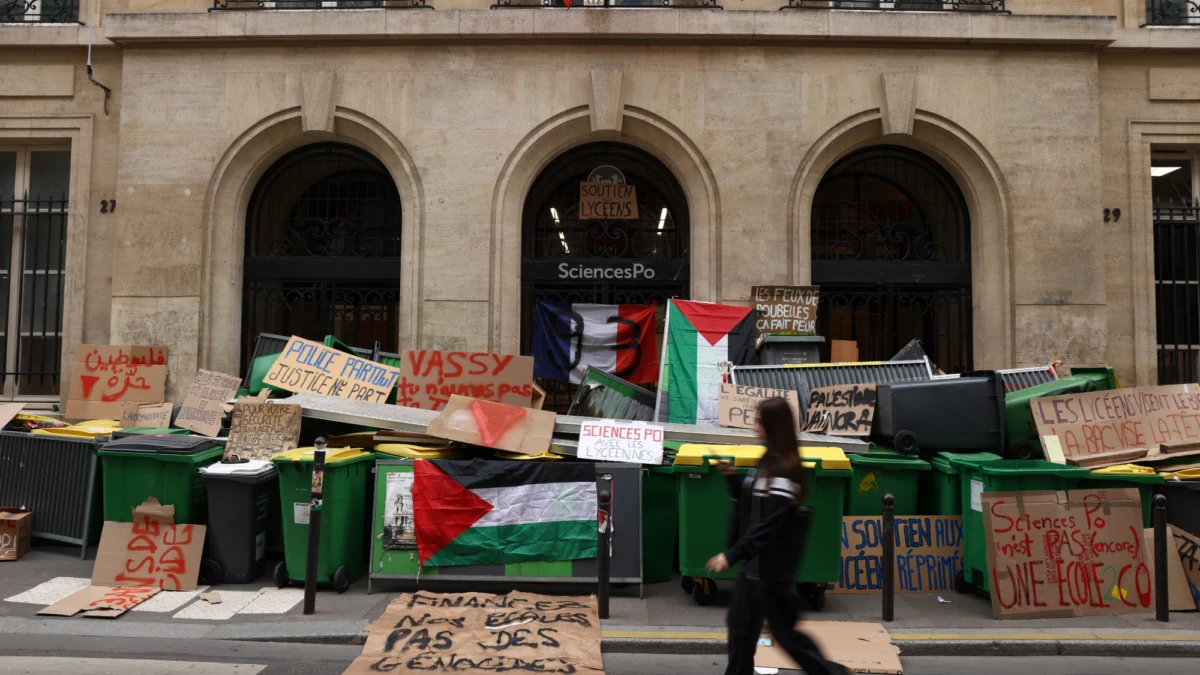
Across France, the hallowed halls of academia have transformed into the frontlines of a generational revolt. For the past four weeks, thousands of students have occupied school entrances, barricaded administrative buildings with waste bins, and marched through the streets of Paris to protest what they characterize as the systemic failure of the French state to protect its youth.
What began as localized grievances over overcrowding and crumbling infrastructure has metastasized into one of the most significant social movements in recent French history. The catalyst? A brutal, record-breaking summer of heat waves that turned centuries-old classrooms into sweltering, unventilated traps, exposing a government policy that many students and climate scientists argue is fundamentally out of step with a warming planet.
The Human Toll: When Classrooms Become Furnaces
For 16-year-old Cléo, a high school student on the eastern periphery of Paris, the breaking point arrived on a Wednesday in June. Amidst the country’s second consecutive heat wave, she attempted to attend a Greek class, only to find herself overwhelmed by a combination of nausea, dizziness, and extreme dehydration.
"I thought I was just tired," she recalled. "But by the next day, the school nurse told me I had to go home immediately." Cléo’s experience was not an anomaly. As record-breaking temperatures frequently climbed past 100 degrees Fahrenheit, schools across France reported a wave of heat-related illnesses, ranging from fainting spells to persistent nosebleeds.
The statistics are grim. This year, France recorded its hottest summer in history, resulting in 8,000 excess deaths. In June alone, mortality rates spiked by 11 percent compared to the same period in 2025. For the students, these deaths are not merely data points; they are a harbinger of the world they have inherited—a world where the school buildings they inhabit are effectively lethal.
A Chronology of the Revolt
The current uprising did not occur in a vacuum; it is the culmination of years of frustration regarding public investment and environmental policy.
- Early June 2026: The first of two major heat waves hits France. Schools, many of which lack air conditioning and are built with materials that trap heat, become unlivable.
- Late June 2026: Sporadic student walkouts occur in Paris, initially focused on the immediate need for better cooling measures and building repairs.
- September 2026: As the new academic year begins with the lingering effects of the summer’s infrastructure failures—including reports of mold, collapsing ceilings, and pest infestations—the protests expand from local issues to a national movement.
- Early October 2026: The movement intensifies. Thousands of students from high schools and universities, including the prestigious Sciences Po, join the picket lines.
- Mid-October 2026: The French government initiates a heavy-handed police response. In just three weeks, approximately 8,000 arrests have been recorded, with 85 percent of those detained being minors.
The Infrastructure Trap: Design Flaws in a Warming World
The structural integrity of French schools has become a focal point for researchers like Marie-Hélène Azam, a professor of engineering science at the National Institute of Applied Sciences. Azam, who leads a project focused on climate-resilient school architecture, explains that the current crisis is a result of design philosophies that are now obsolete.
"Until now, we have designed buildings for energy efficiency in winter," Azam notes. "Traditionally, French schools feature large windows to maximize sunlight and warmth. We need to find a way to reconcile comfort in winter with comfort in summer, and that means designing buildings differently."
The problem is compounded by the "high thermal inertia" of many French buildings. These structures were built to absorb and store heat to keep classrooms warm during cold winters. In a stable climate, this was an asset. In an era of climate-driven heat waves, however, it is a liability. The buildings absorb heat during the day and are unable to cool down sufficiently at night, leading to a cumulative "heat trap" effect.
"With heat waves becoming more intense and lasting longer, we no longer have enough time to cool these buildings down," Azam explains. "As soon as the temperature of the building starts to drop, another even more intense heat wave arrives."

Official Responses and the Policy Tug-of-War
The government’s response has been a mix of financial allocation and security-focused containment. A spokesperson for the Île-de-France region, which oversees high school infrastructure in the Paris area, announced that $1.2 billion had been earmarked for school construction and renovations this year. This includes planned upgrades to roofs and windows. Furthermore, during the height of the summer heat, the regional government allocated $1.1 million to establish temporary exam centers and purchase fans and misting devices.
However, many activists view these measures as "Band-Aids on a broken limb." There is a deep-seated resistance to the widespread installation of air conditioning, both for financial reasons—given Europe’s sky-high energy prices—and for environmental concerns. Critics point out that standard AC units exacerbate the "urban heat island" effect by dumping hot air into the surrounding streets, thereby warming the city even further.
The students are pushing for more holistic solutions: exterior shutters to block solar gain, the integration of green roofs, and passive cooling technologies that utilize water evaporation. But the government’s slow pace in implementing these structural changes has only deepened the divide between the administration and the youth.
Broader Implications: The Politics of Hopelessness
Beyond the immediate concerns of peeling paint and boiling classrooms, the student movement is a profound statement on intergenerational injustice. Many participants, such as university students Margaux Levy and Raphaëlle Richard, view their struggle as part of a larger, existential battle.
"It’s pretty unsettling to see that we’re living in a world where we’re going to die out because of our own actions," Levy said during a protest at Place Vauban. "Everything seems pretty bleak. I feel like nobody is making an effort, and political parties aren’t making it a priority."
The movement has attracted international attention, including a visit from Swedish activist Greta Thunberg. Speaking to students in northern Paris, Thunberg echoed the sentiments of a generation that feels abandoned by the status quo. "This generation is one that has been growing up with a sense of hopelessness," she stated. "We can see our future and our rights taken from us in front of our very eyes. What do they expect? Of course people are going to fight back."
The Path Forward
The French government now faces a delicate dilemma. Continued reliance on police crackdowns risks further alienating a generation that is already deeply disillusioned. Conversely, addressing the systemic demands of the students would require a massive, long-term commitment to infrastructure reform that goes well beyond the current budgetary cycles.
As the protests continue, the demands of the students remain clear: they are calling for an overhaul of the post-secondary application system, smaller class sizes, and, most importantly, a guarantee that their learning environments will be safe in the climate of the future.
For now, the barricades remain. The "green garbage cans" outside schools like Sciences Po have become symbols of a youth movement that refuses to be silenced by heat, police, or political apathy. As winter approaches, the immediate threat of the heat wave may subside, but the underlying tension—between a warming planet and a state failing to adapt—is only beginning to intensify.
The students of France have made one thing clear: they are no longer asking for change; they are demanding a future that does not demand their physical sacrifice. Whether the French political establishment is capable of answering that call remains to be seen.
About the Author