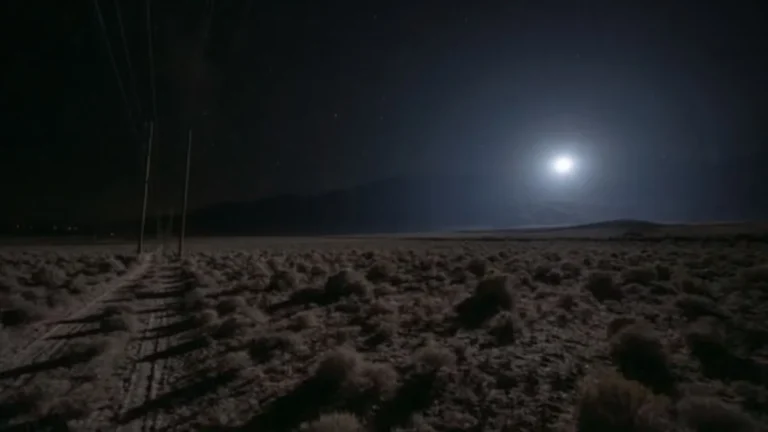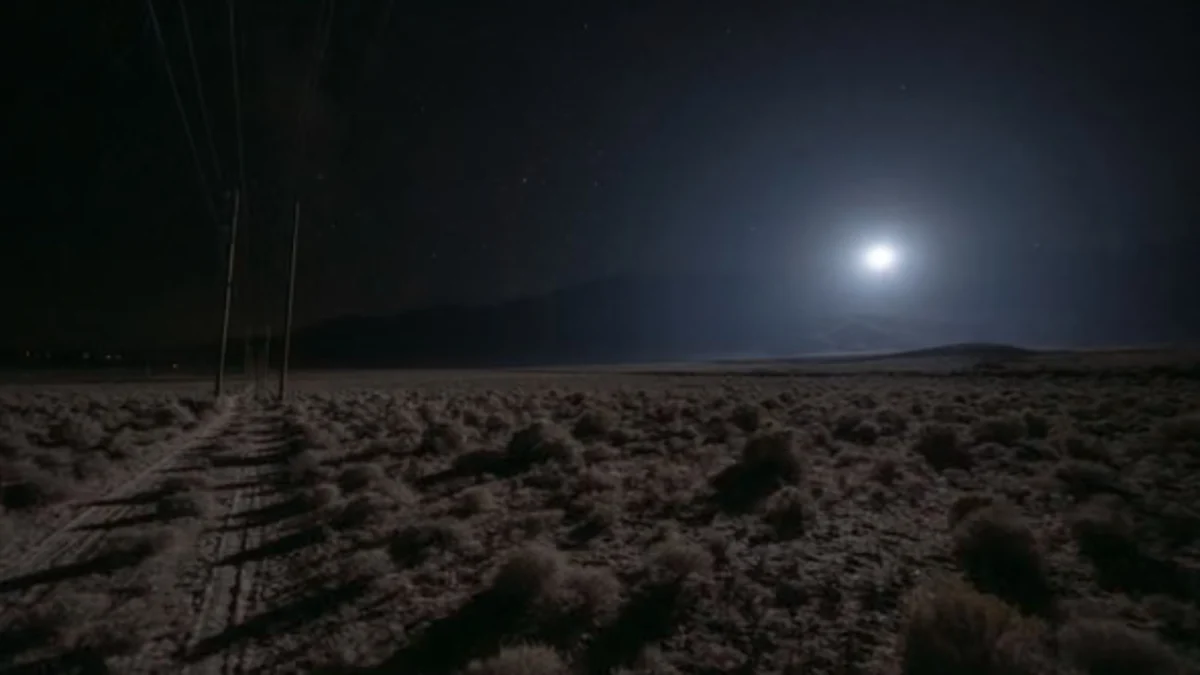
In the quiet, desolate expanses near California’s Death Valley, the natural rhythm of the night was recently shattered. For the residents near Lone Pine, the transition from dusk to darkness is usually absolute, defined by the jagged silhouette of the Sierra Nevada mountains and the canopy of stars. But earlier this month, the darkness was pierced by a blinding, artificial radiance—a deliberate, high-tech intrusion that has sparked a fierce debate over the future of the night sky.
This demonstration was the work of Reflect Orbital, a startup with an ambition that sounds lifted from the pages of a hard science fiction novel: to launch a constellation of 50,000 satellites into orbit, each equipped with massive mirrors capable of reflecting sunlight onto the Earth’s surface long after the sun has set. As the startup moves from conceptual testing to federal authorization, the world is being forced to confront a fundamental question: Do we have the right to commodify the night?
Main Facts: Bringing Noon to Midnight
Reflect Orbital’s technology is predicated on a relatively simple, if dauntingly complex, engineering feat. The company plans to deploy satellites into orbit carrying 59-foot-diameter mirrors. These mirrors are designed to capture sunlight and redirect it toward specific coordinates on Earth, creating beams of illumination roughly three miles wide.
According to company filings and FCC documentation, the intensity of this light can be modulated, ranging from the gentle, ambient glow of a full moon to the searing intensity of a sun at high noon. The recent California test, which featured large mobile lights near Mount Whitney, served as a "proof of concept." The company claims this technology is not merely a novelty but a utility. Proposed applications include:
- Emergency Response: Providing immediate, high-intensity lighting for search-and-rescue teams operating in remote or disaster-stricken areas.
- Agricultural Optimization: Extending the growing season by "bathing" crops in sunlight, theoretically increasing yields.
- Infrastructure Support: Providing temporary illumination for infrastructure repairs or replacing faulty streetlights.
- Energy Generation: Redirecting sunlight to solar farms at night, potentially boosting the efficiency of renewable energy grids.
Chronology of a Controversial Launch
The path to this moment has been rapid, characterized by a mix of technological optimism and regulatory friction.
- Mid-2025: Reflect Orbital enters the public consciousness with its "space mirror" proposal, garnering significant interest from venture capitalists and tech-focused media.
- July 2026: The Federal Communications Commission (FCC) grants approval for an initial demonstration satellite. The decision sends shockwaves through the scientific community, which had largely dismissed the project as too impractical or ethically questionable to receive government backing.
- October 2026: The company conducts its ground-based demonstration in California, partnering with local search-and-rescue teams to showcase the practical utility of the reflected light.
- August 2026 – Present: A coalition of environmental and astronomical organizations, led by Earthjustice, petitions the FCC to reconsider its authorization, citing a lack of comprehensive environmental impact studies.
The Scientific and Environmental Backlash
The resistance to Reflect Orbital is not merely aesthetic; it is deeply rooted in ecology and biology. The most vocal critics point to the fundamental necessity of the diurnal cycle—the biological "clock" that has dictated the evolution of nearly every living organism on Earth for billions of years.
The Ecological Tipping Point
"Literally all of life on Earth evolved based on the rhythm of day and night, and there is a ton of data showing that messing with this is not a good idea," says Jan Hasselman, a senior attorney with the environmental law firm Earthjustice.
Ecologists warn that the introduction of artificial nighttime light on a massive scale could have catastrophic consequences for migratory birds, which rely on celestial cues for navigation. Insects, the bedrock of many global food chains, are also at risk; nocturnal pollinators are frequently disoriented by high-intensity light, leading to population collapses. Mammals, too, depend on the cover of darkness for hunting, mating, and predator avoidance. By "erasing" the night, Reflect Orbital could effectively strip away the ecological niches that millions of species occupy.
The Astronomer’s Lament
For astronomers, the project represents an existential threat to their field. Observatories have already struggled with the increasing proliferation of low-earth-orbit (LEO) satellites, such as those from SpaceX’s Starlink constellation. The addition of "mirror" satellites would exacerbate light pollution to an unprecedented degree.
"We are talking about adding a layer of glare that could fundamentally obscure the stars," says one researcher associated with the DarkSky organization. "If we allow this, we are effectively choosing to look at a corporate-controlled sky rather than the universe itself."

Official Responses and Corporate Strategy
Reflect Orbital has adopted a strategy of "cooperative transparency" in response to the backlash. A company spokesperson emphasized that the California demonstration was conducted in partnership with local authorities, framing the event as a success for public safety.
"Search-and-rescue teams are expected to be our first customers," the spokesperson stated. "We will keep working closely with local communities and authorities wherever we operate, and are excited to show how this technology can help save lives."
The company maintains that it is not operating in a vacuum. They claim to have held "substantive discussions" with members of the scientific community to develop "exclusion zones." Under this framework, areas of high astronomical importance or protected wilderness would remain in the shadows, unmolested by the redirected sunlight. They argue that their technology is an essential tool for the modern era, one that can reduce reliance on fossil fuels by maximizing the utility of existing solar infrastructure.
Implications: A Fundamental Alteration of the Planet
The debate over Reflect Orbital transcends the immediate concerns of light pollution or wildlife disruption. It touches upon the broader, more contentious issue of "geoengineering."
The Geoengineering Paradox
Climate scientists are particularly wary of any project that involves redirecting solar radiation. David Ho, a climate scientist at the University of Hawaii, highlights the irony of the company’s proposal. "Global warming is happening because the Earth has a radiative imbalance due to the massive amounts of greenhouse gases we’ve dumped into the atmosphere," Ho explains. "Some people are promoting the already unhinged idea of installing space mirrors facing away from the Earth to reflect the sun’s energy to decrease global warming. Imagine wanting to turn those mirrors around so that the Earth gets hotter."
While Reflect Orbital’s mirrors are designed for local illumination, the cumulative effect of thousands of such satellites could theoretically alter the local albedo or heat retention of specific regions, potentially creating micro-climates that have not been adequately modeled by current climate simulations.
The Regulatory Void
The case of Reflect Orbital has highlighted a significant gap in international and national space law. Current regulations are largely focused on preventing physical collisions between satellites and managing space debris. They are woefully ill-equipped to address the "moral" or "environmental" impacts of how those satellites behave once they are in orbit.
The petition filed by Earthjustice and its allies to the FCC is a test case. It asks whether a federal agency has the mandate to consider the impact on the "night sky" as a public resource. If the FCC holds firm in its approval, it could set a precedent for the commercialization of the celestial sphere—where every facet of our environment, including the rotation of the planet itself, becomes a service that can be bought, sold, and toggled on via an app.
Conclusion: The Choice Ahead
As Reflect Orbital prepares for its first satellite launch next year, the conflict between progress and preservation is reaching a fever pitch. On one side, a vision of a world where darkness is a managed commodity—a resource to be optimized for safety, industry, and energy. On the other, a plea to respect the primal, unyielding nature of the night, which has remained the one constant for life on Earth since the dawn of time.
Whether the "twilight frontier" will be occupied by millions of mirrors or remain a sanctuary for the stars is a decision that will define the coming decade. As we stand on the precipice of this change, the warning from critics remains clear: once the night is gone, there may be no way to turn it back on.
About the Author