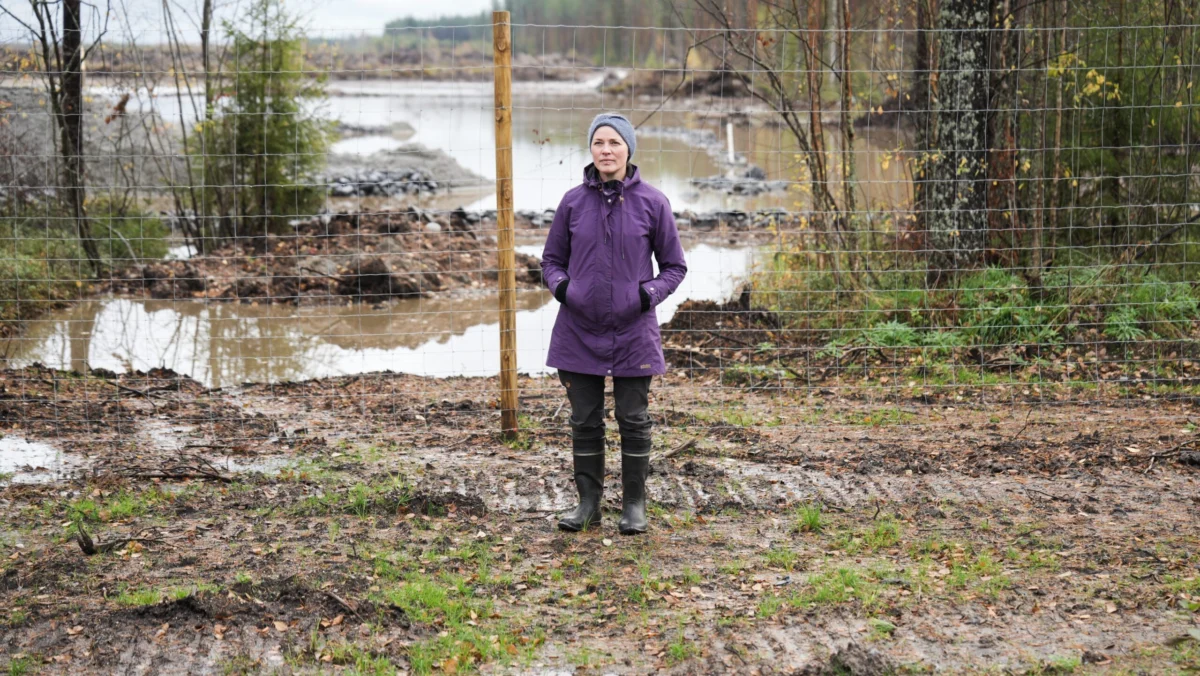
In the quiet, forested reaches of northern Finland, the silence of the wilderness has been replaced by the rhythmic, jarring thrum of heavy machinery. Near the municipality of Muhos, a 815-acre tract of land that was, until just months ago, a dense, carbon-sequestering expanse of trees, now stands as a barren, mud-slicked wasteland. The transformation is so absolute that it feels like a violent excision of the landscape. Nearly a quarter-million trees were felled in a matter of weeks, leaving behind nothing but exposed earth, churned-up roots, and a network of stagnant puddles.
This is the frontline of the global AI gold rush. As tech giants scramble to secure the computing power necessary to feed the insatiable appetite of Large Language Models and generative AI, Finland has emerged as a premier destination. Yet, the recent actions of Google—which cleared this land without obtaining the necessary environmental impact assessments—have ignited a fierce national debate. It is a story of corporate hubris, regulatory gaps, and a country forced to decide whether its natural heritage is a sacrifice zone for the digital future.
The Chronology of a Regulatory Failure
The unfolding crisis in Muhos and the nearby village of Otanmäki did not happen in a vacuum. It is the result of a rapid, aggressive expansion strategy by one of the world’s most powerful corporations.
- Early 2026: Google identifies northern Finland as an ideal location for a massive, multi-billion dollar AI infrastructure project, citing the region’s cool climate—which reduces cooling costs—and political stability.
- Mid-2026: Local municipalities, eager for tax revenue and job creation, fast-track the land acquisition process.
- Late Summer 2026: Without securing the final environmental permits, Google contractors begin the clear-cutting process at Muhos. An estimated 250,000 trees are removed. A similar, smaller-scale clearing occurs at Otanmäki, where another 150,000 trees are felled.
- October 6, 2026: The Finnish Licensing and Supervision Authority (LVV) intervenes, ordering an immediate cessation of all work at both sites. The authority cites a failure to conduct mandatory environmental impact assessments (EIA).
- Mid-October 2026: Public outcry reaches a fever pitch. A national petition against unregulated data center expansion garners over 93,000 signatures.
- Late October 2026: Google issues a formal apology, though it maintains that it acted under the "best understanding of the legislation at the time." The company pledges to work with regulators to rectify the situation.
The Environmental and Social Toll
The ecological impact of the clear-cutting extends far beyond the loss of timber. Ecologists, such as Mari Annala of the Finnish Association for Nature Conservation (SLL), have been tracking the damage from the air. Drone footage reveals sediment-heavy, brown water runoff bleeding from the site into local streams, eventually feeding into the Oulujoki River. The removal of the topsoil has stripped the land of its ability to filter water or sustain local flora.
The social fabric of these rural communities is also fraying. In Otanmäki, a former mining village, residents describe the physical and psychological toll of the disruption. Anni Ranta, a local resident, notes that the destruction of the forest habitat has forced wildlife—including wolf packs—into the residential areas. The heavy construction noise, amplified by the hard-rock geological structure of the region, has made daily life increasingly unbearable for those living on the perimeter of the project.
"It’s like a drum," Ranta says, describing the constant vibration of the earth. Beyond the immediate noise, there is a profound sense of cultural loss. For many Finns, the forest is not merely a resource; it is a fundamental component of the national identity. When an international tech giant treats the landscape as a blank slate for industrialization, the perceived arrogance of the act cuts deep.
The Economic Mirage: Do Data Centers Pay Off?
Google’s $17 billion AI infrastructure project is the largest of its kind in Nordic history. Proponents, including Finnish Prime Minister Petteri Orpo, have championed the deal as a "top priority" for the national economy. The government, currently navigating a period of fiscal austerity and spending cuts, views the investment as a necessary bridge to a modern digital economy.
However, industry experts are beginning to question the math. Jussi Kangasharju, head of computer science at the University of Helsinki, argues that the benefits are significantly overstated. "Really, for Finland, there are no benefits," Kangasharju contends. "These are international companies serving international customers. Very little corporate tax goes to Finland. Data centers ultimately have very little benefit for anyone except the operator."

The criticism is bolstered by the fact that these facilities are massive consumers of electricity. As Finland strives to maintain its status as a leader in renewable energy, there is growing resentment over the idea that the country’s clean energy grid is being utilized to power the computing needs of Silicon Valley, rather than local industry or households.
Official Responses and the "Cold Shower"
The Finnish government finds itself in a delicate position. Caught between the promise of foreign direct investment and a public that is increasingly wary of the environmental cost, Prime Minister Orpo has characterized the Muhos incident as a "cold shower." The phrase suggests a realization that the state’s trust in corporate self-regulation may have been misplaced.
Veli-Matti Uski, director general of the ministry of environment, has signaled that the government is "monitoring the development" and is "prepared to propose legislative amendments." This shift reflects a broader, systemic concern: that the current regulatory framework is incapable of handling the speed at which AI infrastructure is being deployed.
For its part, Google has adopted a conciliatory, if legalistic, stance. A spokesperson stated: "We have operated in Finland for 15 years and have always worked to meet or exceed zoning, environmental, health, and safety requirements." Regarding the current pause, the company claims it is in full compliance with the LVV’s requests and is eager to "strengthen our partnership with Finland."
The company has offered to plant trees across 74 acres at the Muhos site—a gesture that environmentalists have dismissed as "a drop in the ocean" compared to the 815 acres of destruction.
Implications for the Future: A Political Flashpoint
As the April elections approach, the "data center question" is poised to become a central issue in Finnish politics. The conflict represents a collision between the old world and the new: traditional environmental stewardship versus the relentless, high-speed demand for AI compute.
The case has highlighted a critical need for a centralized, national approach to data center planning. Currently, decision-making is largely decentralized to local municipalities. These towns, often struggling with aging populations and a lack of economic opportunity, are vulnerable to being "sold short" by powerful multinationals that promise prosperity in exchange for rapid, often under-scrutinized, development.
The residents of Muhos and Otanmäki, however, are sending a clear message to Helsinki and the world. They are not merely asking for better oversight; they are questioning the fundamental necessity of the projects themselves. As the debate moves from the muddy tracks of northern Finland to the halls of parliament, one thing remains clear: the era of unchecked digital expansion is meeting its first significant barrier. The question is no longer just about where these data centers should go, but whether the environmental and social costs are a price that the Finnish people are willing to pay for a piece of the AI future.
About the Author