For decades, the windswept expanse of Mitivik Island—a tiny, remote speck near the mouth of Hudson Bay—served as a crucial laboratory for understanding the pulse of the Arctic. In the 1990s, when global populations of eider ducks began a mysterious and precipitous decline, the Canadian government established a research station there. It was a modest outpost, but it yielded outsized scientific returns. For thirty years, researchers and Inuit partners from Southampton Island worked in tandem, braving harsh elements to document how a changing climate, shifting sea ice, and emerging diseases were reshaping the northern ecosystem.
Today, that station is silent. In 2024, Environment and Climate Change Canada quietly shuttered the facility. The closure is not an isolated incident but a microcosm of a broader, systemic retreat from Arctic environmental monitoring. As the region experiences the most rapid warming on the planet, the scientific community is finding itself effectively blinded, with research programs being dismantled across the circumpolar world.
The Chronology of a Scientific Retreat
The decline of the Mitivik Island station reflects a broader trend of institutional exhaustion. In the 1990s, the initial impetus for the site was the urgent need to stave off the extinction of nesting eiders. At its peak, the island hosted 8,000 breeding pairs. By the time the government pulled the plug in 2024, that number had plummeted to a few hundred.
This decline mirrored a wider withdrawal of scientific presence. Federal research now continues in only three of Canada’s 14 migratory bird sanctuaries in the Arctic. This pattern extends beyond Canadian borders; from Greenland to Alaska, hundreds of wildlife research endeavors have been shuttered in recent years.
The trajectory of this decline can be traced through several critical phases:
- The 1990s–2000s: A period of robust international collaboration, where researchers identified critical overwintering sites for eiders and established hunting regulations that initially spurred a population recovery.
- 2005–2010: The emergence of climate-linked threats, such as avian cholera outbreaks and the increasing presence of polar bears forced onto land by retreating sea ice.
- 2021–2024: A period of "crushing funding cuts," marked by the suspension of US-Russia climate collaborations due to the invasion of Ukraine, the closure of the Arctic Research Consortium of the United States, and a 10 percent workforce reduction within Environment and Climate Change Canada.
- 2025–Present: A definitive pivot by circumpolar governments away from climate-focused research toward national security and mineral resource extraction.
Supporting Data: A Region in Flux
The ecological stakes are immense. At least 96 Arctic and sub-Arctic mammal and bird species are actively responding to warmer winters and earlier spring snowmelts. These animals are shifting their migratory patterns, traveling further and earlier in search of stability.
However, data consistently shows that these expanded journeys do not equate to better outcomes. Research conducted by the now-defunct stations revealed that new migration routes often lead to nutritional deficits, higher exposure to parasites, and increased predation. Furthermore, the degradation of critical stopover sites—such as the Salton Sea in California—means that as Arctic birds fly further, they arrive at exhausted, human-impacted habitats.
Perhaps most alarming is the discovery of the "mercury buffer." Scientists like Jennifer Provencher found that while warming temperatures increase the prevalence of gastrointestinal worms in eiders, these parasites actually absorb and clear mercury and lead from the ducks’ tissues. As permafrost melts, these heavy metals are leaching into the food chain. The loss of research capability means we are no longer monitoring how this toxic interplay affects the health of both wildlife and the Inuit communities that rely on these birds for subsistence.
The Geopolitical Shift: Resources Over Research
Why are governments abandoning the front lines of climate change at the exact moment the region is destabilizing? The answer, according to experts like Larry Hinzman of the University of Alaska, Fairbanks, lies in a fundamental realignment of priorities.
In the past, Arctic wildlife monitoring was often tethered to the economic justification of oil and gas development. Monitoring caribou, for instance, was essential to ensure that pipelines and drilling pads didn’t cause total population collapses. As the search for oil and gas waned due to the rise of fracking and lower commodity prices, governments turned their attention to the "Climate Change Era."
But that era has now been eclipsed by the "Security Era." Geopolitical tensions, exacerbated by the war in Ukraine and the race for rare-earth minerals, have pushed environmental science to the margins. Canada’s recent commitment of $405 million toward an Arctic highway—part of a $40 billion plan to assert northern sovereignty—dwarfs the meager funding required to keep long-term biological stations operational.
The Arctic Council, once the primary forum for international environmental cooperation, has seen its efficacy crippled by these same geopolitical tensions. When nations prioritize territorial control and resource extraction, the slow, methodical work of counting bird nests or tracking polar bear health is viewed as a luxury expense rather than a national security imperative.
Official Responses and Institutional Silences
When questioned regarding the closure of the Mitivik station and the broader reduction in funding, Environment and Climate Change Canada remained characteristically opaque. In a prepared statement, the department claimed to be "committed to the long-term conservation of biological biodiversity and abundance." They pointed toward "new research programs" involving territorial governments and emerging technologies as a replacement for traditional field presence.
However, scientists on the ground remain skeptical of this "tech-first" pivot. Andrew Derocher, a leading polar bear expert with four decades of experience, argues that technology cannot replace the nuance of in-person, long-term monitoring. "We’ve pretty much stopped any research beyond long-term monitoring in Western Hudson Bay," Derocher notes. "There is almost no other research on polar bears in Canada now."
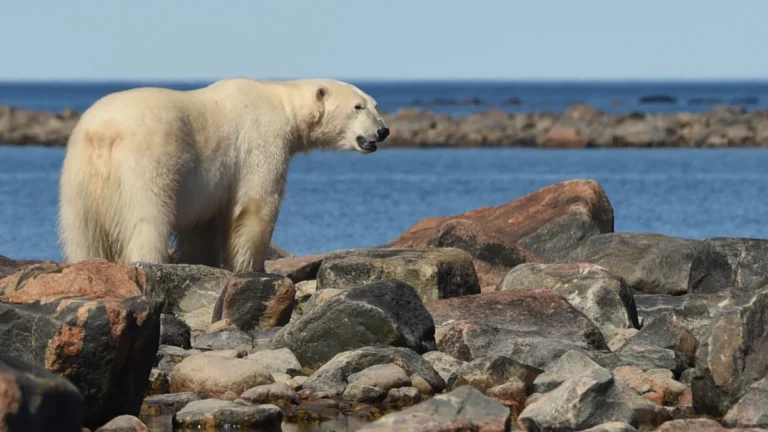
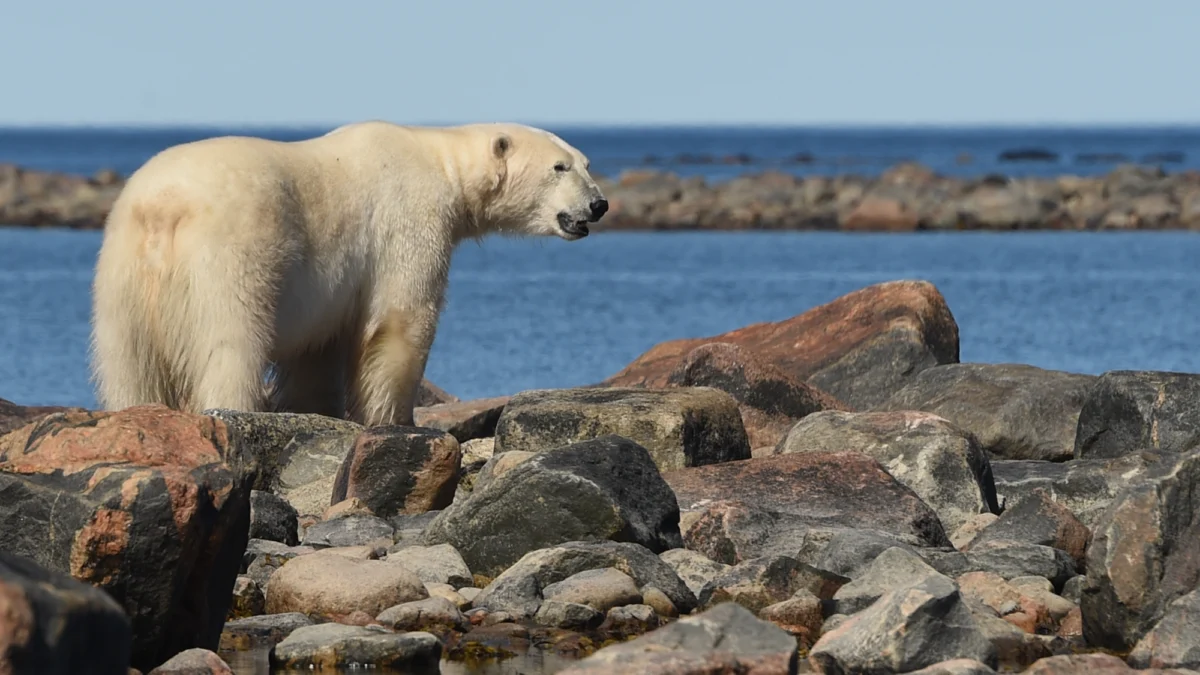
For the polar bear, which calls Canada home for 13 of the world’s 19 populations, this lack of data is catastrophic. Without consistent field observations, scientists are essentially guessing at the survival rates of these apex predators as their hunting platforms—the sea ice—disappear.
The Implications: A Future in the Dark
The implications of this withdrawal are profound. We are witnessing a "silent" transformation of the North. Because the Arctic is so vast—with only a small fraction of its 150,000 residents living above the Arctic Circle—the disappearance of researchers creates a massive informational vacuum.
Indigenous knowledge, which has long signaled the arrival of orcas in new waters, the arrival of grizzly-polar bear hybrids, and the decline of species like the ivory gull, is being isolated. Without the complementary data provided by professional field biologists, these observations remain anecdotal in the eyes of policymakers, who require "hard data" to justify environmental protections.
Ornithologist Mark Mallory, who left his post at the Canadian Wildlife Service out of frustration, offers a sobering assessment: "No credible scientist would deny that not enough is being invested in long-term monitoring. But the bigger problem is not enough is being done to act on what we know is happening."
Mallory’s sentiment captures the despair of a generation of scientists who feel they are documenting a tragedy they have no power to stop. Yet, researchers like Grant Gilchrist, the founder of the Mitivik station, continue to advocate for the necessity of the work. Even as he moves his research to the more cost-effective, bear-sparse Baffin Island, he maintains that the fundamental obligation of science is to bear witness.
"Somebody should still be out in nature monitoring wildlife," Gilchrist says. As the Arctic warms, the glaciers melt, and the permafrost heaves, the world is choosing to turn its back on the evidence. By dismantling the stations that act as the Earth’s early warning system, we are not merely losing data; we are choosing to navigate the coming climate crisis with our eyes closed. The tragedy of the eider duck is merely the first chapter in a story of environmental loss that we are now, by choice, unable to read.
About the Author