In the high-stakes environment of modern manufacturing and chemical processing, spills rarely announce themselves at a convenient time. Whether occurring during routine loading operations, within aging pipe corridors, or in complex tank farms, an uncontrolled release is more than an operational nuisance—it is a potential catastrophe that can compromise worker safety, inflict severe environmental damage, and trigger rigorous regulatory scrutiny.
Industry experts and safety professionals, such as those at CITGO Petroleum Corporation, emphasize that the first sixty seconds of a spill event often dictate the trajectory of the entire incident. During this narrow window, the effectiveness of a facility’s response strategy determines whether the event remains an isolated, manageable occurrence or escalates into a multi-agency environmental crisis.
The Core Strategy: The Stop-Contain-Report Framework
To navigate the chaos that inevitably follows an industrial spill, organizations are increasingly adopting the "Stop-Contain-Report" (SCR) framework. This protocol is not designed to supersede formal Emergency Action Plans (EAPs), Safety Data Sheets (SDS), or mandatory regulatory reporting obligations. Instead, it serves as a high-level cognitive tool for field personnel to translate complex regulatory requirements into immediate, actionable field decisions.
1. Stop the Source (If Safe)
The primary objective is to prevent additional material from entering the environment. This may involve closing manual valves, engaging emergency shutdown switches, uprighting toppled drums, or isolating damaged piping. Critically, this step is conditional: it must only be performed if the responder can do so without risking their own physical safety.
2. Contain the Material
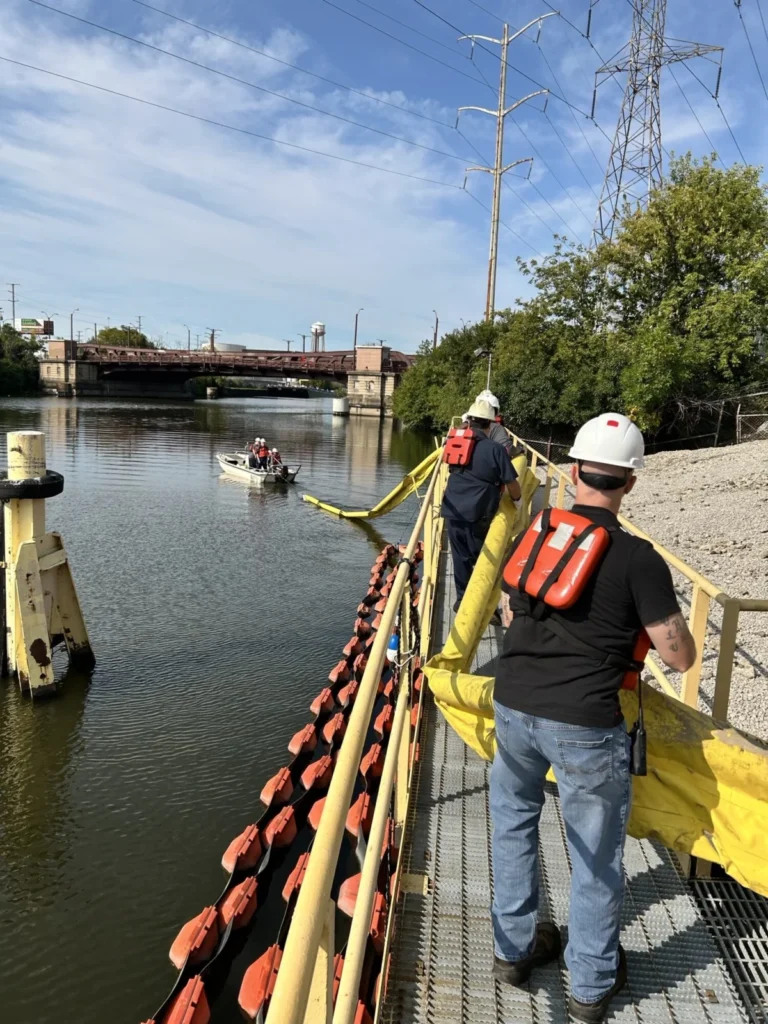
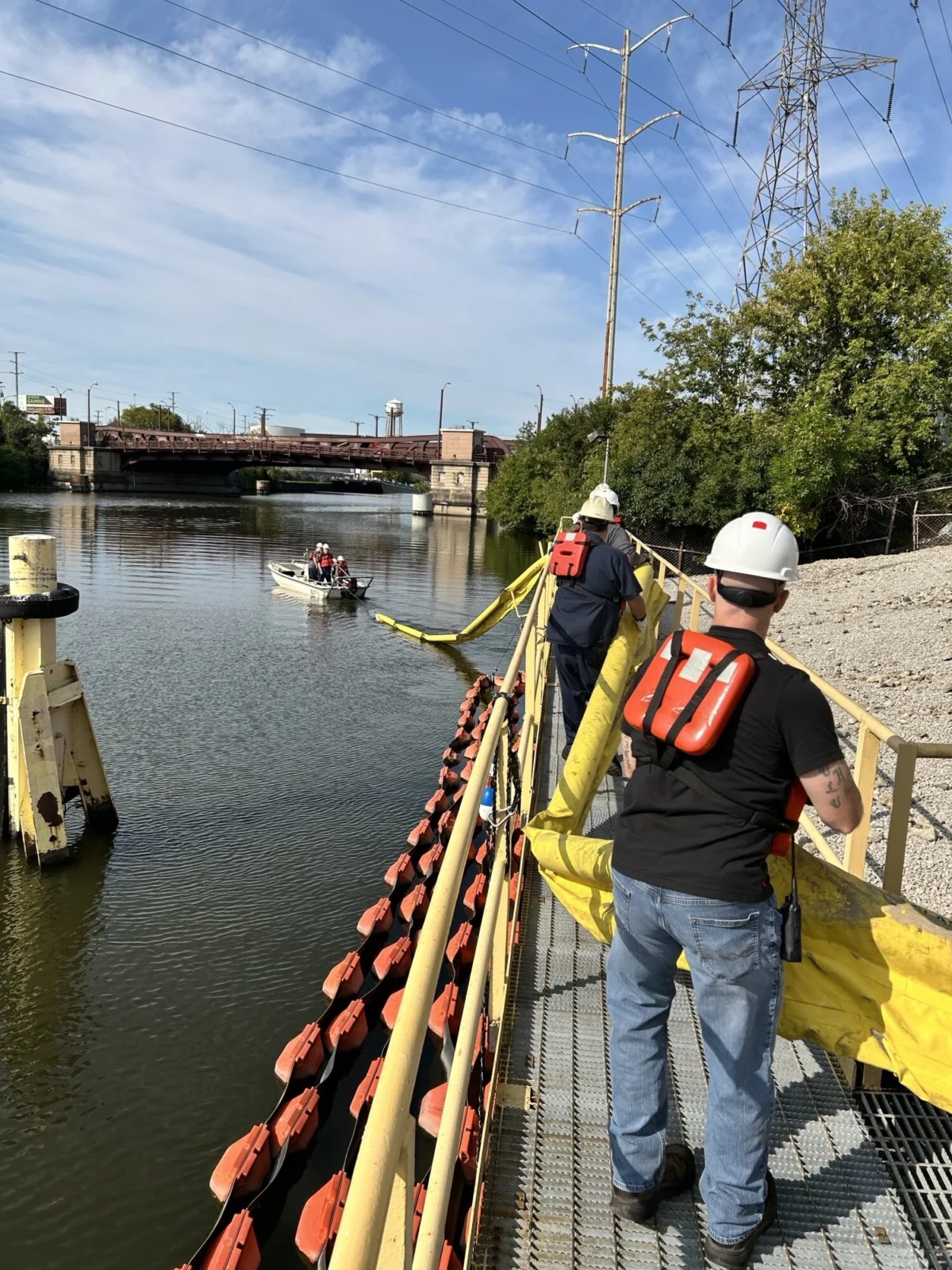
Containment is the tactical bridge between the initial breach and final cleanup. The goal is to create a physical barrier between the spilled substance and the facility’s sensitive infrastructure—specifically drains, unpaved soil, waterways, and active traffic lanes. When a spill reaches a municipal stormwater system or an unprotected floor joint, the costs and complexity of remediation grow exponentially.
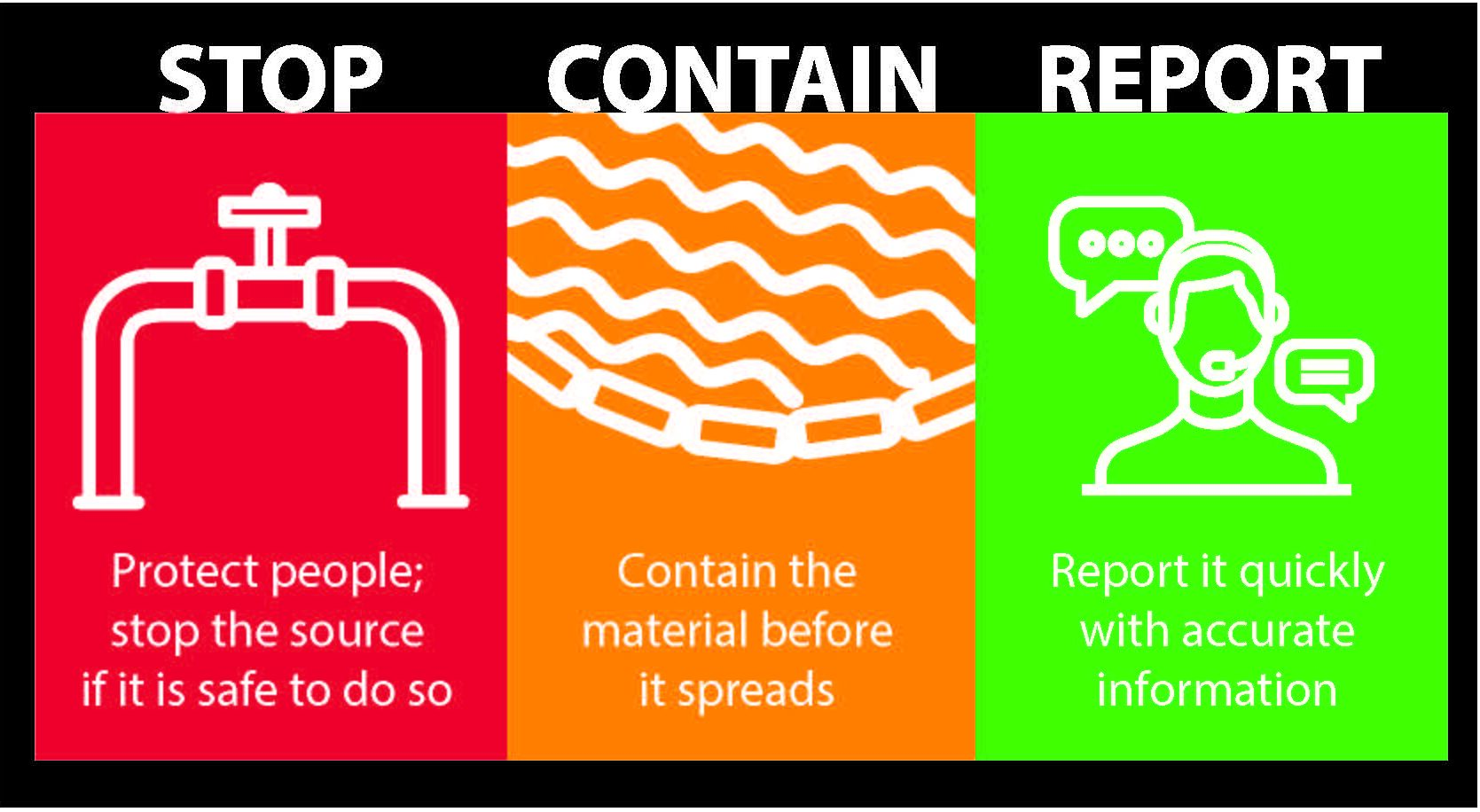
3. Report with Precision
Reporting is the vital communication link. Immediate internal notification ensures that the facility’s Incident Command, EHS department, and leadership are aware of the breach, allowing for the deployment of resources. External reporting, such as notifying the U.S. Environmental Protection Agency’s (EPA) National Response Center (NRC), is a non-negotiable legal requirement that must be managed with accuracy and speed.
Chronology of a Crisis: From Detection to Resolution
The timeline of an industrial spill is unforgiving. Understanding the phases of a response allows facilities to identify where their current processes may be failing.
- T-Minus 0:00 (Detection): The spill occurs. Immediate identification of the substance and the source is required.
- T-Plus 0:01 (Assessment): The "Protect People" phase. Responders assess the immediate life-safety hazards: fire, toxic fumes, or slip/fall risks. If the risk is unacceptable, evacuation is the only appropriate response.
- T-Plus 0:02–0:05 (Tactical Intervention): The SCR framework is activated. Trained employees attempt to stop the flow and initiate containment, using spill kits or secondary containment systems.
- T-Plus 0:05–0:15 (Communication): The internal chain of command is activated. Essential personnel are notified, and initial site stabilization is documented.
- T-Plus 0:15–0:60 (Escalation and Cleanup): Based on the scale and nature of the spill, the site manager determines if the incident can be resolved in-house or if external emergency responders and hazardous material teams are required.
- Post-Event (Reporting and Analysis): Once the site is secure, comprehensive documentation—including photography and witness statements—is gathered to satisfy regulatory requirements and inform root-cause analysis.
Supporting Data: Why Preparedness is an Operational Imperative
The frequency of spills is often tied to the "hidden" vulnerabilities of aging infrastructure. Many manufacturing sites handle a vast array of lubricants, specialty solvents, and coolants. The most common failure points are rarely catastrophic structural collapses; they are typically the result of long-term degradation:
- Worn Piping and Deteriorated Hoses: Mechanical fatigue often goes unnoticed during standard operations.
- Valve and Gasket Failure: Small, persistent leaks are often ignored until they reach a tipping point.
- Human Error: Overfills and transfer mistakes remain among the leading causes of spills.
Data from environmental safety audits consistently show that facilities with formalized, practiced response plans experience cleanup costs that are 40% to 60% lower than those that rely on improvised, ad-hoc responses. Furthermore, the presence of secondary containment—such as oil-water separators and collection pits—is the single most effective engineering control for preventing small leaks from becoming reportable environmental violations.
Official Responses and Regulatory Expectations
The U.S. EPA maintains a strict oversight regime regarding spill prevention. The Spill Prevention, Control, and Countermeasure (SPCC) rule and the Facility Response Plan (FRP) requirements serve as the bedrock of federal oversight. These regulations are not merely bureaucratic hurdles; they are designed to force facilities to map their flow paths and pre-stage resources.
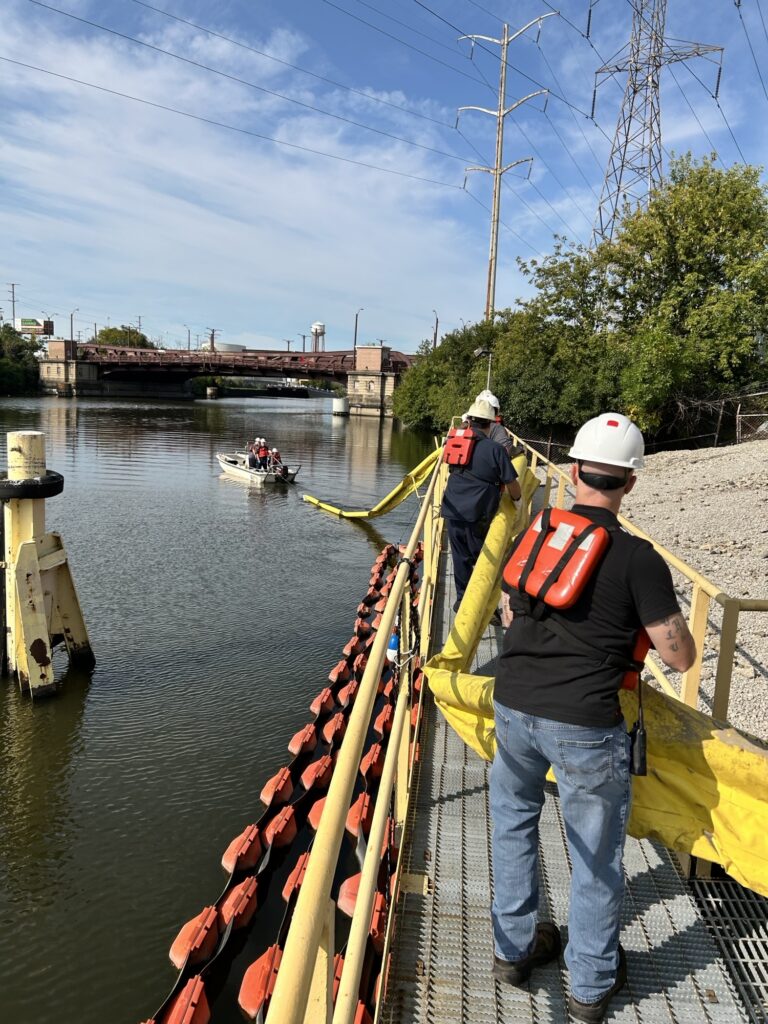
According to federal guidance, waiting for a spill to be "cleaned up" before reporting is a common regulatory pitfall. Facilities must be prepared to notify authorities the moment it becomes clear that a threshold for reportable quantity has been exceeded. The NRC serves as the federal clearinghouse for these reports, triggering the National Contingency Plan when necessary. By failing to report accurately and on time, companies invite heavy fines and permanent damage to their reputation with local environmental agencies.
Implications: Building a Culture of Vigilance
The transition from a reactive to a proactive safety culture requires more than just buying spill kits. It requires a fundamental shift in how employees perceive their role in site security.
The Dangers of Improvisation
When employees are uncertain about their roles, the response becomes improvised. Improvisation leads to gaps in documentation, delayed containment, and, most dangerously, unnecessary exposure to hazardous materials. If an employee does not know if a spill is "incidental" or "major," they may inadvertently place themselves in harm’s way.
The Role of PPE and Documentation
A recurring lesson in industrial safety is the tendency of well-intentioned staff to rush. This often leads to using incorrect Personal Protective Equipment (PPE) or neglecting to record the scene. Before any cleanup begins, responders should be trained to:
- Verify the chemical compatibility of gloves and respirators using the SDS.
- Document the spill through photos and logs before the area is disturbed, which is essential for insurance and regulatory compliance.
The Myth of "Small" Spills
One of the most dangerous misconceptions in industrial settings is that the severity of a spill is determined solely by volume. A few ounces of a highly reactive or toxic chemical in an environmentally sensitive area—such as near a storm drain—is infinitely more dangerous than 500 gallons of a benign lubricant contained within a bermed area. Decisions must always be based on the intersection of hazard, exposure, and containment capability.
Conclusion: Continuous Improvement
Improving spill preparedness is not a one-time project; it is an ongoing operational commitment. Facilities should treat spill response as an essential part of daily production. By conducting regular drills, ensuring spill kits are strategically placed and fully stocked, and maintaining an open line of communication regarding "near misses," management can significantly mitigate the risk of a catastrophic event.
Ultimately, the goal is to create a workforce that is so well-trained that, when the unexpected occurs, the response is instinctive. By adhering to the Stop-Contain-Report framework, companies can protect their people, preserve the environment, and maintain the integrity of their operations in the face of even the most challenging circumstances.
Disclaimer: This information is provided for educational purposes and reflects common industry practices regarding spill response. It is not intended to serve as a legal opinion, standard operating procedure, or a substitute for site-specific professional consultation. All facilities must evaluate their unique operations, hazards, and regulatory requirements in accordance with local, state, and federal laws.
About the Author