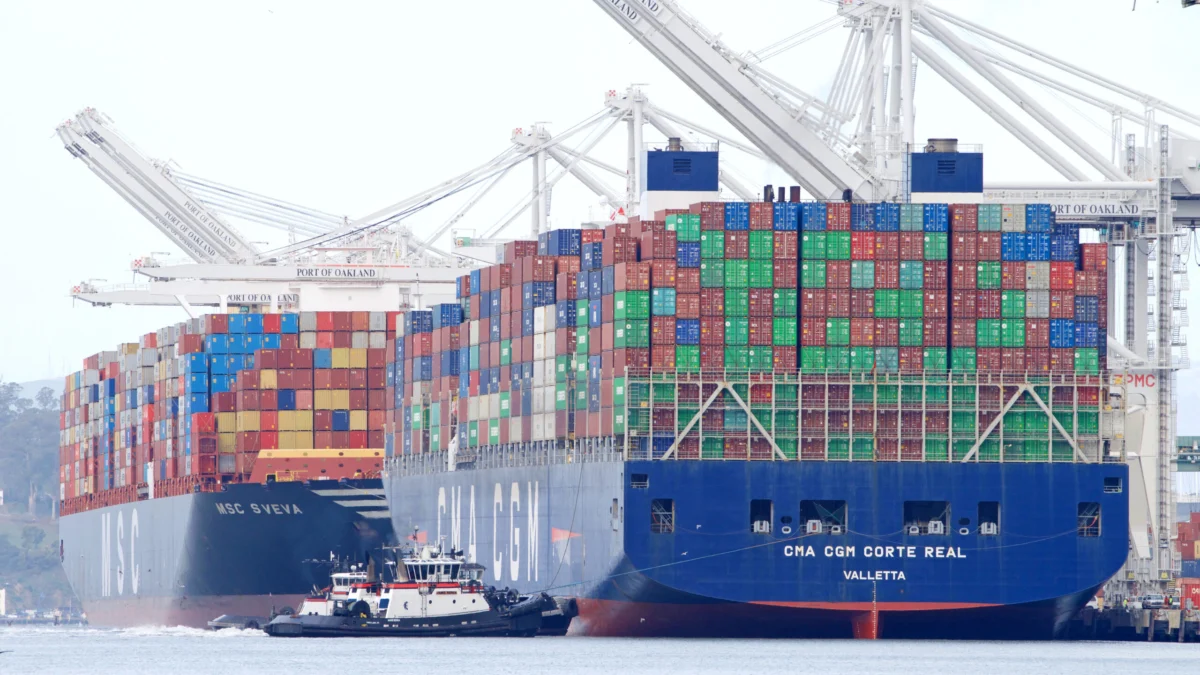
In the high-stakes world of global trade, the physical movement of goods is only half the battle. Behind every container ship crossing the Pacific and every truck navigating a cross-border checkpoint lies a silent, complex, and often overwhelming paper trail. For freight forwarders, customs brokers, and logistics service providers (LSPs), the modern supply chain is increasingly defined by a “document dilemma”—a relentless deluge of invoices, manifests, and declarations that threaten to capsize operational efficiency.
However, a technological paradigm shift is underway. Artificial Intelligence (AI) is no longer a futuristic concept for the logistics sector; it is the engine driving a fundamental transformation in how companies manage workflows, from warehouse automation to intricate trade compliance. As firms grapple with rising costs and a volatile regulatory landscape, AI has emerged as the definitive competitive differentiator.
Main Facts: The AI-Driven Supply Chain
The integration of AI into logistics is moving beyond simple digitisation. It represents a shift toward "intelligent orchestration." Modern logistics enterprises are deploying AI to manage three critical areas: shipment execution, trade compliance, and document management.
At its core, the shift is about velocity and accuracy. Traditional logistics workflows have historically been hampered by manual, repetitive tasks—often referred to as "swivel-chair" processes, where employees must constantly toggle between disparate systems to reconcile data. AI is dismantling these silos by automating the extraction, interpretation, and validation of data, allowing logistics teams to focus on high-value decision-making rather than mundane data entry.
Chronology: From Manual Entry to Agentic AI
The evolution of logistics technology can be traced through three distinct eras:
- The Manual Era (Pre-2010s): Documentation was handled via physical paper or basic digital files. Data entry was performed manually, leading to high error rates, significant bottlenecks at customs, and limited scalability.
- The Digitization Era (2010–2020): The introduction of Optical Character Recognition (OCR) allowed companies to convert images and PDFs into machine-readable text. While this reduced physical paper clutter, it still required human intervention to interpret the context of the data and move it into ERP (Enterprise Resource Planning) or TMS (Transportation Management Systems).
- The Agentic AI Era (2020–Present): We are currently witnessing the rise of Intelligent Document Management (IDM). By combining OCR with Machine Learning (ML) and Natural Language Processing (NLP), these systems don’t just "read" a document; they understand its logistics context. Furthermore, the latest evolution involves "agentic AI"—autonomous digital assistants that reside directly within the software platforms employees already use, eliminating the need for external tools or manual handoffs.
Supporting Data: Why AI is a Strategic Imperative
The urgency of this transition is backed by robust industry data. According to a 2025 benchmark survey by Descartes, the adoption of AI is no longer a "nice-to-have" but a core business requirement for survival.
- Top Competitive Advantage: 65% of respondents identified "implementing AI solutions to increase efficiency" as the single most valuable technology investment for their organization over the next two years.
- Scalability Metrics: Firms utilizing advanced AI document management are reporting the ability to handle significantly higher shipment volumes without a proportional increase in headcount.
- Error Reduction: By removing the human element from data re-keying, companies are seeing drastic reductions in compliance risk—a critical factor given the escalating complexity of global trade regulations.
These figures underscore a critical truth: the companies that fail to integrate AI into their core workflows are effectively choosing to operate with a structural disadvantage that will grow more pronounced as competitors achieve faster, more accurate, and lower-cost operations.
Official Industry Perspectives: The Human-in-the-Loop Requirement
Despite the hype surrounding "automation," industry leaders and technology experts maintain a nuanced view of the role of human workers. The consensus is clear: AI is not a replacement for human intellect; it is a force multiplier for it.
"Customs AI that ignores the operator is built to fail," notes a recent analysis by Global Trade Magazine. This perspective highlights that logistics is a domain governed by subjective compliance decisions and complex legal nuances that algorithms cannot fully resolve.
The industry’s "human-in-the-loop" model ensures that while AI handles the high-volume, repetitive tasks—such as verifying line items on a 200-page commercial invoice—the final sign-off and high-level compliance strategy remain firmly in the hands of experienced customs brokers and logistics managers. This hybrid approach ensures that the business gains the efficiency of machine speed while retaining the safety net of human expertise.
Implications: The End of the "Swivel-Chair" Tax
The most profound implication of the new wave of AI-driven IDM technology is the death of the "swivel-chair tax." In the past, even with digitization, employees were forced to act as the bridge between different software platforms. They would extract data from an OCR tool, open an ERP, input the data, check a compliance database, and then update a TMS.
Breaking Down the Bottlenecks
The new generation of AI agents integrates directly into existing logistics applications. By embedding the intelligence into the workflow, the system acts as an invisible assistant. For instance, when a new shipping manifest arrives, the AI agent automatically identifies it, extracts the relevant shipment data, validates it against the company’s internal business rules, and prepares the data for the customs entry—all without the user ever leaving their primary interface.
The Economic Impact
This integration results in three primary economic benefits:
- Reduced Implementation Complexity: Because these solutions are increasingly modular and cloud-native, the time-to-value is shorter than legacy custom software integrations.
- Compliance Agility: As trade regulations change, AI systems can be updated to reflect new requirements instantly, ensuring that documentation remains compliant across jurisdictions.
- Revenue Growth: By accelerating the speed at which a shipment can be cleared, logistics companies can improve their cash-to-cash cycles and offer superior service levels to their clients, thereby winning more business in a competitive market.
The Path Forward: Embracing the Future
As we look toward the remainder of the decade, the divide between "digitized" and "intelligent" logistics companies will widen. The warehouses and trucking fleets of the world remain the physical face of global trade, but the "invisible" supply chain—the documentation and the data—is what dictates the pace of commerce.
For customs brokers, freight forwarders, and LSPs, the message is clear: the future belongs to those who view their documentation not as a burden, but as a data asset. By leveraging agentic AI to transform static, unstructured documents into operationally ready data, these firms can unlock levels of productivity that were previously impossible.
Ultimately, the goal is to liberate logistics professionals from the tedium of manual data entry, allowing them to focus on what truly matters: providing strategic value, managing complex compliance issues, and ensuring that the flow of goods across borders remains as frictionless as possible. The technology to achieve this exists today; the task now lies in the hands of leadership to implement these tools and empower their teams for a more efficient, AI-augmented future.
About the Author