By Editorial Staff | November 6, 2026
In a landmark development for the artificial intelligence sector, OpenAI has successfully secured $11 billion in a new funding round, pushing its total valuation to an unprecedented $1.25 trillion. This capital infusion, confirmed by sources familiar with the transaction, marks a pivotal moment for the San Francisco-based AI giant as it navigates a volatile macroeconomic environment and mounting pressure from regulators and investors alike.
The funding round, while substantial, remains ongoing. According to reports, the company is actively working toward a larger close that could see the total capital raised reach $20 billion in the coming weeks.
Main Facts: The Anatomy of the $1.25 Trillion Valuation
The current injection of $11 billion serves as a significant vote of confidence in OpenAI’s long-term infrastructure and research capabilities. Despite falling short of the ambitious $30 billion target reported by Bloomberg in late September, the achievement of a $1.25 trillion valuation cements OpenAI’s position as one of the most valuable private enterprises in history.
The capital is expected to be directed toward two primary pillars: the massive computational requirements needed to train next-generation large language models and the expansion of the company’s enterprise-facing product suite. As OpenAI transitions from a research-focused lab to a commercial powerhouse, the cost of "compute"—the raw power required to run sophisticated AI—has become the single most significant line item on the company’s balance sheet.
Chronology: The Road to the Latest Funding
The trajectory of OpenAI’s valuation has been nothing short of meteoric, though it has not been without significant turbulence.
- September 2026: Initial reports emerge suggesting that OpenAI is preparing for a massive funding round, with internal targets set at $30 billion. At this stage, market sentiment remained bullish, and the $1.4 trillion valuation goal appeared within reach.
- Early November 2026: Following a week of political and market instability, the company concludes the first $11 billion tranche of its funding, settling at a $1.25 trillion valuation.
- November 5, 2026: In a significant strategic pivot, company leadership, including Greg Brockman, indicates that the firm is now positioning itself for an Initial Public Offering (IPO) in 2027, officially abandoning the aggressive push for a 2026 public debut.
- November 6, 2026: Market analysis reveals a cooling of investor sentiment toward AI startups, with specific attention drawn to the softening valuation of OpenAI’s direct competitor, Anthropic.
Supporting Data: A Cooling Market for AI Titans
While OpenAI’s $1.25 trillion valuation is undeniably massive, the context provided by the broader market suggests a cooling trend. On the same day the OpenAI funding was confirmed, reports indicated that prospective buyers for shares in Anthropic—OpenAI’s primary rival—are balking at previous valuation expectations.
Just one month ago, investors were pricing Anthropic at approximately $2 trillion. Current market estimates, however, suggest a dramatic correction, with some buyers eyeing valuations as low as $1.1 trillion. This "AI rout" has sent ripples through Silicon Valley, causing investors to re-examine the price-to-earnings ratios of companies that have yet to demonstrate consistent, long-term profitability.
The broader tech sector has also been under duress. Following the recent U.S. midterm elections, which resulted in a landslide victory for the Democratic Party, markets have reacted with visible jitters. The election outcome, paired with rising public and political scrutiny regarding the environmental and social impact of energy-intensive AI data centers, has created a climate of uncertainty. The Nasdaq has experienced significant downward pressure, reflecting broader investor anxiety over potential future regulatory hurdles.

Official Responses and Corporate Strategy
As of the time of publication, OpenAI has maintained a guarded stance regarding the specifics of the deal. When reached for comment, representatives for the company did not immediately provide a statement. However, the firm’s strategy is becoming increasingly clear through its public-facing communications.
The delay of the IPO from 2026 to 2027 is widely interpreted as a defensive maneuver. By waiting, OpenAI gains additional time to stabilize its revenue streams and solidify its transition to an enterprise-first model. Greg Brockman has publicly stated that the majority of the company’s sales now originate from enterprise clients, a shift that provides a more predictable revenue base compared to consumer-facing subscription services. This pivot is crucial for convincing institutional investors of the company’s long-term viability before they ring the opening bell on the New York Stock Exchange.
Implications: What This Means for the Future of AI
The $11 billion funding round and the subsequent $1.25 trillion valuation hold profound implications for the future of artificial intelligence.
1. The Capital Intensity Barrier
The sheer scale of the investment required to remain competitive in AI is creating a de facto oligopoly. With $11 billion in a single round, OpenAI is further distancing itself from smaller startups that lack the capital to train frontier models. This environment suggests that only the wealthiest entities—often backed by "Big Tech" partners—will have the capacity to push the state of the art in generative AI.
2. The Regulatory Horizon
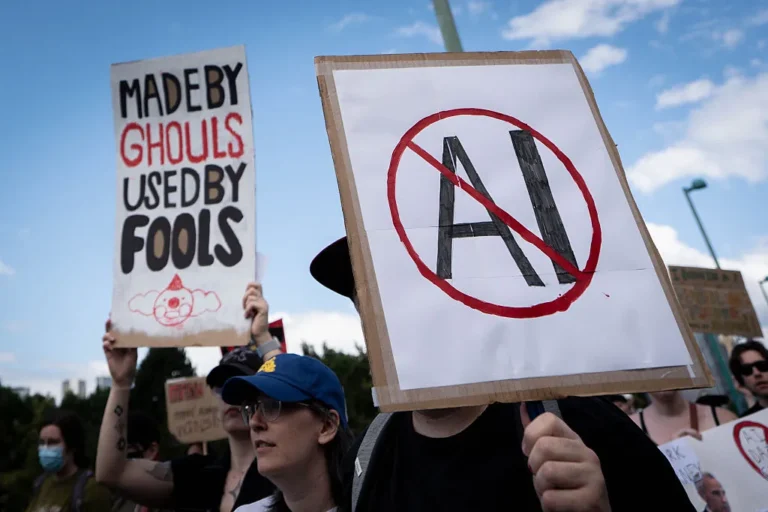
The political climate in the United States is shifting. The voter sentiment regarding the energy consumption of data centers—often cited as a major point of contention in local community protests across the U.S.—is now a federal concern. Should the government move to impose stricter environmental or operational regulations on AI infrastructure, companies like OpenAI may face increased overhead and operational delays. The market’s current nervousness is a direct reflection of this looming regulatory uncertainty.
3. Market Valuation Corrections
The discrepancy between the $2 trillion expectations for Anthropic last month and the $1.1 trillion reality today signals a transition from "hype-driven" investing to "fundamentals-driven" investing. Investors are no longer merely betting on the potential of AI; they are now requiring clear evidence of sustainable business models. For OpenAI, the challenge will be to justify its $1.25 trillion valuation when it eventually hits the public markets. If the company cannot show a clear path to profitability that justifies such a price tag, it risks a disastrous IPO performance similar to other over-valued tech debuts of the past.
4. The Path to 2027
The decision to wait until 2027 to go public gives OpenAI a "runway" to navigate the current market volatility. During this time, the company is expected to continue aggressively scaling its API services and enterprise partnerships. Whether the market will remain receptive to a $1 trillion-plus valuation by then remains the primary question for analysts and stakeholders alike.
Conclusion
OpenAI’s latest funding round is a testament to the company’s undeniable influence on the global technological landscape. Yet, it also serves as a warning sign. In an era where AI development is increasingly tethered to political sentiment, energy policy, and the cooling of venture capital appetites, the "AI gold rush" is entering a more mature, and perhaps more difficult, phase. As OpenAI marches toward its eventual IPO, the eyes of the financial world remain fixed on whether the company can transform its massive funding into a sustainable, profitable future that can withstand the scrutiny of the public market.
About the Author