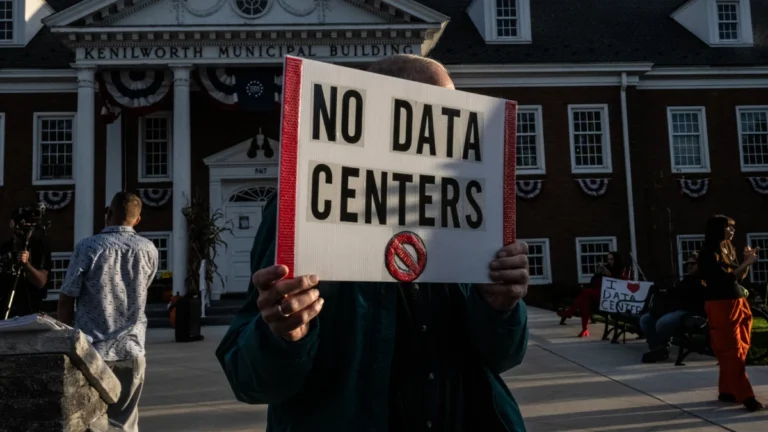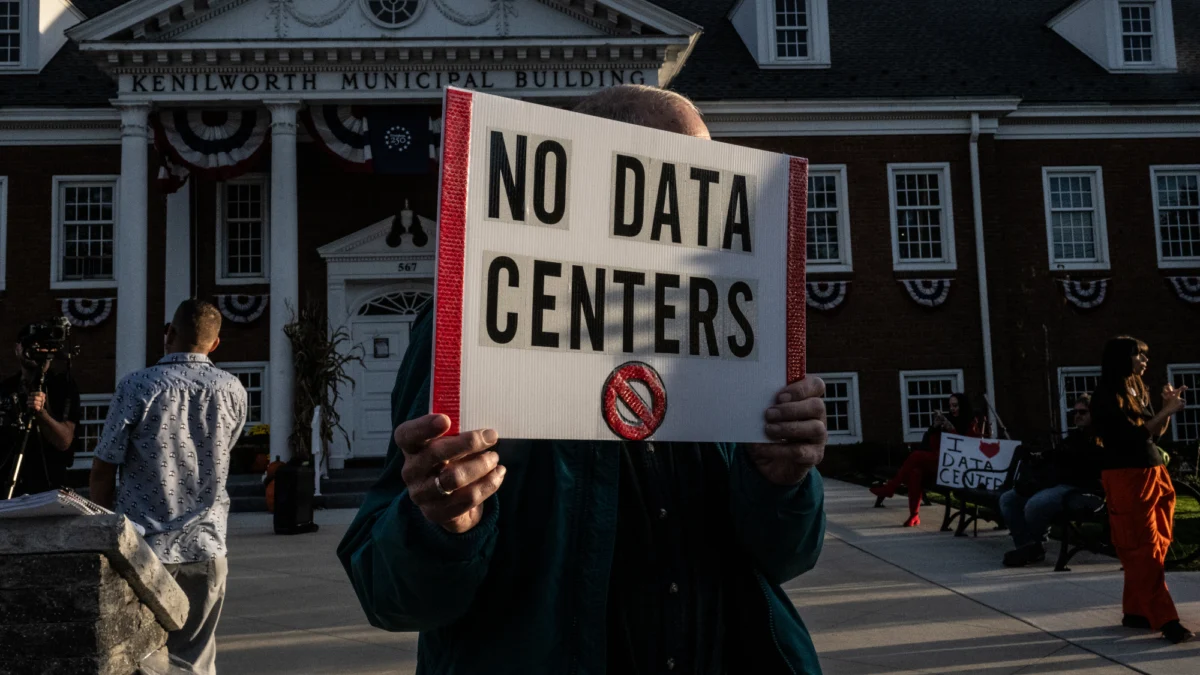
In a stunning display of grassroots mobilization that has sent shockwaves through the corridors of power in Washington and Silicon Valley, American voters have delivered a resounding "no" to the unchecked expansion of artificial intelligence infrastructure. During the 2026 midterm elections, nearly 40 ballot measures concerning data center construction were placed before voters across 10 states. By the time the polls closed on November 3, it was clear that a tectonic shift had occurred: in 39 of those 40 instances, voters opted to restrict, pause, or outright ban the development of industrial-scale server farms in their backyards.
This unprecedented electoral outcome transformed the midterm cycle from a standard partisan contest into a high-stakes referendum on the energy demands of the AI revolution. With the exception of a single project in Harwood, North Dakota, the tech industry faced a near-total rejection across California, Florida, Illinois, Kansas, Maine, Nevada, New Jersey, Ohio, and Wisconsin. The message from the electorate was unambiguous: the rapid, energy-intensive growth of Big Tech is no longer being viewed as a sign of progress, but as a direct threat to local utility stability, environmental quality, and community autonomy.
The Chronology of a Grassroots Uprising
The road to the 2026 ballot box was paved by years of quiet frustration that eventually erupted into a nationwide movement. For much of the early 2020s, the construction of data centers—massive, windowless warehouses containing thousands of high-performance servers—proceeded with minimal public oversight. Often shielded by non-disclosure agreements signed between tech giants and local municipal officials, these projects were frequently presented as "economic development" opportunities.
However, the tide began to turn in the mid-2020s. A pivotal moment occurred in Memphis, Tennessee, where local groups such as Memphis Community Against Pollution and Young, Gifted & Green began to peel back the curtain on Elon Musk’s xAI facility. The activists exposed not only the intense pollution and water consumption associated with the site but also the total lack of public discourse surrounding its approval.
As awareness spread, the "Data Center Resistance" movement coalesced. By early 2026, the movement had shifted from reactive protests to proactive policy-making. Organizers bypassed reluctant state legislatures and city councils, successfully gathering enough signatures to place citizen-led initiatives directly on the ballot. By the time the November 3 election arrived, the infrastructure of the internet had become a central campaign issue, with over half of all voters identifying AI-related industrial growth as a crucial factor in their decision-making process.
The Economic and Environmental Stakes
At the heart of this conflict lies a fundamental tension between the digital ambitions of Silicon Valley and the material realities of the communities expected to host them. Data centers are uniquely resource-hungry, requiring massive amounts of electricity for cooling and continuous operation, as well as significant water resources.
The Cost of Convenience
The proliferation of AI services, from generative chatbots to streaming media, has placed an unprecedented strain on the national power grid. In many regions, this surge in demand has contributed directly to skyrocketing utility bills. Jamil Davis, an organizer with Black Voters Matter in northern Florida, noted that when he knocked on doors this fall, the conversation rarely centered on abstract political ideology. Instead, it focused on the tangible pain of rising costs. "Almost every time, utility bills and data centers are the key things that people bring up," Davis stated.
Environmental Justice and Racial Equity
The siting of data centers has frequently followed the path of least resistance, often targeting low-income neighborhoods and communities of color. This pattern has turned the tech industry’s expansion into a modern-day environmental justice crisis. In Joliet, Illinois, a city with a long history of battling industrial pollution from trucking and warehousing, residents saw the data center boom as the next iteration of the same struggle. Consequently, nearly 80 percent of Joliet voters supported measures to restrict new data center construction.
This is not merely a local grievance; it is a systemic issue. Critics argue that Big Tech is exploiting communities that have historically lacked the political capital to resist, leaving them to bear the environmental and financial burdens of a global digital economy that provides them with few local benefits.
Data and Disparity: The Financial Goliath vs. The People
The 2026 election cycle provided a clear look at the gross disparity in resources between the tech industry and its opposition. According to the advocacy group Data Center Resistance, tech corporations and their allies outspent local citizen campaigns by a staggering ratio of 100 to 1.
The financial footprint of the tech industry was most visible at the federal and state levels:
- The Musk Factor: Elon Musk, a vocal proponent of aggressive AI development, contributed a record-shattering $474 million to support conservative groups and pro-AI candidates. This represents the largest single-donor contribution in the history of US election cycles.
- California’s Legislative Influence: An analysis by CalMatters revealed that Google, Meta, and other major tech firms accounted for at least 20 percent of all contributions in California legislative races, highlighting the industry’s desire to secure a favorable regulatory environment in its home state.
Despite this "war chest," the outcomes of the November 3 ballot measures suggest that money cannot always buy political consent. As Ed FitzGerald, director of Data Center Resistance, aptly put it: "This is nothing short of a political earthquake. They had the money, but we had the people."
Official Responses and Political Realignments
The election results have created a complicated landscape for the incoming Congress and the White House. President Donald Trump, who has frequently touted his desire to make the United States the "AI capital of the world," finds himself at odds with a significant portion of his own base. Recent polling data indicates that a majority of Republicans—alongside a large majority of Democrats—oppose the construction of new data centers in their own communities.
Elizabeth Bast, executive director of Oil Change Action, argued that the results represent a broader rejection of the current administration’s energy agenda. "They’re fed up with the agenda of fossil fuel giveaways, illegal and immoral wars, and unchecked data center expansion that makes their lives more expensive while lining the pockets of Big Oil and Big Tech," Bast said.
In Alabama, the political implications were even more stark. The League of Conservation Voters (LCV) strategically targeted Republican Rhett Marques, a vocal proponent of data center expansion, by highlighting how the local energy boom had inflated household utility bills. The successful campaign to unseat him in favor of Representative Shomari Figures was hailed as a landmark victory for Black communities, particularly given the state’s recent history of racial gerrymandering and the erosion of the Voting Rights Act.
Implications: A New Era of Oversight
The "political earthquake" of 2026 signals that the era of "move fast and break things" in the physical world is coming to a close. The implications for the tech industry are profound:
- The End of Secrecy: The use of non-disclosure agreements and backroom deals to push through infrastructure projects is likely to face intense legal and public scrutiny. Communities are demanding transparency as a prerequisite for any new industrial development.
- The "Social License" Problem: Silicon Valley can no longer assume that its products—viewed as essential by many—automatically grant it the right to occupy land and consume resources without community consent. The failure to secure this "social license" has become a major business risk.
- A Shift in Federal Strategy: With local voters rejecting the AI-first model, the federal government may find it increasingly difficult to force the expansion of the energy infrastructure required to support massive AI models. Congress will be forced to choose between the interests of their donors and the demands of their constituents.
As the dust settles on the 2026 midterms, the message to Silicon Valley is clear: the digital future must be built with the consent of the people, not at the expense of their quality of life. The grassroots victory of November 3 has set a new standard for local accountability, proving that even in the age of the algorithm, human political agency remains the most powerful force in American democracy.
About the Author