The global maritime industry, once characterized by predictable seasonal cycles and steady trade lanes, has spent the better part of the last three years navigating a high-stakes economic roller coaster. For containership operators and major port authorities, the concept of "normal" has become an elusive relic of the past. From the persistent geopolitical instability in the Middle East to the shifting sands of global trade policy, the industry is currently defined by a "wave of uncertainty" that shows no signs of receding.
As we move into the latter half of 2026, the logistics sector is grappling with a trifecta of challenges: hostile maritime environments, the structural realignment of supply chains, and a looming surge in vessel capacity that threatens to upend the delicate balance between supply and demand.
Main Facts: A New Reality of Risk
The maritime landscape is currently dictated by the fallout of the Iran war and the ongoing volatility across the Middle East. These conflicts have effectively rendered the Strait of Hormuz—a vital artery for global energy and cargo—a no-go zone for many commercial operators.
The consequences are immediate and far-reaching. Containership operators like Maersk have been forced to abandon established routes, redeploying assets and turning to costly, complex overland solutions to maintain service for general and refrigerated cargo. The primary mandate for these operators has shifted from efficiency to survival, with safety protocols for crews, vessels, and high-value cargo taking precedence over traditional transit-time metrics.

Chronology of Disruption
The current state of affairs is the result of a compounding series of events that began with the pandemic-era congestion and evolved into today’s geopolitical volatility:
- 2024–2025: The initial escalation of regional conflicts in the Middle East forced an immediate reassessment of global shipping lanes. Operators began the pivot toward the Cape of Good Hope, adding weeks to transit times.
- Early 2026: The persistence of the Red Sea and Hormuz crises cemented the need for "long-term temporary" solutions. Carriers began investing heavily in inland logistics and alternate port hubs in the UAE to bypass critical chokepoints.
- May 2026: An uncharacteristic surge in cargo volumes occurred. Unlike the traditional peak season, this spike was driven by anticipatory inventory building and a desperate scramble by beneficial cargo owners (BCOs) to front-load goods before impending U.S. tariff hikes.
- July 2026: The industry reached a critical juncture where the "peak season" failed to materialize in the traditional sense, replaced instead by sporadic, volume-heavy spikes driven by market anxiety rather than consumer demand.
Supporting Data: The Capacity Conundrum
While the industry is managing current disruptions, a looming threat lies in the massive "order book" of new vessels. According to Philip Damas of Drewry Supply Chain Advisors, the current fleet expansion is unprecedented.
The Numbers Behind the Overload
- The Order Book: Approximately 1,600 container ships are currently on order. This represents a staggering 38% of existing global capacity—the highest growth rate observed in the last decade.
- The Scrapping Gap: Projections for 2027 indicate an influx of 3 million TEUs (twenty-foot equivalent units) of new capacity. Conversely, only 400,000 TEUs of older vessel capacity are slated for decommissioning. This imbalance suggests a massive potential for oversupply, which could crash freight rates if demand does not keep pace.
- Pricing Volatility: The Drewry World Container Index reflected this fragility in early July, showing a 9% surge in pricing to $4,530 per 40-foot TEU. Specific routes, such as Shanghai to New York, saw an 11% increase, highlighting the premium being paid for reliability in an unstable market.
Official Responses and Strategic Pivots
Industry leaders are adopting varied strategies to cope with these pressures. Michael Britton, head of North American ocean products for Maersk, notes that the company’s priority remains a cautious, safety-first approach. Maersk has utilized significantly more overland solutions, despite the higher costs, to shield their customers from the volatility of maritime transit.
Port authorities, meanwhile, are balancing the need for infrastructure growth with the reality of erratic cargo flows.

The Resilience of U.S. Gateways
- Port of New York & New Jersey: Despite not being directly reliant on the Hormuz routing, the port processed 8.9 million TEUs in 2025. Port Director Bethann Rooney emphasizes that the ripple effects of fuel costs and routing changes remain the biggest threat to operational consistency.
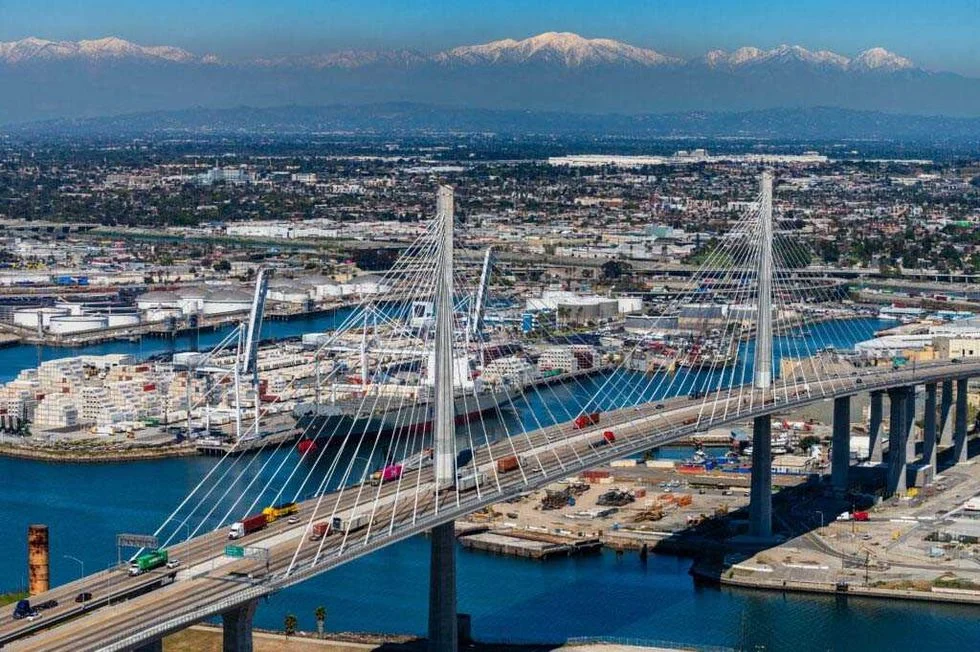
- The Twin Ports (LA/Long Beach): These ports remain the central nervous system of U.S. imports. Gene Seroka, CEO of the Port of Los Angeles, reported that June was the busiest in the port’s 118-year history, moving over 1 million TEUs. The focus here has been on labor efficiency and truck turn times, with Seroka noting that the system is "humming" despite global headwinds.
- Port of Oakland: By focusing on flexibility, Oakland has seen an increase in vessel calls, allowing shippers to pivot when other routes become compromised. Carolyn Almquist, the port’s business development manager, notes that the universal demand from customers today is not just speed, but predictability.
Implications: The Future of Supply Chain Resilience
The current environment is forcing a fundamental shift in how businesses view their supply chains. The era of "just-in-time" inventory is being replaced by a "just-in-case" philosophy.
Economic Indicators
The S&P Global U.S. Manufacturing PMI for June 2026 registered at 53.9. While this remains above the 50.0 expansion threshold, the underlying data is concerning. Manufacturers are reporting "sharp employment declines" as firms cut labor costs to offset the skyrocketing prices of energy and raw materials. Business confidence has reached an eight-month low, suggesting that the current resilience of the supply chain may be masking underlying fragility in the domestic economy.
The Path Forward
The consensus among experts like Lars Jensen of Vespucci Maritime is that normalization is impossible without a permanent resolution to the regional conflicts in the Middle East. Until trade routes through the Red Sea and the Strait of Hormuz are secured, the industry will continue to incur the "war risk premiums" and extended transit times that keep costs elevated.
For the remainder of 2026 and into 2027, the maritime industry will be defined by its ability to manage the influx of new capacity. If the 1,600 new vessels come online while trade remains restricted by geopolitical barriers, carriers may find themselves with an excess of ships and a lack of viable, safe lanes to deploy them.

Ultimately, the maritime sector is proving remarkably adaptable. Ports are working harder, operators are innovating with multimodal logistics, and BCOs are becoming more sophisticated in their planning. However, the industry remains a hostage to global politics. Until stability returns, the "wave of uncertainty" will remain the only constant, requiring every player in the supply chain to remain agile, cautious, and prepared for the next unforeseen swell.
About the Author