In the complex ecosystem of modern manufacturing, few components are as vital—or as frequently overlooked—as the compressed air system. Often referred to as the "fourth utility" alongside electricity, water, and natural gas, compressed air is the lifeblood of the plant floor. It powers everything from delicate assembly tools and pneumatic pistons to product conveyance, painting, and the generation of nitrogen. Yet, unlike other utilities typically managed and maintained by external providers, the compressed air system is almost always the responsibility of the facility itself.
When this "fourth utility" falters, the consequences are rarely trivial. A system failure can bring an entire production line to a standstill, leading to astronomical losses in output. As industrial operations strive for greater efficiency and sustainability, the shift from reactive, break-fix repair models to advanced predictive maintenance (PdM) is no longer a luxury; it is a fundamental operational imperative.
The Case for Redundancy: Protecting the Plant’s Lifeblood
The irony of modern industrial investment is palpable: companies will invest millions in cutting-edge production machinery while simultaneously skimping on the supporting infrastructure required to run it. While many facilities prioritize redundant power generators to mitigate the risk of grid failure, they often neglect to build similar safeguards for their compressed air systems.
The Cost of Catastrophic Failure
A catastrophic failure is defined as a critical breakdown that cannot be rectified by internal maintenance staff or a standard service call. This typically involves the failure of major components—motors, air ends, coolers, or starters—that require days or weeks to source and install.
When a facility lacks 100% redundancy, a primary system failure leads to two equally undesirable outcomes: a complete halt of production or the emergency procurement of costly rental equipment. In either scenario, the financial impact of lost production far outweighs the initial capital expenditure required to install a backup system. Reliability must be the primary design constraint, followed closely by energy efficiency and long-term performance optimization.

Preventive vs. Predictive: Defining the Maintenance Spectrum
To ensure continuous uptime, operators must distinguish between two essential strategies: preventive maintenance (PM) and predictive maintenance (PdM).
Preventive Maintenance (The Baseline)
Preventive maintenance involves performing scheduled tasks to keep equipment within manufacturer specifications. For oil-flooded rotary screw compressors, this is the foundational layer of reliability. It includes:
- Routine Component Replacement: Changing air filters, fluid filters, separators, lubricants, and couplings.
- Varnish Mitigation: Preventing the degradation of internal fluids that can lead to "varnish" buildup on rotors—a common cause of premature mechanical stress.
- Adherence to Warranty: Regular PM is typically a prerequisite for maintaining manufacturer warranties, ensuring that the machine operates as designed throughout its intended lifespan.
Predictive Maintenance (The Strategic Edge)
If PM is the "routine checkup," PdM is the "advanced diagnostic imaging." Predictive maintenance utilizes data collection and trend analysis to forecast when a component is likely to fail, allowing for repairs to be scheduled during planned downtime.
Data-Driven Diagnostics: The Technological Arsenal
The evolution of Industrial Internet of Things (IIoT) sensors has made high-fidelity monitoring more accessible and cost-effective than ever before. Modern facilities now have the tools to turn their compressed air systems into "smart" assets.
1. Lubricant Sampling and Analysis
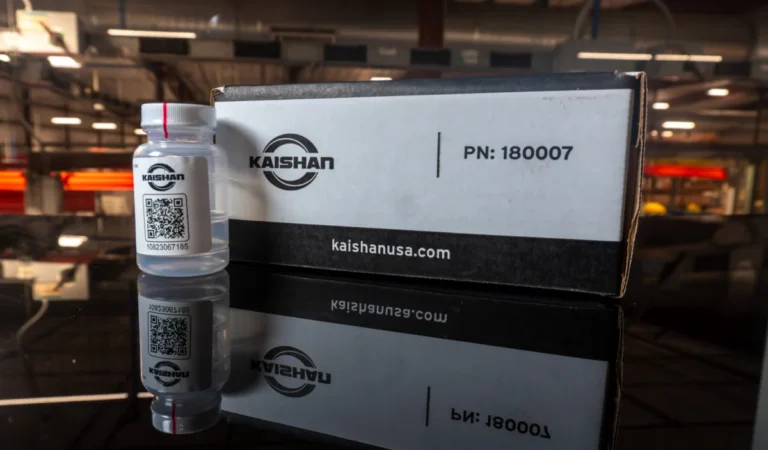
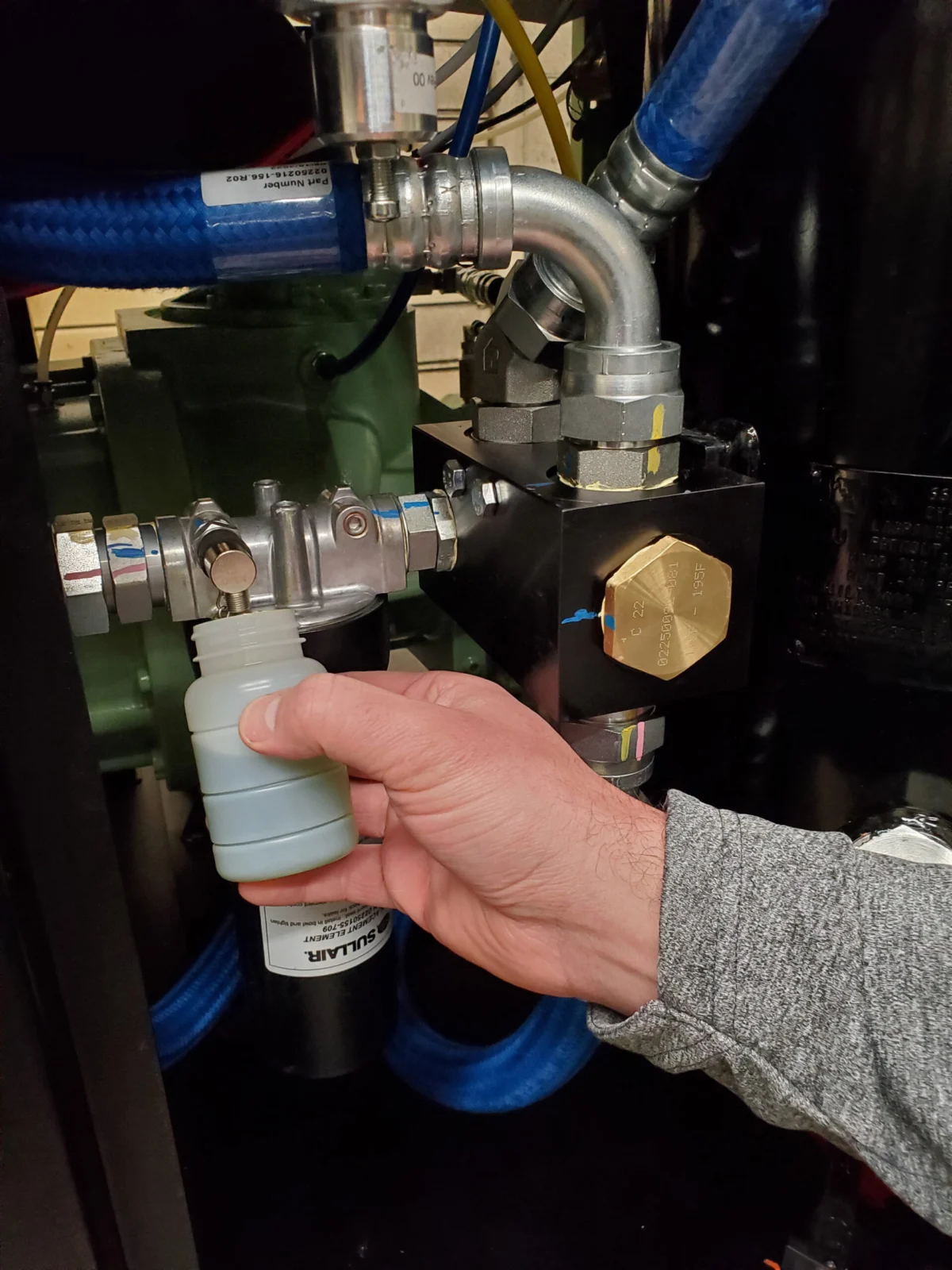
Lubricant sampling remains the gold standard for internal health monitoring. By analyzing fluid for changes in viscosity, acidity, and the presence of wear metals, technicians can identify potential failures before they manifest as mechanical noise. For instance, an uptick in iron or copper particles in the lubricant can indicate early-stage bearing degradation, allowing for a component swap before the entire air end seizes.

2. Acoustic Imaging and Leak Detection
Compressed air leaks are the "silent thieves" of energy efficiency. Even small leaks, when compounded across a facility, can account for a significant percentage of total compressed air demand.
- The Evolution of Detection: While the traditional "soapy water" test is sufficient for small, accessible components, modern acoustic imaging devices have revolutionized the process. By using an array of microphones to visualize ultrasonic sound frequencies, these devices can detect leaks from hundreds of feet away, even in noisy production environments.
- Systemic Impact: Eliminating leaks does more than save energy; it stabilizes system pressure, prevents unnecessary compressor cycling, and improves the performance of air treatment equipment by reducing the load on dryers.
3. Thermography and Electrical Health
Thermography provides a visual representation of temperature variances. By using infrared cameras, technicians can identify "hot spots" in electrical panels, motor windings, and thermal valves. High-temperature readings often signal loose electrical connections, overloaded circuits, or failing bearings. Because heat is the primary precursor to electrical and mechanical failure, thermal monitoring serves as a critical early-warning system.
4. Vibration Analysis: The Unique Signature
Every piece of rotating equipment possesses a unique "vibration signature." By establishing a baseline at the time of installation and conducting regular analysis—or, ideally, continuous monitoring via permanent sensors—maintenance teams can track the health of bearings, rotors, and couplings.
- Precision Diagnostics: Modern vibration sensors can isolate specific issues, such as whether a problem lies within the inner or outer race of a bearing, or if the system is suffering from shaft misalignment or rotor imbalance. This granularity allows for targeted, surgical repairs rather than broad, expensive overhauls.
Supporting Data: The ROI of Proactive Management
Industry benchmarks suggest that the implementation of a comprehensive PdM program can yield significant financial and operational dividends:
- Energy Savings: Reducing leak-related demand can lower overall energy consumption by 10% to 30%.
- Extended Lifespan: Equipment that is consistently monitored and properly lubricated often achieves 20% to 40% more operational hours before requiring major refurbishment.
- Downtime Reduction: By shifting from reactive to planned repairs, facilities can reduce unscheduled downtime by as much as 50%, significantly improving the bottom line.
Implications for Sustainability and ESG Goals
Beyond the immediate financial benefits, predictive maintenance aligns with broader Corporate Social Responsibility (CSR) and Environmental, Social, and Governance (ESG) goals.

In an era of rising energy costs and stringent carbon reporting, the efficiency of the "fourth utility" is a key metric. A poorly maintained, leaky air system is a major source of wasted electricity. By optimizing system performance, plants reduce their Scope 2 emissions, contributing to a more sustainable manufacturing footprint. Furthermore, extending the lifespan of hardware reduces the environmental impact associated with manufacturing, shipping, and disposing of heavy industrial equipment.
Future Outlook: The Autonomous Compressor Room
As we look toward the future, the integration of Artificial Intelligence (AI) and Machine Learning (ML) will further refine these predictive capabilities. Future compressed air systems will not only report data; they will analyze it in real-time to adjust operating parameters autonomously.
For example, a system might detect a slight rise in vibration and automatically adjust the cooling fan speed or reduce the load slightly to prevent a temperature spike, effectively "self-healing" or extending the time until a manual intervention is required. This transition toward autonomous reliability will solidify the role of compressed air as a dependable, efficient, and truly "smart" utility.
Conclusion: A Call to Action for Plant Managers
The transition to a predictive maintenance model for compressed air is not merely a technical upgrade; it is a cultural shift. It requires moving away from the mentality that compressed air is a "set it and forget it" utility.
Plant managers and sustainability engineers must recognize that the hidden costs of neglect—energy waste, shortened equipment life, and the catastrophic risk of total production shutdown—are far higher than the investment in diagnostic sensors and regular analysis. By implementing a layered approach of preventive service, regular leak auditing, and advanced vibration and thermal monitoring, facilities can protect their most critical assets.

In the high-stakes world of modern manufacturing, reliability is the only currency that matters. Ensuring the health of your compressed air system today is the best insurance against the production crises of tomorrow.
About the Author