For decades, the engine of global commerce operated on a singular, relentless directive: move goods as quickly and cheaply as possible to maximize market share and shareholder returns. In this era, environmental accounting was viewed as an external nuisance—a "soft" consideration far removed from the hard realities of balance sheets and supply chain velocity.
That era has ended. Today, the rapid expansion of freight volumes, the tightening web of international emissions regulations, and the seismic shift in investor expectations toward climate disclosure have moved sustainability from a corporate talking point to an operational imperative. For the modern enterprise, environmental responsibility is no longer a peripheral ethical concern; it is a core structural requirement for global survival.
The Scale of the Challenge: Unmasking the Footprint
The historical correlation between trade growth and environmental degradation is undeniable. As global trade volumes surged, so did the extractive intensity, waste production, and carbon emissions required to fuel them.
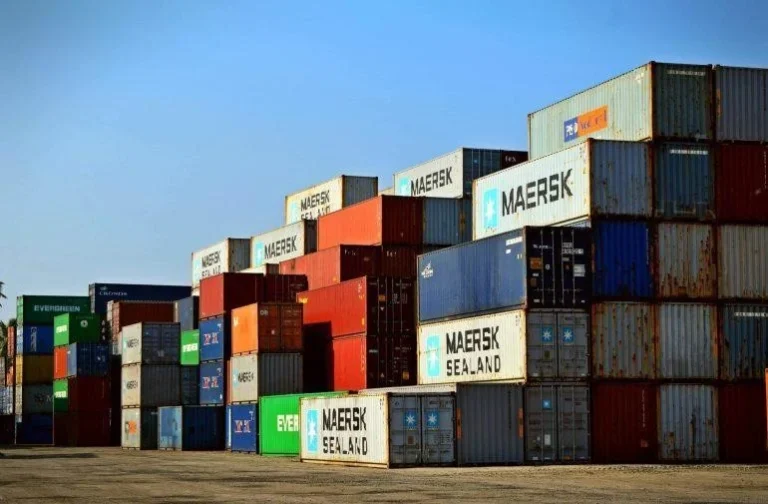
The environmental footprint of trade is often most obscured where it is most significant: the logistics layer. Maritime shipping, the silent workhorse of the global economy, carries the overwhelming majority of international trade by volume. Despite improvements in engine technology, maritime transport remains a stubborn source of global greenhouse gas (GHG) emissions. When combined with air, rail, and road freight, the logistics sector accounts for a massive share of global CO2 output, with road freight contributing the most significant portion of transport-related emissions.
However, the "hidden" costs go beyond the vessel or the truck. Inefficient warehousing, excessive packaging, customs bottlenecks, and poor routing protocols add layers of environmental waste. Every empty shipping container repositioned across the Pacific, every heavy-duty truck idling at a congested port, and every distribution center running on legacy HVAC systems represents a financial inefficiency that carries a heavy environmental price tag. The realization that these inefficiencies are fundamentally linked is why the business case for sustainability has moved from the boardroom’s "optics" department to the operations floor.
Chronology of a Paradigm Shift
The transformation of global trade is not an overnight occurrence but a response to decades of mounting pressure.
- 1990s–2000s: The Era of Efficiency: Focus was almost entirely on "Lean" supply chains. Environmental impact was largely ignored unless it directly resulted in lower fuel costs.
- 2010s: The Rise of ESG: Institutional investors began demanding Environmental, Social, and Governance (ESG) metrics. The conversation shifted toward "Scope 3" emissions—those produced by suppliers and logistics partners.
- 2020–2022: The Regulatory Tipping Point: The IMO (International Maritime Organization) began implementing stricter fuel standards (IMO 2020), and the EU’s Green Deal signaled a new era of carbon-border adjustment mechanisms.
- 2023–Present: The Data Mandate: The widespread adoption of CSRD (Corporate Sustainability Reporting Directive) in Europe and similar frameworks globally has forced companies to treat carbon data with the same rigor as financial data.
Supporting Data: The Cost of Inaction
Recent data highlights the financial and environmental stakes. A report by the World Economic Forum suggests that logistics decarbonization could add as much as 3–5% to supply chain costs in the short term, but the "cost of inaction"—ranging from carbon taxes and regulatory fines to brand devaluation—is projected to be significantly higher.
- Fuel Consumption: Modern "slow steaming" practices in shipping have been shown to reduce fuel consumption by up to 15–20%, directly correlating to a massive drop in CO2 output.
- Intermodal Shifts: Moving freight from road to rail can reduce a shipment’s carbon footprint by up to 75% per ton-mile, depending on the energy mix of the regional grid.
- Circular Sourcing: Companies that have adopted circular packaging solutions report a reduction in material waste costs of roughly 12% within the first three years of implementation.
Official Perspectives and Industry Responses
The response from industry leaders has been a mix of innovation and cautious investment. Maritime carriers, facing the most immediate regulatory pressure, are moving away from the "bigger is better" philosophy of the past.
"We are no longer just looking at the size of the vessel," says an executive from a leading global shipping line. "We are looking at the carbon-intensity of the entire voyage. That means retrofitting existing fleets to run on methanol or ammonia and investing in shore-power infrastructure at our key ports to ensure that when a ship is docked, it isn’t burning bunker fuel to power its lights and cranes."
Manufacturing giants are similarly pivoting. In the steel and aluminum sectors—industries once thought impossible to decarbonize—companies are piloting hydrogen-based production processes. While these technologies remain in the pilot stage, the capital expenditure is being justified by the long-term protection of market access in carbon-regulated jurisdictions.
The Practical Pillars of Sustainable Trade
For firms looking to integrate sustainability into their DNA, the approach must be systematic.
1. The Digital Foundation: Transparency
You cannot manage what you do not measure. The rise of "Green Trade" software has enabled companies to track fuel consumption and emissions with granular precision. This data is no longer just for compliance; it is used to optimize routes, select cleaner carriers, and negotiate better rates based on real-world carbon efficiency.
2. Electrification and Alternative Fuels
The "first and last mile" remains the most difficult challenge in logistics. While long-haul hydrogen-powered trucks are still in the R&D phase, short-haul electric delivery vehicles are already becoming the standard in urban environments. Public-private partnerships are currently funding "Green Corridors"—specific routes equipped with high-speed charging infrastructure—to de-risk the transition for logistics providers.
3. Circularity as a Strategy
Sustainability is increasingly moving "upstream." By rethinking raw material sourcing—using reprocessed metals or marine-derived inputs—companies can reduce their carbon footprint before a product ever leaves the factory. This decoupling of growth from resource extraction is the ultimate goal of the circular economy.
Implications: The New Competitive Advantage
The skeptics who view sustainable trade as a marketing veneer are missing the structural reality: the most successful companies are finding that efficiency and sustainability are two sides of the same coin.
Lower fuel consumption is both a lower carbon footprint and a lower freight bill. Less packaging waste is both a lighter environmental load and a reduced packaging budget. Regulatory foresight—preparing for carbon pricing or emissions caps—protects margins far more effectively than scrambling to catch up once legislation is passed.
However, the transition is not equitable. Large multinationals have the balance sheets to absorb the costs of fleet retrofitting or alternative-fuel procurement. Small and mid-sized enterprises (SMEs) face a steeper mountain. To prevent a two-tier global trade system, industry consortia and green-financing initiatives are becoming vital. By pooling resources and standardizing carbon-reporting tools, these consortia allow smaller players to access the same sustainable logistical networks as their larger counterparts.
Looking Ahead: The Future of Global Commerce
Sustainable trade is not yet a finished project. The fuel transition remains in its infancy, regulatory frameworks are still fragmented across continents, and the full capital cost of decarbonizing global logistics is still being reconciled.
Yet, the "direction of travel" is irreversible. We are witnessing the maturation of global trade. The days of treating environmental responsibility as a bolt-on to trade operations are over. Companies that view sustainability as an integral component of their strategic roadmap will be the ones that navigate the next decade’s regulatory, financial, and reputational challenges with the most agility.
Growth and environmental responsibility were never mutually exclusive; they were merely mismatched in the eyes of mid-20th-century planners. As modern technology, data, and policy converge, they are revealing that the most efficient way to trade is, in fact, the most responsible one. The companies that realize this now are not just protecting the planet; they are securing their place in the future of the global economy.
About the Author