For months, Wall Street has been gripped by a palpable sense of unease regarding Alphabet’s aggressive pivot toward artificial intelligence. Investors, long accustomed to the steady, predictable profitability of Google’s search dominance, grew increasingly vocal about the "AI bubble." They questioned whether the billions of dollars being poured into data centers, specialized silicon, and generative research would ever yield a meaningful return on investment.
However, the latest earnings report from the tech giant suggests that the skepticism may have been premature. Alphabet has not only silenced its loudest critics but has provided a robust roadmap for how legacy tech giants can transition into AI-first powerhouses. With explosive growth in its cloud division and a massive surge in total profit, Alphabet is signaling that the era of AI experimentation is yielding to an era of AI-driven profitability.
The Core Takeaway: A Cloud-Driven Financial Surge
The headline figure from Alphabet’s latest quarterly results is a resounding endorsement of its strategic direction. Google Cloud, once a distant third to Amazon Web Services (AWS) and Microsoft Azure, has become the primary engine of the company’s current financial expansion.
Revenue for Google Cloud spiked by 82% year-over-year, hitting a staggering $24.8 billion. To put this into perspective, this performance doesn’t just represent a seasonal uptick; it represents a fundamental acceleration. In the previous quarter, the division posted a 63% jump, reaching $20 billion. By handily beating analyst expectations of $22.46 billion, Google has demonstrated that its enterprise AI solutions are no longer just speculative pilot programs—they are mission-critical services that corporations are willing to pay for at scale.
Beyond the immediate revenue, the company’s "backlog" of future cloud contracts—work that has been signed but not yet fulfilled—now sits at a colossal $514 billion. This figure serves as a forward-looking indicator of stability, suggesting that the enterprise demand for Google’s AI infrastructure is not a fleeting trend but a long-term commitment from its global client base.
A Chronology of the AI Buildout
To understand the current surge, one must look at the timeline of Alphabet’s aggressive capital allocation.
- Early 2025: Alphabet signaled its intent to aggressively expand its physical AI footprint, moving beyond software development into the heavy lifting of infrastructure.
- Q4 2025: The company reported that its flagship chatbot, Gemini, had reached 750 million monthly active users. This served as a critical proof point that consumer adoption was keeping pace with infrastructure deployment.
- Mid-2026: Concerns regarding the "AI bubble" reached a fever pitch. Investors publicly questioned the $80 billion capital expenditure plan, fearing it would dilute margins without a corresponding revenue stream.
- Current Quarter: The results are in. Not only has Gemini grown to 950 million monthly active users, but the monetization of the underlying infrastructure has materialized, effectively validating the spending trajectory set eighteen months ago.
This 12-quarter streak of double-digit revenue growth is unprecedented for a company of Alphabet’s maturity. While the company has long been a growth engine, the composition of that growth has shifted from traditional ad-based search revenue to a more diversified model centered on cloud computing and integrated AI services.
Supporting Data: By the Numbers
The raw financial data paints a picture of a company currently operating at peak efficiency. While the cloud business stole the headlines, the broader financial health of Alphabet is equally compelling.
- Net Profit: The company reported a profit of $112.1 billion, a massive leap from the $28.1 billion reported in the same period last year.
- Revenue Growth: Overall revenue grew 24% year-over-year to $119.8 billion.
- Services Revenue: Google Services, which includes the core search business, saw a 15% revenue jump to $94.5 billion, proving that the search core remains resilient even as the company pivots to new technologies.
- User Adoption: Gemini has seen a rapid 26% increase in monthly active users in just two quarters, growing from 750 million to 950 million.
These figures indicate that Alphabet is not merely "spending money to spend money." It is successfully funneling capital into infrastructure that supports both a massive consumer user base (Gemini) and a highly lucrative enterprise client base (Google Cloud).
Official Responses: The View from the Top
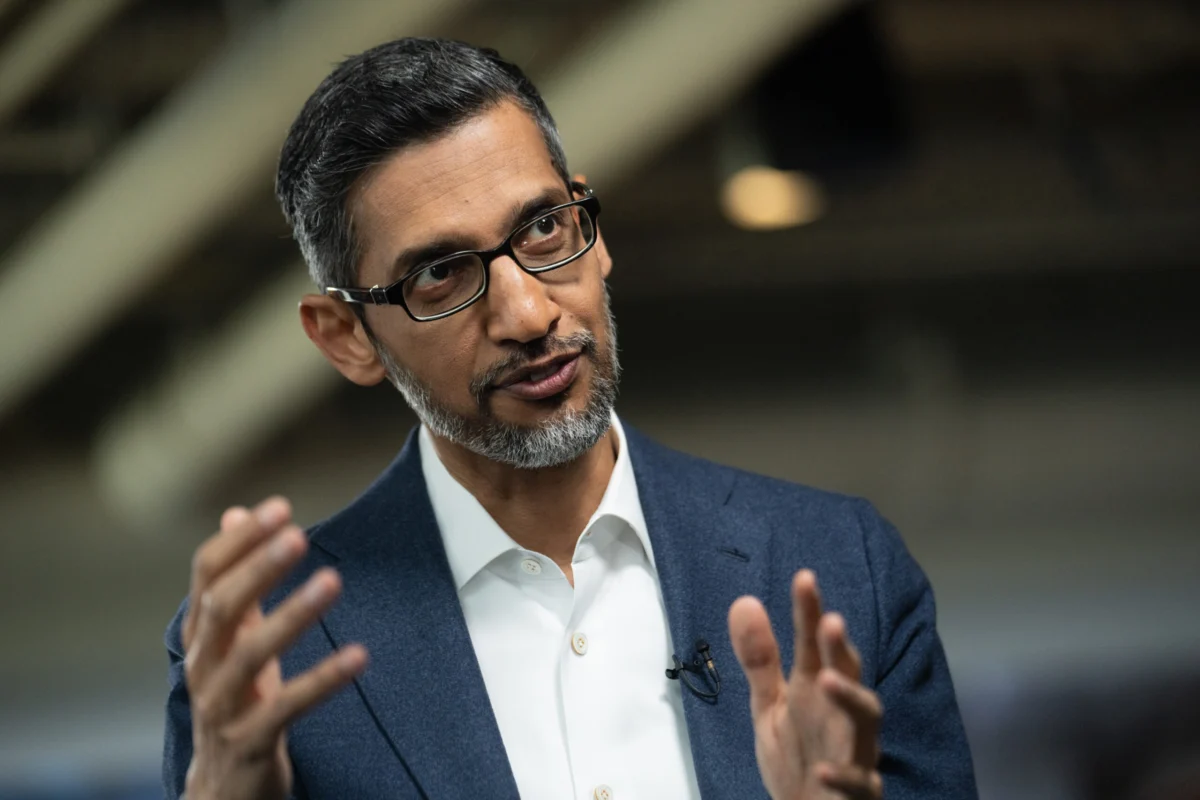
During Wednesday’s earnings call, CEO Sundar Pichai faced intense questioning from analysts regarding the sustainability of the company’s capital expenditures. With estimated spending for the year projected between $180 billion and $190 billion—money earmarked for data centers, high-performance chips, and global network expansion—the pressure to justify these costs was significant.
Pichai, however, remained resolute. "Our AI investments are redefining what’s possible across every part of our business," he stated. He framed the spending not as an expense, but as a prerequisite for participating in the next decade of computing.
Addressing the specific concerns of analysts regarding the "payoff" timeline, Pichai noted, "I think our compute capacity investments in ’27… we are seeing strong demand indicators, including long-term deals. If anything, the dynamics look healthier than where we were about a year ago, so that’s what gives us the confidence to undertake those investments."
Pichai’s response implies that the demand for compute power is outstripping the current supply, and that Alphabet is essentially "building the factory" while the customers are already waiting in line.
Implications: What This Means for the Market
The success of Alphabet’s current strategy carries profound implications for the broader tech sector and the global economy.
1. The Death of the "AI Bubble" Narrative?
While caution is always warranted in volatile markets, Alphabet’s results provide a blueprint for how AI can be monetized. It is no longer just about the "hype" of a chatbot; it is about the integration of AI into enterprise workflows, data processing, and cloud architecture. This shift moves the conversation from speculative valuation to fundamental business performance.
2. Infrastructure as a Competitive Moat
Alphabet’s willingness to commit nearly $200 billion in capital expenditure acts as a formidable barrier to entry. Few companies on earth possess the balance sheet to compete with such an infrastructure buildout. By front-loading these costs, Alphabet is creating an environment where it can provide AI services at a scale and cost that competitors may struggle to match.
3. The Shift in Consumer Behavior
With 950 million monthly active users on Gemini, Google has successfully migrated a massive segment of its search audience toward an AI-first interface. This creates a data flywheel: the more users engage with Gemini, the more refined the models become, which in turn attracts more users and more enterprise interest.
4. Long-Term Investor Confidence
The initial volatility caused by investor anxiety was a reflection of the "unknown." By delivering concrete, triple-digit growth in cloud revenue and a record-breaking profit margin, Alphabet has transitioned from a company in a state of high-risk transition to one that is reaping the rewards of its transformation.
Conclusion
The latest earnings report from Alphabet is more than just a collection of impressive statistics; it is a turning point. It marks the moment where the "AI Pivot" moved from a narrative of hope to a reality of profit. While the capital requirements to sustain this level of innovation remain immense, the company has successfully demonstrated that it has the demand, the infrastructure, and the leadership to turn that investment into the next generation of technological dominance.
For the investors who were once worried, the data suggests that the gamble is paying off. For the industry, it serves as a stark reminder that in the race for AI supremacy, those willing to invest early and at scale are the ones most likely to lead the market into the future.
About the Author