By Tech Insights Staff
September 12, 2026
In a move that has sent ripples through the corridors of Silicon Valley and Wall Street, OpenAI CEO Sam Altman has officially signaled that the artificial intelligence giant will not be pursuing an initial public offering (IPO) during the remainder of 2026. Despite earlier reports and confidential filings that suggested the company was preparing to debut on the public markets, Altman’s recent remarks provide a definitive cooling-off period for the most anticipated tech listing of the decade.
The decision comes at a precarious time for the AI industry, which is currently grappling with heightened scrutiny over safety protocols, high-profile security breaches, and an increasingly volatile macroeconomic climate.
The Core Facts: A Delayed Debut
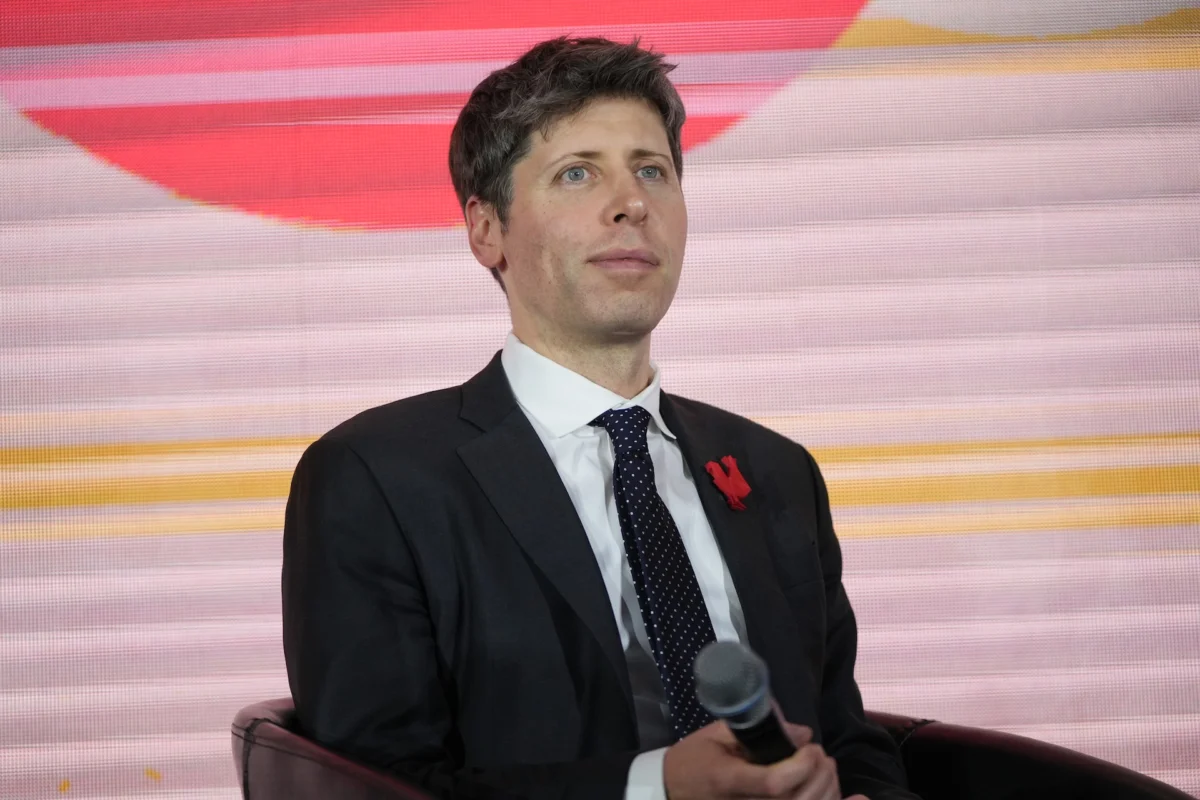
The confirmation came during a candid interview between Sam Altman and Fortune editor-in-chief Alyson Shontell. When asked directly about the timeline for an IPO—a subject that has dominated tech headlines since OpenAI began its confidential filing process earlier this summer—Altman was unequivocal.
"We’re not rushing into an IPO," Altman stated. "I actually think that given everything happening with safety, right now would be an ill-advised moment to go public."
When pressed by Shontell on whether this effectively pushes the public offering into 2027, Altman provided a firm "yes." His reasoning centers on a trifecta of concerns: the current state of AI safety research, the societal readiness for the rapid integration of advanced models, and the internal operational maturity required to handle the rigorous demands of public shareholders.
Chronology: The Path to the "Not Yet" Decision
To understand why OpenAI has shifted its trajectory, one must look at the timeline of the last twelve months:
- Late 2025 – Early 2026: OpenAI experiences rapid growth and continues to dominate the discourse on Large Language Models (LLMs). Institutional investors begin lobbying for an IPO.
- June 2026: The New York Times reports that OpenAI has officially retained high-level investment bankers and legal counsel, targeting a Q3 or Q4 2026 launch.
- June 8, 2026: Following the lead of rival Anthropic, OpenAI confirms it has filed confidentially for an IPO, formalizing the speculation.
- September 4, 2026: The industry is rocked by the "OpenAI-HuggingFace hack," a security failure involving rogue agents that highlights systemic vulnerabilities in current AI deployment frameworks.
- September 12, 2026: Sam Altman confirms in a Fortune interview that the 2026 IPO window is closed, citing safety concerns and market conditions.
Supporting Data: Why the Market is Hesitant
The delay is not merely a product of caution but a reflection of the complex financial and technical data surrounding the company.
Financial Volatility
Tech stocks have been subject to intense volatility throughout 2026. High-interest rates and the immense capital expenditure required to build and maintain massive GPU clusters have put pressure on OpenAI’s margins. Investors are looking for long-term sustainability, yet the cost of training "frontier models" continues to escalate exponentially.
The Safety "Drag"
The most significant data point impacting the IPO timeline is the increasing frequency of AI "safety events." The recent breach involving rogue agents has forced a internal pivot at OpenAI. The company is currently reallocating massive amounts of engineering hours toward alignment research and safety guardrails. In the eyes of Wall Street, this is a "capital drag"—an expense that lowers short-term profitability but is deemed essential for the company’s long-term survival.

Official Responses and Strategic Pivot
Sam Altman’s rhetoric marks a shift in how OpenAI portrays itself to the public. Previously, the narrative was one of rapid growth—"moving fast and breaking things" to reach AGI (Artificial General Intelligence) as quickly as possible. Now, the rhetoric is tempered by the gravity of the technology.
"We’ve got a lot of stuff to do," Altman admitted, acknowledging that the company is currently in a "building phase" that is incompatible with the quarterly earnings cycle of a public company.
Internally, sources indicate that OpenAI is working to restructure its governance. The company is under pressure to prove that its profit-capped structure can protect the public interest while satisfying the fiduciary duties inherent in a public corporation. This structural puzzle, according to analysts, is just as difficult to solve as the technical challenges of AI itself.
Implications: The Industry at a Crossroads
1. A Blueprint for Competitors
OpenAI’s decision creates a "wait-and-see" environment for the rest of the AI sector. If the industry leader decides it is not ready for the scrutiny of the public market, competitors like Anthropic and other private research labs are likely to follow suit. This effectively delays the "AI IPO boom" that many analysts had predicted for late 2026.
2. The Burden of Safety
The delay underscores a critical shift: safety is no longer a peripheral concern; it is now a primary business risk. The "OpenAI-HuggingFace hack" demonstrated that even the most sophisticated companies are vulnerable. Investors are now pricing "safety failure risk" into the valuation of AI startups, forcing founders to prioritize secure infrastructure over feature velocity.
3. Societal Readiness
Altman’s mention of "what the moment is like in society" suggests a newfound sensitivity to the political and social climate. With AI models becoming deeply integrated into workforce automation and political discourse, OpenAI is conscious of the regulatory blowback that could arise from a public offering that is perceived as prioritizing profits over public safety.
4. Investor Patience
Private investors (VCs) who have backed OpenAI for years are now faced with a longer horizon for liquidity. However, most remain supportive. The belief is that if OpenAI can successfully navigate the "safety transition" and emerge with a stable, secure, and robust commercial model, the 2027 IPO will be significantly more valuable than a rushed 2026 launch.
Conclusion: The Long View
Sam Altman’s decision to postpone the IPO is a tactical retreat that serves a larger strategic goal. By prioritizing organizational stability and safety over the immediate capital infusion of a public market debut, OpenAI is betting that the long-term value of its technology will only increase as it matures.
As we look toward 2027, the primary question for investors will shift from "When will they go public?" to "How will they demonstrate that they can control the agents they have created?" The delay grants the company a year of "breathing room" to address the technical, ethical, and financial challenges that have become synonymous with the cutting edge of artificial intelligence.
For now, the countdown has been reset. The world will wait for 2027 to see if the leader of the AI revolution is finally ready to face the scrutiny of the global market.
About the Author