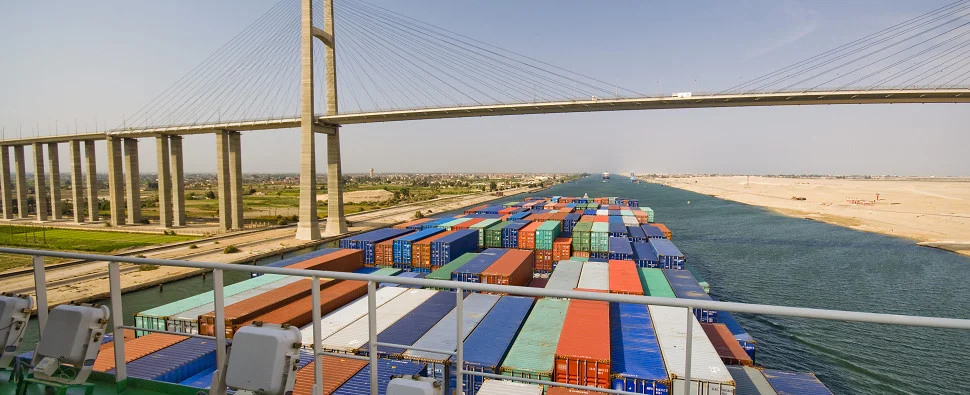
The security architecture of global maritime trade is undergoing a profound and dangerous transformation. As geopolitical fissures widen across the Middle East, the Red Sea—a critical artery for global energy and consumer goods—has morphed from a standard transit route into a high-stakes theater of conflict. Escalating threats from Iran-backed Houthi rebels have forced a systemic rethink of maritime logistics, prompting shipowners to deviate from established routes and triggering alarm bells among European naval authorities.
The situation, characterized by an unpredictable blend of drone threats, maritime interdiction, and state-sponsored posturing, threatens to choke the flow of energy from Saudi Arabia to Asia. With the Strait of Hormuz already suffering from prolonged instability, the simultaneous emergence of the Red Sea as a "hot zone" creates a worst-case scenario for global supply chain managers: the potential for a dual-chokepoint crisis that could send freight costs skyrocketing and rattle energy markets worldwide.
The Chronology of Escalation: A Timeline of Instability
The current crisis did not materialize overnight, but rather emerged as an extension of the broader regional friction between the United States, its allies, and the Iranian proxy network.
Initial Warnings and Strategic Posturing
The early stages of this latest round of instability were marked by localized threats, primarily centered around the Bab el-Mandeb Strait. However, the intensity shifted when the Houthi movement began issuing direct, explicit warnings to international shipping firms against calling at Saudi ports. These threats, framed as a retaliation for regional political maneuvers, were initially dismissed by some analysts as rhetorical bravado.
The Turning Point: Operational Deviations
The reality of the threat hit home when real-time maritime tracking data began to reflect a sudden, erratic shift in vessel behavior. Within the last week, the maritime industry witnessed a series of highly unusual maneuvers. The liquefied petroleum gas (LPG) carrier Gas King, having recently loaded cargo at Saudi Arabia’s Yanbu port, abruptly reversed its trajectory. Instead of proceeding south toward the Bab el-Mandeb Strait—the logical route for its Japan-bound voyage—the vessel turned north toward the Suez Canal.
Similarly, the Greek-owned crude tanker Amazon, laden with over one million barrels of crude oil, deviated from its original destination of India. It, too, pivoted toward the Suez Canal, a move that indicates a profound lack of confidence in the security of the southern exit from the Red Sea.
Current Status: Stagnation and Idling
The instability has led to a "wait-and-see" approach for many operators. The supertanker New Explorer, carrying a significant shipment of Saudi crude destined for Singapore, was observed idling in the Red Sea, effectively stalling its voyage. The Aframax tanker Lahore exhibited similar behavior, pausing operations shortly after loading at the Yanbu terminal. These movements represent a significant departure from the industry’s hallmark efficiency, where idle time is viewed as a direct erosion of profit margins.
Supporting Data: The Economic Cost of Caution
The decision to reroute or pause a vessel is not taken lightly in the shipping industry. Every mile diverted and every hour spent at anchor represents a tangible financial loss.
The Anatomy of a Reroute
For a vessel traveling from the Red Sea to Asia, the Bab el-Mandeb Strait is the natural, efficient gateway. By avoiding this passage, shipowners are forced to:
- Extend Voyage Times: Rerouting through alternative, longer paths or waiting for naval escorts significantly increases transit times.
- Escalated Fuel Consumption: Longer distances and unpredictable speeds necessitate higher bunker fuel usage, inflating operational costs.
- Suez Canal Fees: Vessels turning back toward the Suez Canal incur additional transit fees and administrative hurdles, further squeezing margins.
The Yanbu Paradox
Saudi Arabia has, in recent months, leaned heavily on its Red Sea export infrastructure. By utilizing the East-West Pipeline to transport crude from the Persian Gulf to Yanbu, the Kingdom had successfully mitigated the risks associated with the Strait of Hormuz. However, the recent Houthi threats have turned this safety valve into a potential trap. While loading operations at Yanbu remain technically "active," the maritime data reveals a profound hesitation among the captains and charterers tasked with moving that oil to international markets.
Official Responses and Threat Assessments
The international community, particularly European naval forces, has reacted with a heightened sense of urgency. The response has moved beyond mere monitoring to proactive threat assessment.
EUNAVFOR ASPIDES: Upgrading the Threat
The European Union Naval Force (EUNAVFOR) mission, known as ASPIDES, has officially upgraded its threat assessment for the Red Sea from "low" to "medium." This is a significant policy shift. The mission has issued a strong advisory: merchant ships linked to Israeli, U.S., or Saudi interests are now explicitly cautioned to avoid transiting the Red Sea and the Gulf of Aden. This advisory acts as a de facto red flag for insurers, who may now adjust premiums or deny coverage entirely for vessels ignoring these warnings.
The Role of the Joint Maritime Information Center (JMIC)
The Joint Maritime Information Center (JMIC) has provided the technical backing for these warnings. Their assessment indicates that Houthi forces maintain persistent, high-readiness positions near the Bab el-Mandeb chokepoint. The JMIC emphasizes that the rebels retain both the intent and the capability to conduct kinetic attacks against commercial shipping. This assessment confirms that the threat is not merely psychological; it is a tactical reality that military assets must now account for.
Implications for the Global Economy
The convergence of risks in the Red Sea and the Strait of Hormuz places the global energy supply chain in a precarious position.
Energy Security and Market Volatility
Saudi Arabia is the linchpin of global oil stability. If the Red Sea corridor becomes functionally impassable for tankers, the resulting supply chain bottleneck could lead to a rapid tightening of global crude supplies. While inventories exist, the psychological impact on oil futures—fueled by the fear of a broader, sustained conflict—often precedes the physical shortage, leading to price spikes that impact everything from transportation costs to consumer inflation.
Freight Markets Under Pressure
The shipping industry operates on razor-thin margins. The increased costs associated with rerouting, coupled with the rising premiums for war-risk insurance, are inevitably passed down the supply chain. If these disruptions persist, the maritime industry may see a repeat of the pandemic-era freight rate surges. Furthermore, the uncertainty complicates long-term chartering agreements, as owners become increasingly reluctant to commit to routes that cross the Red Sea.
Geopolitical Friction
The intensifying military exchanges between the United States and Iranian-backed entities add a layer of volatility that is difficult to hedge against. As these skirmishes enter their second week of heightened activity, the "new normal" for the Red Sea is characterized by a lack of predictability. International shipping, which relies on the stability of law and order to function, is being forced to navigate a landscape where established maritime conventions are being sidelined by regional power struggles.
Conclusion: A Future of Maritime Uncertainty
The Red Sea crisis serves as a stark reminder of the fragility of the globalized trade network. For decades, the freedom of navigation through these straits was treated as a given; today, it is a variable that must be calculated alongside fuel prices and weather conditions.
As shipowners, naval forces, and global powers navigate this complex period, the primary casualty remains the reliability of international trade. While Saudi oil continues to flow—albeit at a significantly more cautious pace—the overarching threat remains: that a single kinetic event or a further escalation in Houthi rhetoric could force a total, albeit temporary, closure of the corridor.
For the global economy, the lesson is clear: the era of "frictionless" maritime trade is under severe strain. Until a diplomatic or military resolution restores security to the Bab el-Mandeb and the broader Red Sea, the shipping industry will remain in a state of high alert, perpetually calculating the cost of the next voyage against the price of potential disaster. The industry is not merely watching the news; it is preparing for a long, volatile winter on the high seas.
About the Author