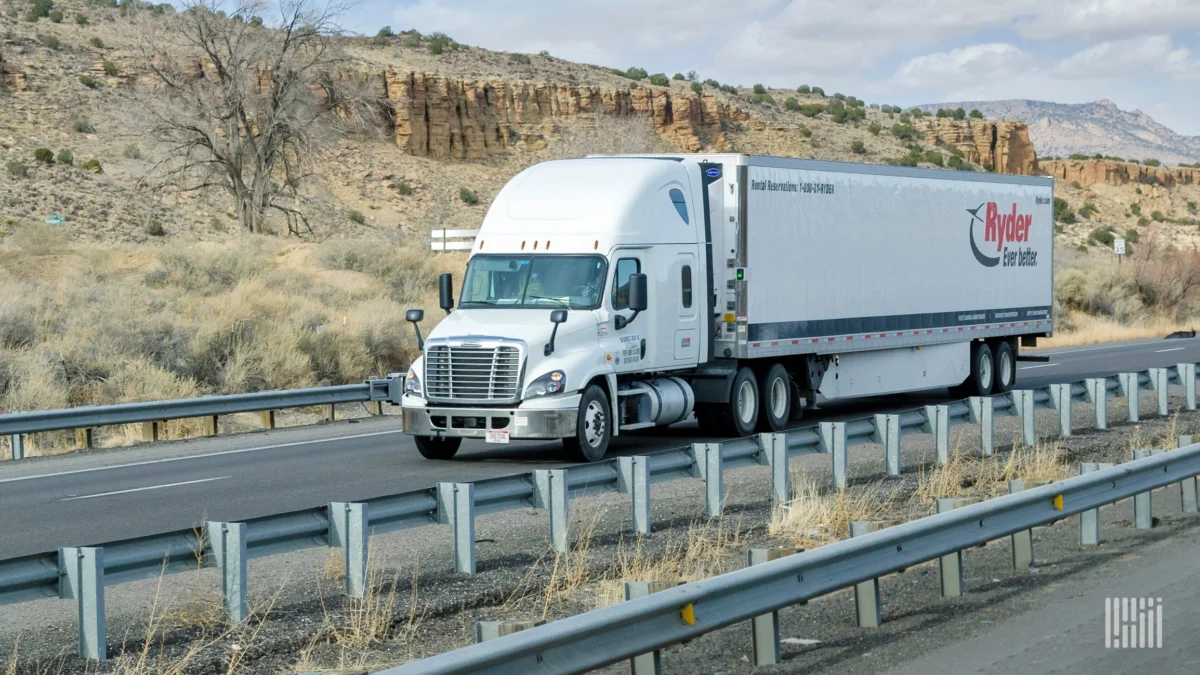
Ryder System, Inc. (NYSE: R) has navigated a challenging macroeconomic environment to deliver a solid second-quarter performance, characterized by disciplined operational management and a notable uptick in used vehicle sales. While the broader stock market faced a significant selloff, leaving Ryder’s shares down approximately 3.55% at $266.56 during mid-day trading on July 23, the company’s internal metrics signaled a firm grip on its strategic trajectory.
The transportation and logistics giant reported non-GAAP earnings per share (EPS) of $3.73, marking a 12% increase over the previous year. This result slightly outperformed the consensus estimates from Wall Street, which had pegged the figure at $3.69, and narrowly eclipsed the $3.71 estimate provided by Citi. By balancing a leaner fleet with high utilization and capitalizing on a surprisingly robust used-vehicle market, Ryder has demonstrated enough confidence in its second-half outlook to raise its full-year financial guidance.
Chronology of the Q2 Earnings Release
The earnings release, which hit the wires ahead of the customary analyst conference call, offered a snapshot of a company in transition—moving away from heavy dependence on cyclical vehicle sales toward a more diversified service model.
Pre-Market Sentiment and Immediate Reaction
Shortly after the numbers were released, Ariel Rosa, an analyst at Citi, characterized the performance as "moderate" and "in-line" with expectations. The market’s reaction, however, was tethered to broader equity market turbulence. Despite the dip in share price, the consensus among observers was that the company’s guidance and performance were consistent with current industry realities, where reduced truck capacity is creating a floor for performance.
The Analyst Call: A Deep Dive
Following the initial print, leadership held a conference call to contextualize the figures. CFO Cristina Gallo-Aquino and CEO John Diez focused heavily on the mechanics of their profitability—specifically how residual values and depreciation schedules are impacting the bottom line. The dialogue quickly pivoted to future-looking concerns, specifically the impending 2027 EPA emissions standards and the tightening of the labor market for drivers.
Supporting Data: Fleet Dynamics and Financial Performance
Ryder’s financial health is increasingly tied to its ability to manage assets efficiently. The Fleet Management Solutions (FMS) segment remains the company’s bedrock, reporting operating revenue of $1.303 billion, a 1% sequential increase that beat Citi’s $1.29 billion forecast.
The Fleet Efficiency Paradox
One of the most critical takeaways from the Q2 report is the shift in fleet composition. Ryder has reduced its average fleet size by 15% year-over-year. While this reduction limits the company’s ability to capture total market share during an upturn, it has significantly boosted operational efficiency.
- Commercial Rental Utilization: While the average fleet count for rentals fell from 34,300 to 29,200, the utilization rate surged by 5 percentage points to 75%.
- Select Care Contracts: The Supply Chain Services (SCS) segment saw growth, with the number of customer vehicles under Select Care contracts climbing to 44,300, up from 43,000 in the same period last year.
Used Vehicle Sales: The Surprise Driver
Used vehicle sales proved to be a major tailwind for the quarter. Although the total number of vehicles sold (5,100) was lower than the second quarter of 2025 (6,200), the profitability per unit was higher.
- Pricing Power: Tractor sales saw an average price increase of 3% year-over-year, while truck sales experienced a 6% increase.
- Sequential Recovery: As noted by industry analyst John Kingston, the 6% sequential growth in used tractor sales suggests that the Q1 downturn was an outlier rather than a trend.
The financial benefit is realized when vehicles are sold at prices exceeding their book residual value. In Q2, the net impact of these sales was a negative $7 million (a positive for cost reporting), compared to a positive $2 million a year ago and a negative $12 million in the first quarter of 2026.
Official Responses and Strategic Adjustments
Upgraded Guidance
Based on the strength of the first half, Ryder updated its 2026 full-year outlook:
- Non-GAAP EPS: Increased to a range of $14.40–$14.80, up from the previous range of $14.05–$14.80.
- Return on Equity (ROE): Now projected at 18%, an improvement over the previous 17–18% forecast.
- Operating Revenue Growth: Remains steady at 3%, bolstered by the Supply Chain Services contract logistics segment.
- Cash Flow: Net cash and free cash flow projections remain unchanged at $2.7 billion and $700–$800 million, respectively.
Addressing the EPA and Regulatory Hurdles
A significant portion of the analyst Q&A session was dedicated to the upcoming 2027 EPA nitrogen oxide (NoX) emissions requirements. CEO John Diez acknowledged that Ryder is in a holding pattern, waiting for original equipment manufacturers (OEMs) to finalize pricing for the next generation of compliant vehicles.
"We’re still waiting for the OEMs to reveal what the price increases are going to be for the second half," Diez noted. He emphasized that Ryder does not expect a "dramatic" divergence from existing plans, but cautioned that the company is preparing for significant cost increases. These costs, which encompass regulatory compliance, inflationary pressures, and potential tariff impacts, will eventually be passed on to customers.
The Labor Market Constraint
Perhaps the most telling commentary on the broader economy came regarding driver capacity. Diez admitted that Ryder is seeing "evidence of tighter driver capacity" within its Dedicated Transportation Solutions segment. The "time-to-fill" for driver positions has ticked upward, a trend that typically signals a tightening labor market and potential wage pressure in the coming quarters.
Implications for the Future
Ryder’s Q2 performance presents a compelling case for a company successfully executing a pivot. By intentionally reducing fleet size while simultaneously increasing utilization, Ryder is proving that it can generate value even when the overall volume of assets is lower.
Diversification as a Hedge
The company’s ongoing efforts to diversify away from used-vehicle-sales dependence are crucial. While used vehicle prices currently act as a "booster" for earnings—with expected gains for the year raised to $40 million—Ryder is clearly positioning its Supply Chain Services and Dedicated Transportation segments as the primary engines for long-term, stable growth.
Market Outlook: 2027 and Beyond
Looking toward the latter half of 2026 and into 2027, Ryder expects pricing to continue accelerating. The company’s pipeline and sales activity remain strong, suggesting that despite the "heavy selloff" observed on Wall Street, the fundamental demand for logistics and fleet management remains resilient.
The key to Ryder’s success in the coming year will lie in three areas:
- OEM Relationship Management: Successfully passing through the anticipated price hikes associated with the 2027 EPA mandates without losing significant market share.
- Labor Retention: Managing the rising cost and difficulty of securing qualified drivers in a tightening labor market.
- Capital Discipline: Maintaining the current 18% ROE by continuing to optimize fleet utilization and shedding underperforming assets.
In summary, Ryder has emerged from the second quarter in a stronger position than it started. By managing costs, refining its fleet, and navigating the complexities of regulatory shifts, the company has signaled to investors that it is not merely reacting to market conditions, but actively shaping its operational footprint for long-term durability. While the stock market may remain volatile in the short term, Ryder’s improved guidance and operational metrics provide a stable foundation for the remainder of the fiscal year.
About the Author