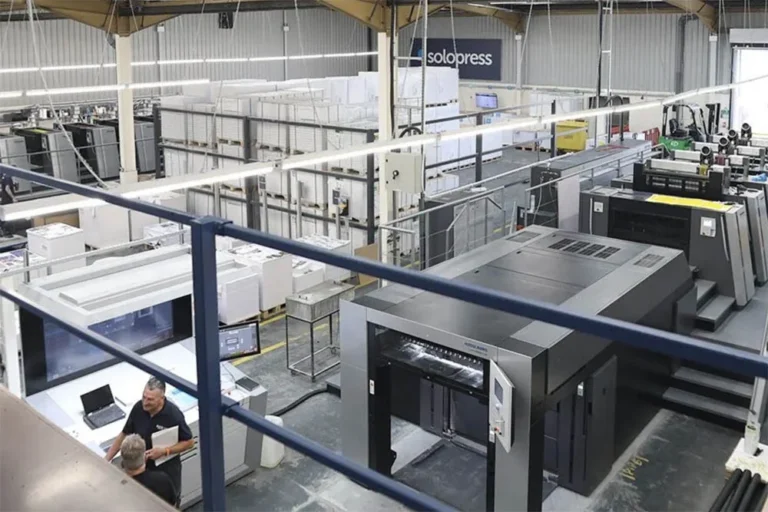
Szczecin, Poland – July 2026 – Scandinavian Print Group (SPG), a formidable force in the European printing landscape, has announced a significant strategic investment in its production capabilities, marked by the commissioning of a state-of-the-art Heidelberg eight-color UV printing press. This substantial enhancement at their central production facility in Szczecin, Poland, is a direct response to escalating market activity and robust financial performance, underscoring SPG’s commitment to efficiency, quality, and technological leadership.
The new B1-format sheet-fed offset machine not only elevates SPG’s total offset fleet to an impressive ten presses but also solidifies its position as a hybrid print powerhouse, adept at leveraging both traditional and cutting-edge digital technologies. This move is a clear signal of the company’s forward-thinking approach, balancing the enduring strengths of offset with the dynamic advantages of digital printing to meet the diverse and evolving demands of its extensive client base across Europe.
Strategic Investment Fuels Pan-European Expansion
The recent financial upturn and a discernible surge in operational activity have provided the impetus for SPG’s latest capital injection. The brand-new Heidelberg press, equipped with eight UV color units, represents a pivotal addition to the company’s distributed manufacturing network. This network now comprises four sheet-fed offset machines in Poland, three in Aarhus, Denmark, two at their recently established production hub in Cologne, Germany, and one in Stockholm, Sweden. All these presses operate in the versatile B1 format, allowing for standardized production across multiple geographies and catering to a wide array of print requirements.
The strategic placement of these machines across key European locations is not merely about increasing raw capacity; it’s about optimizing logistics, reducing lead times, and providing localized support while maintaining consistent quality standards. The Szczecin facility, already a cornerstone of SPG’s operations, gains further prominence with this high-performance addition, reinforcing its role as a central production powerhouse.
Unpacking the Powerhouse: The New Heidelberg UV Press
At the heart of SPG’s latest investment lies a machine designed for unparalleled efficiency and output. The new Heidelberg press boasts remarkable operational statistics that promise to redefine production benchmarks. Esben Mols Kabell, CEO of Scandinavian Print Group, highlighted the machine’s exceptional capabilities: an astonishingly low changeover time of just 1.5 minutes and an average waste rate (makulatur) of merely 27 sheets per job. These figures are critical in an industry where speed and waste reduction directly impact profitability and environmental footprint.
Furthermore, the press can achieve a maximum speed of 18,000 sheets per hour, translating into a projected annual output of between 60 and 70 million sheets. This immense capacity ensures that SPG can handle high-volume demands with greater agility and responsiveness, catering to the needs of clients requiring large print runs with stringent deadlines. The investment is a testament to SPG’s continuous drive for operational excellence and its unwavering commitment to leveraging the most advanced printing technologies available.
The UV Advantage: A Deep Dive into Technology and Rationale
The decision to opt for a UV (Ultraviolet) enabled press, despite its higher operational costs, was a carefully calculated strategic move, according to Esben Mols Kabell. "With UV, we gain a range of advantages that we expect to outweigh the additional cost of the inks," Kabell explained. He estimates the increased cost for UV inks to be approximately 700,000 DKK (roughly €94,000 or $102,000 USD) per machine per year. However, this upfront expenditure is justified by significant savings and enhanced capabilities down the line.
Key Benefits of UV Printing:
- Instant Drying and Accelerated Post-Press: One of the most compelling advantages of UV technology is the instantaneous drying of inks upon exposure to ultraviolet light. Unlike conventional offset inks that dry through oxidation and absorption, requiring considerable drying time, UV inks cure instantly. This eliminates the need for lengthy drying periods, drastically reducing bottlenecks in the post-press and binding stages. Kabell specifically highlighted savings "on delays in binding due to waiting time," which directly translates to faster turnaround times for customers and more efficient workflow management.
- Reduced Smudging and Enhanced Quality: The immediate curing of UV inks virtually eradicates issues of smudging, set-off, and rub-off. This leads to fewer customer complaints and a significant reduction in reprints or quality-related rejections. "We expect to save on fewer complaints about smudging," Kabell noted, underscoring the positive impact on customer satisfaction and operational costs.
- Expanded Color Gamut and Substrate Versatility: UV inks offer a wider and more vibrant color gamut, particularly noticeable on uncoated papers. This allows for richer, more precise color reproduction, opening up new creative possibilities for designers and brands. The ability to achieve superior color fidelity on a broader range of substrates, including challenging non-absorbent materials like plastics and foils, extends SPG’s service offerings and market reach.
- Durability and Environmental Considerations: UV prints are highly durable, resistant to scratches, moisture, and fading, making them ideal for applications requiring longevity. While the article focuses on operational efficiency, it’s worth noting that modern UV systems are also designed with environmental considerations in mind, often using solvent-free inks and reducing VOC emissions compared to some traditional methods.
Kabell also elaborated on the impracticality of an alternative solution involving water-based lacquer and conventional offset, which would necessitate a machine stretching 27 meters. Such a behemoth would be "impractical to operate, take up much more space, and become quite expensive." For SPG, the choice was clear: "UV is the rational choice," he concluded, emphasizing the blend of technological superiority and practical economic sense.
A Hybrid Future: Balancing Offset and Digital Strengths
While the investment in offset capacity is substantial, SPG’s strategy is far from monolithic. The company operates a sophisticated hybrid production model, seamlessly integrating traditional offset with advanced digital printing technologies. Beyond the ten sheet-fed offset presses, SPG’s arsenal includes two high-production inkjet roll printers strategically located in Poland, alongside a considerable number of digital sheet-fed machines distributed across its various production hubs.
The production data for March 2026 provides a clear illustration of this dynamic balance. Offset printing remains the dominant force in terms of sheer volume, accounting for an impressive 18 million square meters produced that month. This figure represents approximately 80% of the total square meters printed across all technologies.
However, the picture shifts when considering value creation. While offset delivers the bulk of the physical output, Esben Mols Kabell revealed that it contributes only about 60% of the total value creation. This disparity highlights the increasing importance and profitability of digital printing, particularly for specialized, personalized, and shorter-run jobs that command higher per-unit value. Digital sheet production contributed 1.7 million square meters in March, while roll inkjet accounted for a robust 2.5 million square meters. The combined digital volume alone translates to a staggering 33 million A3 sheets per month, showcasing the significant scale of SPG’s digital operations.
Growth Trajectories and Evolving Market Dynamics
The most striking growth trajectory within SPG’s diverse portfolio is observed in roll inkjet technology. Compared to the same period last year, roll inkjet production has surged by 40% in terms of square meters. This remarkable expansion underscores the growing market appetite for the flexibility, speed, and cost-effectiveness that high-volume inkjet solutions offer, particularly for variable data printing, personalized marketing materials, and short-to-medium run publications.
This growth also directly influences the long-standing debate within the printing industry regarding the "crossover point" – the volume at which it becomes more economical to print digitally versus offset. Traditionally, offset has been unequivocally superior for very long runs, while digital dominated ultra-short runs. Kabell’s insights suggest a significant shift in this paradigm.
When questioned about whether the new, highly efficient offset machine would push the boundaries for economically viable offset runs, Kabell offered a nuanced perspective: "It’s actually marginal. In practice, the boundary has shifted the other way with our roll inkjet machines, which can compete with offset for runs up to around 1000 copies, when it comes to the paper types we have for that technology."
This statement is profoundly significant. It indicates that SPG’s investment in advanced roll inkjet technology is actively challenging offset’s traditional stronghold for certain medium-volume jobs. This capability allows SPG to offer clients greater flexibility and cost-efficiency, regardless of run length, by precisely matching the job to the most appropriate and economical printing technology. This strategic positioning ensures SPG remains competitive across the entire spectrum of print demands, from massive commercial runs to highly personalized, on-demand projects.
Official Responses and Leadership Vision
Esben Mols Kabell’s leadership vision is clearly articulated through this dual investment strategy. His emphasis on UV as a "rational choice" is rooted in a comprehensive understanding of operational costs, production efficiencies, and client expectations. By mitigating post-press delays and quality issues, SPG is not just saving money but enhancing its reputation for reliability and speed – critical factors in today’s fast-paced market.
The CEO’s acknowledgement of digital’s increasing encroachment into offset’s territory, particularly with roll inkjet, demonstrates a pragmatic and forward-looking approach. Rather than seeing these technologies as competitors, SPG views them as complementary tools in a sophisticated print ecosystem. This philosophy allows them to optimize production for each specific job, ensuring the best possible outcome for the client in terms of cost, quality, and delivery time. Kabell’s comments paint a picture of a company constantly evaluating and adapting to technological advancements and market shifts, always with an eye on maximizing value for both the business and its customers.
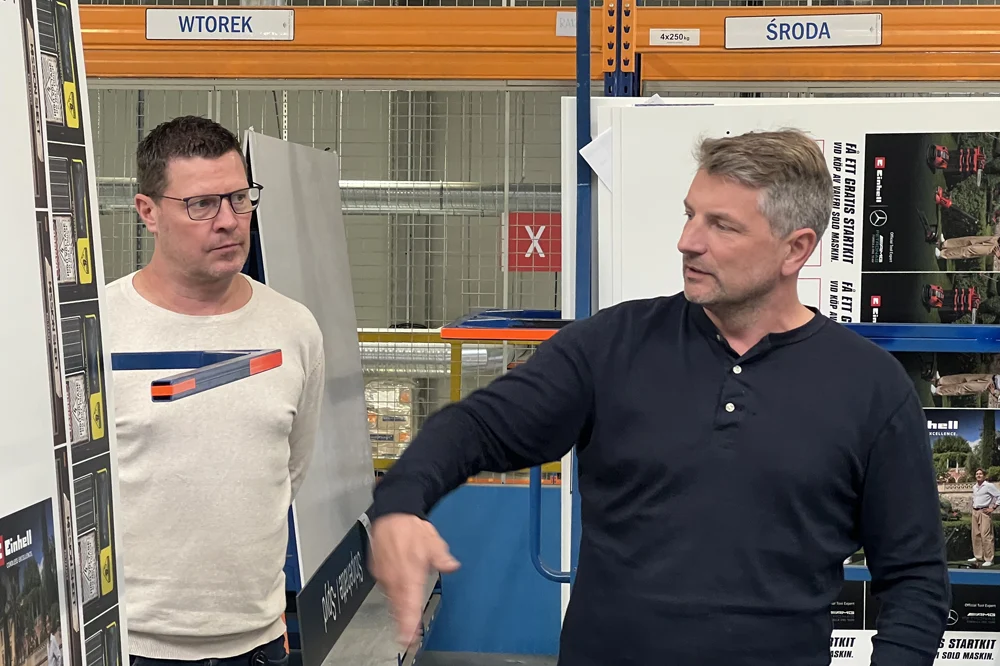
(Image: Adm. direktør for Scandinavian Print Group, Esben Mols Kabell (th), viser rundt på fabrikken i Szczecin.)
(Caption: Scandinavian Print Group’s CEO, Esben Mols Kabell (right), conducting a tour of the factory in Szczecin, Poland.)
Implications for the Industry and SPG’s Future
SPG’s substantial investment in both advanced offset and high-volume digital technologies carries significant implications, both for the company itself and for the broader European printing industry.
For Scandinavian Print Group, this move solidifies its position as a leading, technologically advanced print provider. By enhancing its core offset capacity with the efficiency of UV and simultaneously expanding its digital footprint, SPG is better equipped to:
- Serve a Broader Market: The increased capacity and technological diversity allow SPG to cater to an even wider range of client needs, from high-volume commercial printing to highly customized, short-run digital projects.
- Enhance Competitiveness: Superior efficiency, faster turnaround times, and reduced waste will translate into more competitive pricing and improved service, strengthening SPG’s market share.
- Drive Innovation: Continuous investment in cutting-edge technology fosters a culture of innovation and allows SPG to explore new applications and printing possibilities.
- Strengthen Pan-European Presence: The distributed production model, reinforced by this investment, enhances SPG’s ability to serve its European clientele efficiently and sustainably.
For the printing industry, SPG’s strategy serves as a powerful case study for the evolving role of print in the digital age. It underscores several key trends:
- The Enduring Relevance of Offset: Despite the rise of digital, offset remains indispensable for high-quality, high-volume production, especially when enhanced with technologies like UV.
- The Ascendancy of Hybrid Models: The most successful print companies are those that master the art of integrating different print technologies, leveraging the strengths of each.
- Efficiency as a Core Differentiator: Investments that reduce changeover times, waste, and overall production cycles are paramount for profitability and sustainability.
- Digital’s Growing Influence: Digital printing, particularly inkjet, continues to push the boundaries of economic viability, challenging traditional offset domains and driving innovation in personalization and speed.
Conclusion: A Vision for Integrated Print Excellence
Scandinavian Print Group’s latest investment in an 8-color UV Heidelberg press at its Szczecin facility is more than just an addition of machinery; it’s a strategic declaration. It reflects a company that is not only responding to current market demands but actively shaping the future of print. By meticulously balancing the proven power of enhanced offset with the dynamic flexibility of advanced digital solutions, SPG is constructing a robust and adaptable production framework.
Under the guidance of CEO Esben Mols Kabell, SPG is demonstrating a clear vision for integrated print excellence. This vision prioritizes operational efficiency, superior product quality, and the ability to offer a comprehensive suite of services tailored to the nuanced needs of a diverse European customer base. As SPG continues to grow and evolve, its strategic investments ensure it remains at the forefront of an industry increasingly defined by technological convergence and a relentless pursuit of value.
(See video from the factory here: Link to YouTube video – Scandinavian Print Group installerer deres tiende arkoffsetmaskine)
About the Author