The American trucking industry is currently standing at a precarious, yet potentially transformative, crossroads. As the sector emerges from a prolonged period of margin compression and cost inflation, the consensus among industry leaders is shifting from aggressive, speculative growth toward a strategy defined by operational efficiency, disciplined capital expenditure, and a renewed focus on sustainable returns.
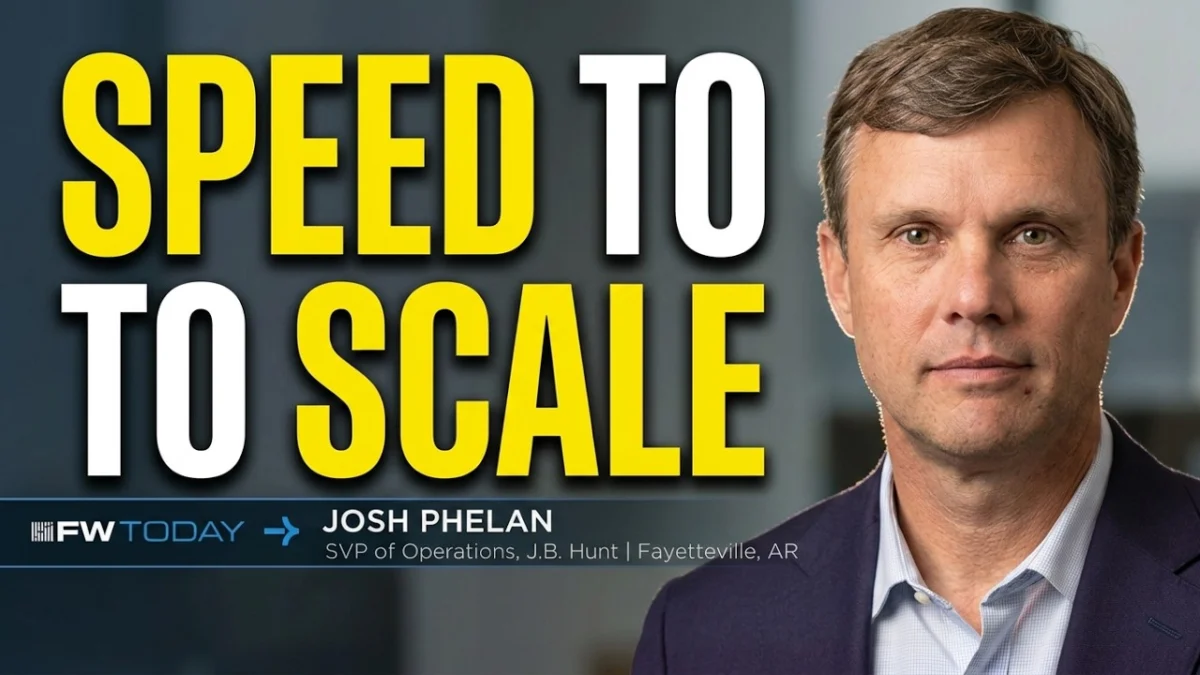
Josh Fellin, who leads the over-the-road (OTR) business for J.B. Hunt Transport Services, recently joined FreightWaves to discuss the state of the market, the tightening labor pool, and the strategic rationale behind the current industry-wide caution. As the freight sector pivots toward a potential recovery, the lessons learned from the post-2020 cycle appear to be fundamentally reshaping how large carriers approach capacity, driver recruitment, and technological integration.
The Current State of the Trucking Market: An Inflection Point
The trucking landscape has undergone a radical transformation over the last 18 months. According to Fellin, the market is currently grappling with a "significant change" in capacity and rate dynamics compared to the previous fiscal year.
A primary indicator of this volatility is the spot capacity rate. In June, the National Trucking Index (NTI) reflected a year-over-year surge of approximately 60%, signaling a drastic shift in supply-side dynamics. For J.B. Hunt, which operates a hybrid model utilizing both independent contractors under its authority and third-party capacity, this volatility has had a tangible, albeit temporary, impact on earnings.
The Cost-Per-Mile Disconnect
Fellin emphasized that the current rate environment is fundamentally tethered to a four-year cycle of compressed margins. Since 2019, the cost-per-mile to operate a truck has skyrocketed, with industry estimates ranging from 48% to 60% increases. Conversely, freight rates over that same period have seen only modest growth, in the neighborhood of 5% to 6%. This margin squeeze has discouraged the necessary capital investment in equipment, leaving the industry in a position where rate increases are not just desired, but essential for carriers to reinvest in their fleets.
Disciplined Growth vs. Overcorrection
One of the most compelling narratives in the industry right now is the reluctance of large, publicly traded carriers to expand their fleets. Knight-Swift, for instance, has explicitly signaled a preference for optimizing existing assets over fleet expansion, reporting a notable improvement in operating ratios within their over-the-road for-hire segment.
The "No Growth" Consensus
Fellin notes that for carriers like J.B. Hunt, the mantra is "disciplined growth." There is a collective memory in the industry of the perils of overcorrecting during an upcycle. In previous years, the temptation to add capacity whenever freight was abundant often led to massive oversupply when the market inevitably softened.
Data from the FreightWaves SONAR platform supports this, showing that fleets with over 1,000 trucks have seen almost flat growth over the last decade. This suggests that the largest players in the industry are prioritizing efficiency—operating smarter rather than just operating more. As Fellin pointed out, if a specific sector of the business, such as traditional OTR, does not offer the required returns, capital will be redirected toward more stable segments like intermodal or dedicated services.
The Tightening Labor Market and Driver Retention
The challenge of driver availability remains the "X-factor" that prevents a rapid, unsustainable expansion of the industry. The labor market for commercial drivers has tightened significantly, a trend that began with the contraction of third-party capacity and subsequently leaked into the available pool of full-time drivers.
Competitive Pressures
The industry is no longer just competing against other carriers for labor; it is competing against the broader gig economy. Platforms like Uber, Lyft, and Instacart offer prospective drivers local work with flexible hours, which poses a significant hurdle for long-haul carriers.
Fellin noted that J.B. Hunt is seeing increased pressure on driver pay. While the industry saw a significant step-change in compensation during 2021 and 2022, the current economic reality suggests that another round of pay increases may be necessary to attract and retain qualified talent through 2027. This, however, creates a compounding effect: carriers need higher rates to repair margins, but they also need to pay more to secure the labor required to haul that freight.
Strategic Implications: Technology and Intermodal
When asked about the future of alternative fuels and electric vehicles (EVs) in the long-haul market, Fellin offered a grounded perspective. While J.B. Hunt is actively testing various Zero-Emission Vehicle (ZEV) technologies, the company remains skeptical of pure-play electric semis for long-haul applications at this time.
The Infrastructure Gap
The prevailing view is that EV technology currently faces significant hurdles regarding range, charging infrastructure, and total cost of ownership. For now, the most viable applications for electrification remain in localized, dedicated, or last-mile services—environments where trucks hit the same routes repeatedly and have easy access to infrastructure.
Furthermore, the strength of J.B. Hunt’s intermodal business serves as a strategic buffer. By operating in a segment that functions more like a railroad than a traditional trucking operator, the company mitigates the extreme price volatility found in the spot market. This diversification is a key reason why large, sophisticated carriers are increasingly looking to move away from the "lifestyle business" of pure-play OTR and toward the more stable, contractual models found in dedicated logistics.
Looking Ahead: The Early Innings of Recovery
Despite the current "choppy" environment, the outlook remains cautiously optimistic. When asked where the industry stands in the current cycle, Fellin identified the market as being in the "early innings" of a potential economic recovery.
Anticipating the Bid Season
While spot market rates have cooled slightly from their mid-year peaks, they remain well above the previous year’s levels. The transition from spot to contract rates typically carries a lag, and Fellin believes it will take at least another full bid season for contract pricing to fully reflect the current cost realities of the industry.
The strategy for the coming months is clear:
- Honoring Commitments: Maintaining service levels for existing customers while navigating difficult conversations regarding rate adjustments.
- Margin Repair: Continuing to strip out unnecessary costs to ensure that capital investments yield the required returns.
- Selective Expansion: Refusing to chase top-line revenue at the expense of the bottom line.
As the industry navigates the remainder of the year and heads into the peak season, the focus will remain on sustainability. For carriers like J.B. Hunt, the goal is not to replicate the volatile growth of the past, but to build a resilient model capable of weathering the inevitable shifts in the global supply chain.
The partnership between logistics providers and shippers, particularly in hubs like Northwest Arkansas—the epicenter of American supply chain innovation—will be critical in fostering this new era of stability. If the industry can maintain its current discipline, the upcoming cycle could be characterized by steady, profitable growth rather than the boom-and-bust cycles that have defined the last twenty years.
About the Author