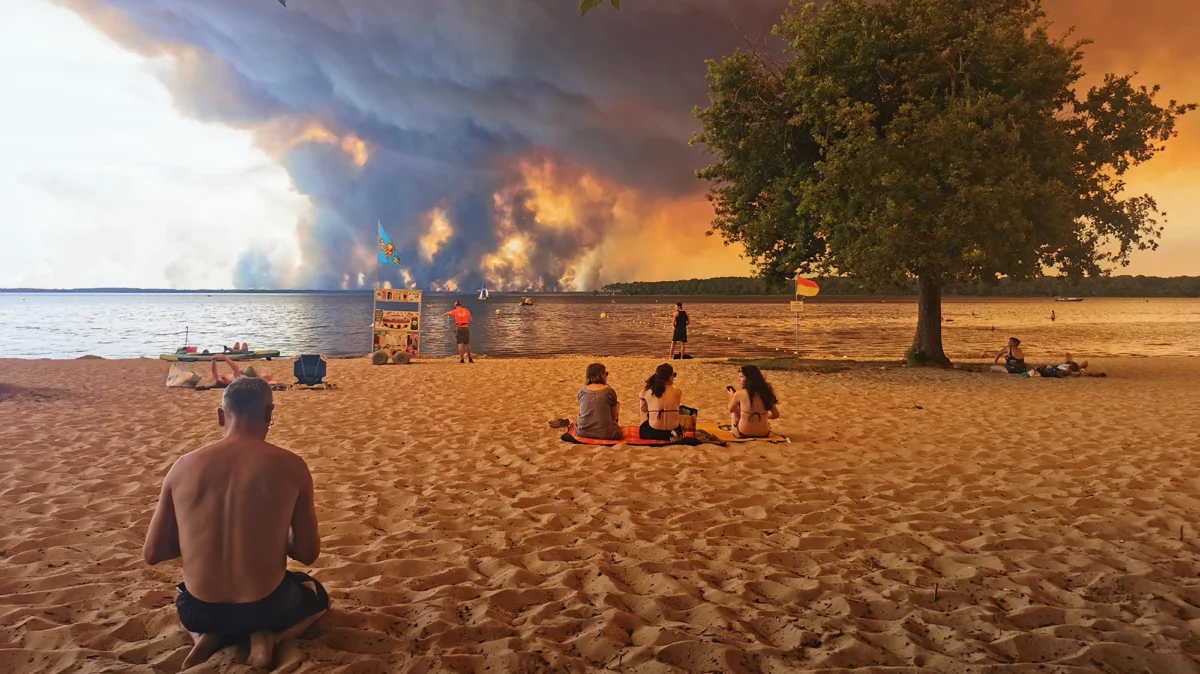
In an unprecedented escalation of the climate crisis, firefighters in southwestern France are battling not only the flames on the forest floor but also the volatile, self-sustaining weather systems forming in the smoke above them. For the first time in recorded history, French authorities have documented the emergence of pyrocumulonimbus clouds—colossal, fire-spawned thunderheads that signal a dangerous new threshold in wildfire intensity.
As heatwaves continue to bake Western Europe, the emergence of these "fire clouds" underscores a grim reality: the planet’s warming atmosphere is fundamentally altering the nature of wildfires, turning once-manageable blazes into uncontrollable meteorological events.
The Science of the "Fire Cloud"
Meteorologists often refer to these towering formations as pyrocumulonimbus or the more evocative cumulonimbus flammagenitus. While the phenomenon has been observed previously in the volatile fire landscapes of Australia, Canada, and the United States, its arrival in France is a diagnostic marker of the extreme thermal energy currently trapped within the region’s burning forests.
The mechanics of a fire cloud are deceptively simple but devastatingly effective. When a fire reaches a critical threshold of heat, it creates an intense updraft. As superheated air, smoke, and ash rise rapidly into the cooler, moist layers of the upper atmosphere, the water vapor clinging to smoke particles condenses. As the column continues its ascent, these droplets freeze into ice crystals, crowning the plume with a dark, ominous anvil—a true thunderhead born of combustion rather than traditional weather fronts.
These clouds are rarely a sign of relief. Despite the presence of water vapor, they rarely produce life-saving rain. Instead, they act as a force multiplier for destruction. The towering clouds can generate their own lightning strikes—sparking new ignition points miles away from the primary fire—and produce violent, erratic downdrafts that slam into the ground, fanning existing flames into a frenzy. In their most extreme manifestations, these pyrocumulonimbus clouds have even been known to spawn fire-driven tornadoes, turning the atmosphere itself into a weapon against first responders.
A Chronology of the 2026 Crisis
The current wildfire surge in France and Spain did not happen in a vacuum. It is the culmination of a summer characterized by relentless heat and cumulative drought.
- Early July 2026: Persistent high-pressure systems settle over Western Europe, creating a "heat dome" effect. Soil moisture levels plummet, turning forests in the Gironde region of France into a tinderbox.
- Mid-July 2026: Small, localized ignitions quickly spiral into massive conflagrations. Evacuation orders are issued as hundreds of thousands of residents and tourists flee the path of the encroaching smoke and flames.
- July 24, 2026: The tipping point is reached. Satellite imagery and ground observations confirm the formation of the first pyrocumulonimbus clouds over the Gironde wildfires. The sheer thermal output of the fires is officially recorded as exceeding the atmospheric stability of the region.
- Late July 2026: Following a brief, minor reprieve in temperatures, meteorological forecasts predict a resurgence of extreme heat, with temperatures expected to soar beyond 104°F (40°C) in France and 108°F (42°C) in Spain.
Supporting Data: An Unprecedented Surge
The data provided by the European Forest Fire Information System (EFFIS) paints a stark portrait of the disaster. The past week has been recorded as the single most destructive week for wildfires in France over the last two decades.
The figures are staggering:
- Record-Breaking Destruction: The total acreage burned in France during this singular event has more than doubled the previous record for a comparable period since satellite tracking began.
- Annual Totals: To date, more than 220,000 acres have been reduced to ash across the country. This represents a six-fold increase over the annual average.
- Surpassing Records: This current season has already burned 61,000 acres more than the previous annual record, and with the summer not yet over, the final tally is expected to grow significantly.
This surge is not a localized anomaly but part of a global trend. A 2024 study published in Nature revealed that the global incidence of extreme wildfires has more than doubled between 2003 and 2023. Of particular concern is the temporal concentration of these events; six of the seven most extreme wildfire years on record have occurred since 2016, a direct correlation with rising global mean temperatures.
Official Responses: An "Operational Impossibility"
For those on the front lines, the appearance of fire clouds has shifted the nature of the job from containment to survival. A spokesperson for the French firefighter association described the situation to AFP as an "operational impossibility."
This terminology is critical. It implies that the fires have crossed the line from human-manageable incidents into "natural forces beyond our control." When a fire generates its own weather, standard tactics—such as creating firebreaks or deploying water-bombing aircraft—become dangerously ineffective. The unpredictable wind shifts caused by pyrocumulonimbus downdrafts put the lives of firefighters at immediate risk, forcing commanders to retreat and re-evaluate strategy, often allowing fires to burn unchecked for hours or days.
Political leaders across Europe are now facing immense pressure to address the structural deficiencies in fire-fighting infrastructure, as traditional methods are clearly insufficient for the current era of "mega-fires."
Broader Implications: The New Climate Reality
The emergence of fire clouds in France is a harbinger of the "new normal" for Europe. For decades, many European nations viewed catastrophic wildfires as an issue confined to the American West or the Australian outback. That perception has been violently shattered.
1. The Fossil Fuel Feedback Loop
The primary driver behind this volatility is the warming of the planet due to the combustion of fossil fuels. As the atmosphere holds more heat, it pulls more moisture from the vegetation, creating the dry conditions required for high-intensity burning. These fires then release vast amounts of stored carbon back into the atmosphere, creating a feedback loop that accelerates future climate warming.
2. The Limits of Adaptation
There is a growing concern among scientists that we are approaching the limits of human adaptation. If wildfires can create their own weather systems, the traditional models for forest management, evacuation planning, and insurance risk assessment become obsolete. The fire in Gironde is a case study in what happens when ecological systems reach a breaking point.
3. Future Preparedness
As the heatwave returns to France and Spain, the focus remains on immediate survival. However, the long-term implications are clear: European nations must pivot toward a strategy that prioritizes deep landscape resilience, massive investment in advanced meteorological monitoring, and, fundamentally, a rapid transition away from the carbon-intensive practices that continue to fuel these atmospheric monsters.
As the smoke hangs over the beaches of Lacanau, the image of vacationers watching a fire-spawned cloud rise on the horizon is more than just a jarring photo opportunity. It is a snapshot of a changing world, where the very sky has turned against the land, and where the safety we once took for granted is being consumed by the flames of a warming planet.
About the Author