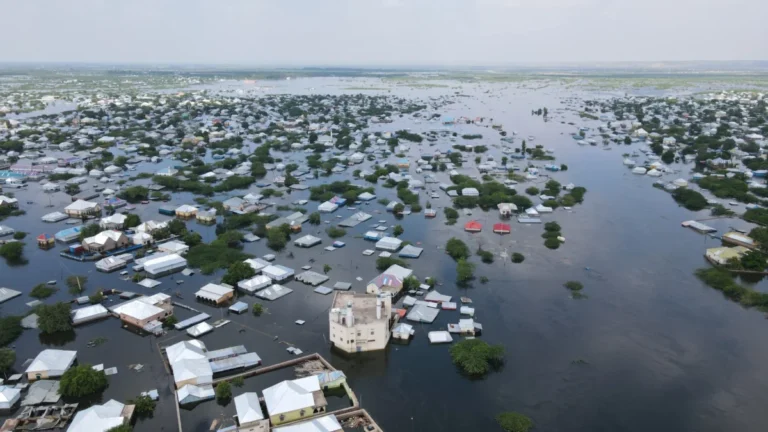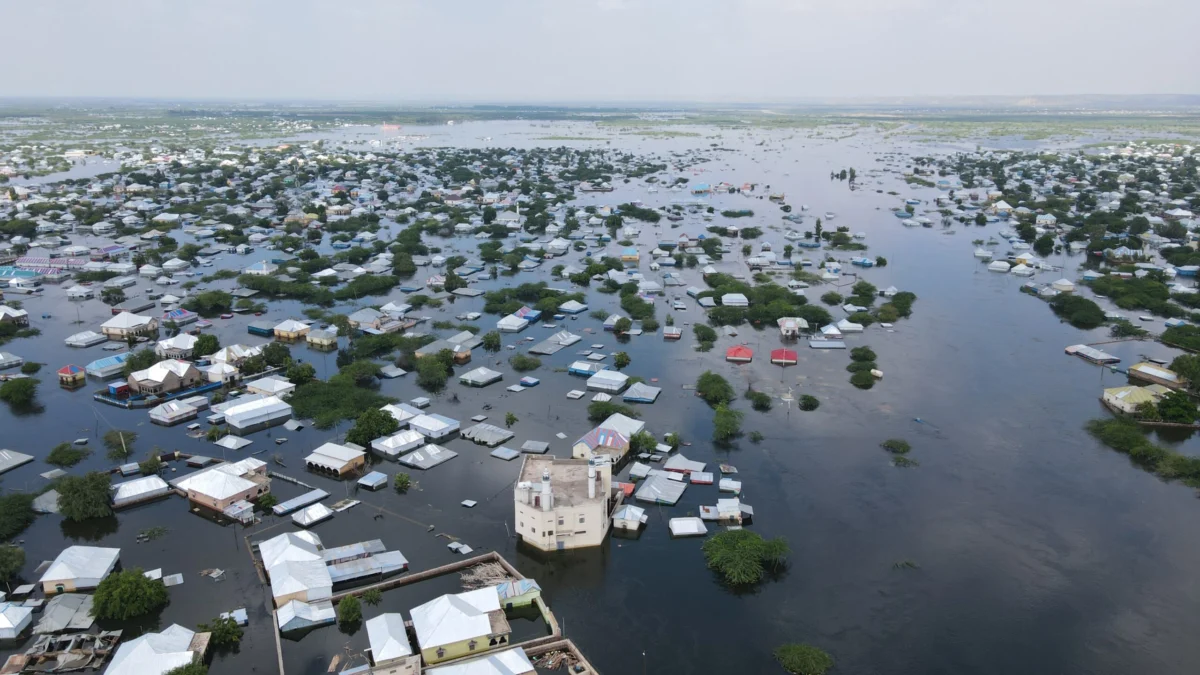
In the low-lying plains of southern Somalia, where the Juba River winds its way toward the Indian Ocean, a dual tragedy is unfolding. The region, long held as a de facto stronghold for the militant group al-Shabaab, has become the epicenter of a harrowing convergence: an intensifying campaign of U.S.-led aerial warfare and the catastrophic onset of a supercharged El Niño climate event.
For the families living in these flood-prone territories, the situation has moved beyond the typical horrors of conflict. Survivors describe a reality where constant drone strikes are not merely targeting militants but are systematically forcing displaced populations toward the riverbanks—areas that are now becoming death traps as the encroaching floodwaters rise. Humanitarian experts and local observers are now raising a chilling allegation: that the environmental volatility of the region is being exploited, effectively turning climate change into a silent weapon of war.
The Geography of Despair: Caught Between Fire and Water
The narrative of this crisis is written in the stories of those who have fled. Cayni Ali, a 27-year-old mother of six living near Jilib, recalls the terror of hearing drones overhead while the Juba River began to breach its banks. "The drones come all the time," she says. "We hear them constantly. They kill animals, civilians. The town is big but destruction is everywhere."
For those in Jilib and surrounding villages like Malenda, the airstrikes create a claustrophobic environment. Residents report that the constant threat of aerial bombardment makes movement impossible, pinning families against the riverbanks where they have no protection against the rising tide. This "pinning" effect—forcing a civilian population into high-risk flood zones—has led to widespread fear of a mass-casualty event in the coming months.
"The airstrikes are forcing people to go close to the river," explains a source monitoring the Juba floodplain. "It’s an extremely aggressive offensive, exploiting El Niño as a weapon of war to push the population into flood-prone areas."
Chronology of a Collapsing Landscape
The current situation is the culmination of years of environmental and military pressure.

- 2023: Somalia experienced its worst flooding in a century due to a significant El Niño event, displacing over 1.2 million people. The destruction of farmland and infrastructure left a power vacuum and a humanitarian deficit.
- Early 2025: The United States significantly altered its diplomatic and aid footprint in the region. Most notably, the abrupt closure of USAID operations under the current administration removed vital lifelines for millions of displaced Somalis.
- August–October 2026: As the current, more intense El Niño began to manifest, U.S. Africa Command (AFRICOM) reported a flurry of airstrikes in the Juba Valley. While the U.S. claims these strikes target specific high-value al-Shabaab commanders, eyewitnesses describe a broader, more indiscriminate pattern of destruction.
- October 2026: Humanitarian agencies, including the International Committee of the Red Cross (ICRC), issued urgent warnings that the Juba River basin is at critical risk of "severe flooding," yet official flood-mitigation support remains nearly non-existent.
The Ethics of "Weaponizing" Environmental Data
The most controversial aspect of the current military strategy is the alleged use of humanitarian mapping data for offensive purposes. Historically, NGOs and international bodies have mapped flood-prone regions to help mitigate civilian harm and direct aid during disasters. Analysts now fear that military planners may be using this same data to identify where populations are most vulnerable, effectively turning humanitarian research into a targeting tool.
Jethro Norman, a senior researcher at the Danish Institute for International Studies, describes this as a "reversal of process." He notes, "Using humanitarian remote sensing to inflict casualties rather than to mitigate harm is a profound ethical breach. You capture the cumulative impact of a sustained airstrikes campaign in an El Niño flooding context, and the result is a catastrophic drowning event."
Official Responses and the Fog of War
The U.S. military maintains a rigid stance regarding its operations in East Africa. In response to inquiries regarding the use of weather as a tool of warfare, an AFRICOM spokesperson stated: "AFRICOM does not target civilians, conduct operations for the purpose of displacing civilian populations, or use weather or flooding as a method of warfare. AFRICOM targets lawful military objectives and takes feasible measures to mitigate civilian harm."
Despite these assurances, there remains a glaring discrepancy between official reports and the ground reality. While AFRICOM records show a limited number of confirmed strikes, hospital records in Kismayo paint a different picture. The ICRC has reported a 43 percent increase in "weapon-related" injuries this year compared to 2025. This gap between official tallies and medical data has fueled speculation that covert operations, or perhaps strikes conducted by partner nations like Turkey, are occurring without public acknowledgement or accountability.
The Human Cost: A Hunger Crisis Amplified
Beyond the immediate threat of death by airstrike or drowning, the broader population is facing a silent, slow-motion catastrophe: starvation. With the destruction of crops—maize and sorghum—and the drowning of livestock, the local food supply has been decimated.
In Kismayo, the situation is dire. Shukri Ahmed, president of the Galbeed refugee camp, estimates that up to 6,000 people have perished in displacement sites since the withdrawal of USAID. Those who arrive at the ICRC-supported hospital are often in the final stages of malnutrition. Zakaria Mohammed, a head nurse, notes that child malnutrition rates have surged by 40 percent this year alone.

The story of Xaawo Nacdoor and her 14-month-old daughter, Faadumo, serves as a microcosm of the region’s suffering. Forced to flee Jamame at night to seek medical help while al-Shabaab restricted movement, Nacdoor walked for three days with nothing but a bottle of water. When she arrived, her daughter weighed only nine pounds. Faadumo’s survival is a rare exception in a system that is failing thousands of others.
Implications for the Future of Conflict
The convergence of climate change and warfare in Somalia poses a terrifying precedent for global conflict. As extreme weather events become more frequent, the "weaponization" of these events—whether through tactical exploitation or simple indifference to the civilian consequences of military action in vulnerable areas—could become a new, dark standard in asymmetric warfare.
The lack of funding is perhaps the most immediate failure. With the national aid budget slashed from $2.2 billion in 2023 to roughly $300,000 today, there are no boats to evacuate the stranded, no sandbags to reinforce the crumbling riverbanks, and no infrastructure to prevent the impending inundation of the Juba Valley.
As the rains intensify, the international community is left with a haunting question: If a population is trapped by a combination of militant control, foreign airstrikes, and a climate-driven flood, where does the responsibility for their survival lie? For the residents of Jilib, the answer is academic. They are simply waiting for the water to stop rising, or for the next drone to appear on the horizon—whichever comes first.
The situation in Somalia is no longer just a conflict over territory or ideology; it is a desperate struggle for survival against the very elements that, in a more stable world, would be managed by humanitarian foresight. Instead, the Juba River has become a frontline in a war where the environment itself is being forced to take sides, with the most vulnerable paying the ultimate price.
About the Author