The modern Chief Executive Officer is standing at a historical inflection point. For over a decade, the business landscape was defined by cheap capital, aggressive growth, and a relatively stable economic horizon. Today, that era is being dismantled by the rapid proliferation of Artificial Intelligence (AI) and a looming, more unforgiving economic cycle.
Adam Benowitz, CEO of VOX Funding, argues that the CEO of 2031 will bear little resemblance to the leader of 2020. As AI commoditizes technical expertise and "drudge work," the premium on human-centric leadership—judgment, relationship building, and strategic wisdom—is skyrocketing. However, this transition comes with a sting: a shrinking pipeline for entry-level talent and a capital environment that no longer rewards reckless burning of cash.
The New Executive Paradigm: AI as an Accelerator, Not a Replacement
The most immediate disruption in the C-suite is the velocity of information. Where CEOs once waited days for analyst teams to build financial models or stress-test market scenarios, AI now delivers these insights in seconds.
The Commoditization of Strategy
"A lot of things that used to take people days to do are going to take seconds," says Benowitz. "Building models, analyzing scenarios, processing information—AI is going to accelerate all of that."
This acceleration forces a change in the CEO’s operational tempo. If a leader can test ten strategic hypotheses in the time it once took to test one, the threshold for decision-making shifts. The ability to pivot based on real-time, AI-driven data is no longer a competitive advantage; it is a baseline expectation.
However, Benowitz warns against the "AI-all-the-way" fallacy. While AI excels at processing, it fails at the nuance of human leadership. "What I don’t think it replaces is relationships," he notes. "In a world where everything becomes commoditized, trust becomes the biggest differentiator."
Chronology of the Shift: From Abundance to Austerity
To understand where the C-suite is headed, one must look at the recent history of the workforce:
- 2010–2020: The Era of Abundance. A decade characterized by low interest rates, massive venture capital inflows, and a focus on "growth at all costs."
- 2020–2022: The Remote Disruption. The COVID-19 pandemic forced a global shift in operations. While digital agility increased, a generation of junior employees missed critical "osmotic learning"—the ability to observe senior leaders navigating crises in real-time.
- 2023–2025: The AI Awakening. Generative AI began to automate mid-level functional tasks, fundamentally changing the entry-level hiring math.
- 2026–2031: The New Reality. A future defined by "tougher credit, higher AI literacy, and the return of the fundamental P&L focus."
Supporting Data: The Changing Economics of Talent
The most profound impact of the AI revolution is not at the top of the pyramid, but at the bottom. Benowitz points to a critical "hollowing out" of the entry-level job market.
The Entry-Level Crisis
The traditional career ladder—where a junior analyst spends three years performing rote tasks before graduating to strategy—is under threat. AI now performs those rote tasks. Companies are increasingly hesitant to hire into roles that provide the "training ground" for future leaders.
- Impact on Seniority: Senior leaders are amplified by AI, using it to manage more complexity with fewer resources.
- Impact on Juniors: Those entering the workforce today face a higher barrier to entry. Without the repetition of manual tasks, they must find alternative ways to develop the judgment and intuition that define top-tier executives.
This shift suggests that future CEOs will need to be intentional about "mentorship by design," as the natural, informal training environments of the office have been diminished by remote work and automation.
Official Perspective: The Wisdom of Adam Benowitz
In an exclusive interview, Benowitz provided a roadmap for how leaders should view the coming years. His philosophy centers on the idea that while tools are changing, the fundamental physics of business—profit, loss, and risk—remain immutable.
On Decision-Making Under Pressure
"CEOs are going to have to get much more comfortable making decisions quickly," says Benowitz. But speed is a double-edged sword. When machines provide instant data, the "wisdom" to pause and assess the human implications of a decision becomes a rarer, more expensive trait.
On the Capital Contraction
The most sobering insight offered by Benowitz concerns the availability of capital. "A lot of younger executives have grown up during a period of abundant capital," he notes. "They haven’t experienced what happens when money isn’t flowing freely."
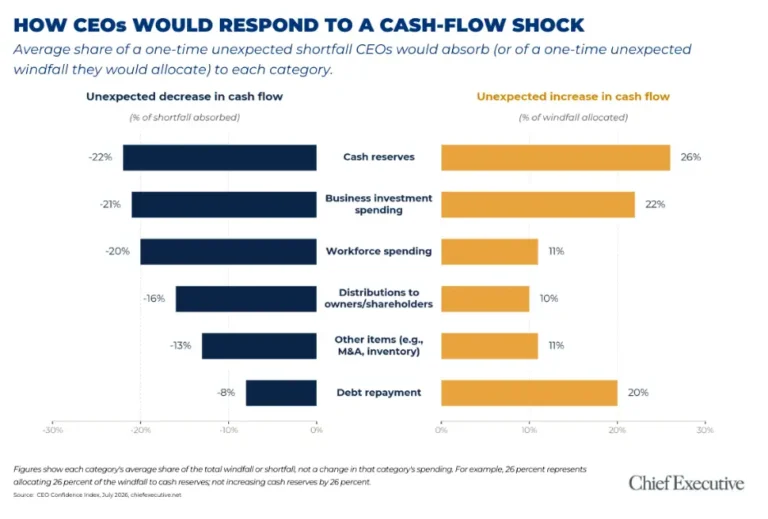
For many, the transition will be jarring. The era of the "next round" of funding serving as a safety net is likely over. Companies that survived by burning cash are being replaced by those that emphasize operational visibility and disciplined cash flow management.
Implications: Preparing for the 2031 Landscape
As we look toward 2031, four clear imperatives emerge for the next generation of leadership:
1. The Death of Non-Data-Driven Deals
The days of securing financing through "vibes" or purely relationship-based narratives are ending. Lenders and investors now demand extreme operational transparency. A CEO who cannot provide a granular, data-backed view of their business performance will find themselves shut out of the credit markets.
2. Radical Cash Flow Discipline
The "growth at all costs" mantra is being replaced by "resilience at all costs." Companies must build internal buffers. The CEOs who succeed in the next decade will be those who operate with the assumption that the "next round of funding" is not guaranteed.
3. AI Literacy as a Core Competency
AI literacy is no longer the domain of the IT department. It is a fundamental hiring requirement across every sector. Leaders must not only understand how to integrate these tools but also how to lead a workforce that is increasingly automated.
4. The Human Differentiator
As technical capabilities are commoditized, the "soft" skills of the CEO—culture, ethical risk-taking, and relationship management—will become the most critical hard assets. In an automated world, the ability to inspire people, navigate complex human conflicts, and maintain a firm grip on corporate culture will separate the CEOs who survive from those who are replaced by their own software.
Conclusion: The Hard Work Remains
While the drudgery of the CEO job is being stripped away by technology, the "hard work"—the responsibility of guiding a collective through uncertainty—is becoming more visible and more consequential.
The successful CEO of the future will be a hybrid: part data scientist, part diplomat, and entirely disciplined. They will operate in an environment where capital is tight, entry-level talent is scarce, and the speed of decision-making is relentless. It is a high-stakes environment that will inevitably cull those who rely on the crutch of easy money and those who fail to recognize that, in the final analysis, business is still a profoundly human endeavor.
As Benowitz concludes, "AI can inform decisions, but it doesn’t replace the people making them." The future of leadership is not in the machine; it is in the judgment of the person who knows when to listen to it, and when to ignore it in favor of the human path.
About the Author