
Main Facts: The Rise of the ‘Cli-Fi’ Genre
As vacationers finalize their summer itineraries and brace for long-haul flights, a specific genre of literature is increasingly finding its way into carry-on bags: Climate Fiction, or "Cli-Fi." What was once a niche sub-genre of science fiction has evolved into a powerhouse of contemporary publishing, garnering the world’s most prestigious literary accolades and fundamentally changing how readers—and industry leaders—perceive the environmental crisis.
In recent years, climate-centered narratives have moved from the periphery to the center of the literary stage. This shift is marked by a transition from traditional "disaster tropes" toward nuanced explorations of ethics, corporate accountability, and human resilience. The genre’s expansion is evidenced by its dominance in awards season; titles focused on the environment now regularly sweep the Booker Prize, the National Book Award, and the Locus Awards. The establishment of dedicated honors, such as The Climate Fiction Prize, further signals that the literary establishment views these stories not merely as entertainment, but as vital cultural barometers.
For sustainability professionals and policymakers, these novels offer more than escapism. They provide a narrative framework for "stress-testing" the future, exploring the social and ethical implications of climate data in ways that a white paper or a spreadsheet cannot.
Chronology: From Niche Warnings to Mainstream Dominance
The evolution of climate fiction can be traced through several distinct phases:
- The Early Precursors (Pre-2000s): Early works like J.G. Ballard’s The Drowned World (1962) or Octavia Butler’s Parable of the Sower (1993) laid the groundwork, using speculative environments to critique contemporary social structures.
- The "Disaster" Era (2000–2010): Following the success of films like The Day After Tomorrow, literature often focused on the immediate, cataclysmic "end of the world."
- The Intellectual Pivot (2011–2020): Writers began to focus on the "slow violence" of climate change. Richard Powers’ The Overstory (2018) became a cultural phenomenon, proving that readers were hungry for deep, ecologically literate prose.
- The Modern Synthesis (2021–Present): Today’s climate fiction blends genres—incorporating elements of noir, family drama, and techno-thriller—to examine how environmental decline intersects with artificial intelligence, global migration, and corporate power.
Supporting Data: Nine Essential Narratives for the Modern Reader
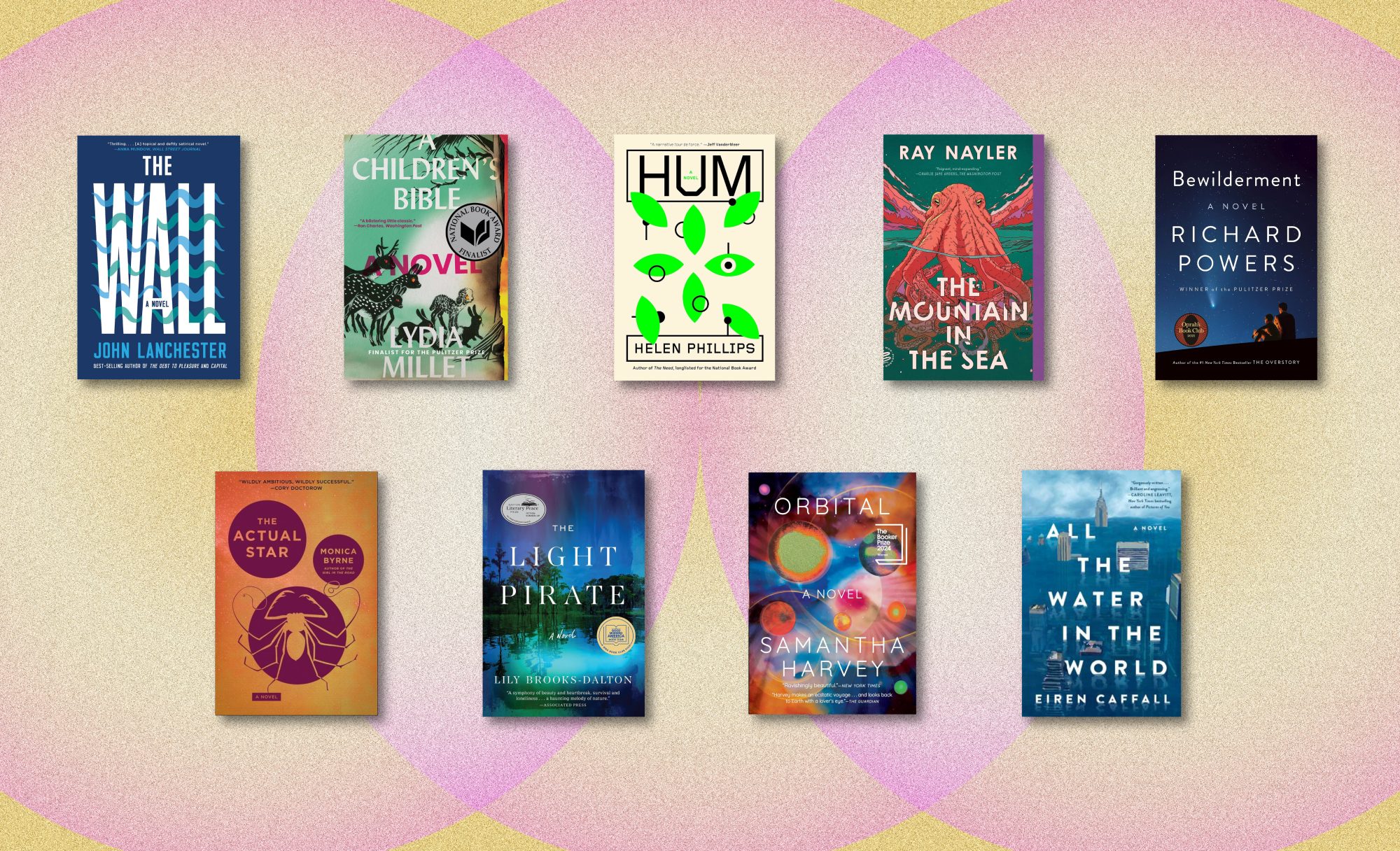
The following nine titles represent the vanguard of the genre, selected for their literary merit and their relevance to the current global discourse on sustainability.
1. The Mountain in the Sea by Ray Nayler
Winner of the Locus Award, Nayler’s debut is a sophisticated exploration of non-human consciousness. Set on a remote archipelago, a team of scientists discovers a species of octopus that has developed its own culture and language. Nayler, drawing on his background as an international advisor to the NOAA, crafts a narrative that is as much about marine conservation as it is about the predatory nature of corporate monopolies. It asks a fundamental question: In a world where intelligence is not exclusive to humans, what do we owe the natural world?
2. Orbital by Samantha Harvey
Winner of the 2024 Booker Prize, Orbital offers a "macro" view of the planet. The story follows six astronauts on the International Space Station. Over the course of 24 hours, they witness 16 sunrises and sunsets. Harvey’s prose captures the "Overview Effect"—the cognitive shift experienced by astronauts when seeing Earth from space. The novel serves as a meditative reminder of the fragility of our atmosphere and the artificiality of the borders that divide us.
3. The Actual Star by Monica Byrne
Spanning two millennia, Byrne’s novel is a "stone-cold masterpiece" of world-building. It connects the collapse of the ancient Maya civilization with a contemporary journey in Belize and a far-future society that has completely reorganized itself following a climate apocalypse. For professionals who think in decades and centuries, The Actual Star provides a sweeping look at how societies adapt—or fail—under extreme environmental pressure.
4. All the Water in the World by Eiren Caffall
Set in a submerged New York City, this debut novel focuses on the American Museum of Natural History, which has become a literal island of human culture. The story follows a young girl with an intuitive connection to the rising tides. Critics have praised the book for its "incandescent" prose, turning a tale of survival into a study of community resilience and the preservation of history in the face of literal erasure.
5. The Wall by John Lanchester
Longlisted for the Booker Prize, The Wall is a chilling look at "climate fortressing." An island nation has encircled itself with a massive concrete barrier to keep out both the rising seas and the refugees created by them. Through the eyes of a young guard, Joseph Kavanagh, Lanchester explores the ethical cost of security and the terrifying ease with which a society can dehumanize "the other" when resources become scarce.
6. Bewilderment by Richard Powers
Following his Pulitzer-winning The Overstory, Powers returns with a more intimate story. An astrobiologist, mourning the death of his activist wife, tries to raise his neurodivergent son, who is overwhelmed by the "eco-anxiety" of the modern world. The novel uses the search for life on other planets to highlight the miraculous, dwindling life on our own. It is a profound study of grief and the psychological toll of the climate crisis on the next generation.
7. A Children’s Bible by Lydia Millet
A finalist for the National Book Award, this novel is a biting satire of generational apathy. During a summer vacation, a group of children is forced to take charge when a massive storm hits, while their parents remain in a state of drunken denial. Millet’s work is a "righteously angry" indictment of leadership failure, reimagining biblical themes through the lens of modern environmental collapse.

8. The Light Pirate by Lily Brooks-Dalton
Focusing on the slow-motion disappearance of Florida, The Light Pirate follows a woman born during a catastrophic hurricane. As the state is gradually reclaimed by the Everglades and the ocean, the novel shifts from a story of loss to one of adaptation. It is a crucial read for those interested in climate risk, illustrating how infrastructure and society must be remade as the map changes.
9. Hum by Helen Phillips
The winner of the 2026 Climate Fiction Prize, Hum explores the intersection of environmental decline and intrusive technology. In a city reshaped by AI and surveillance, a mother undergoes a procedure to make her face unidentifiable to scanners. Phillips explores how "ordinary life" persists even when the climate is failing and automation is rendering human roles obsolete.
Official Responses: Critical and Scientific Validation
The reception of these works indicates a narrowing gap between science and art. Publications such as Scientific American and New Scientist have begun reviewing fiction, acknowledging that narrative is a powerful tool for communicating scientific reality.
The literary establishment has also shifted its stance. The "Climate Fiction Prize" was established specifically to honor works that "address the most urgent issue of our time without sacrificing aesthetic quality." Judges for these awards often include both literary critics and environmental scientists, ensuring that the books are grounded in a plausible reality. Furthermore, the Booker Prize’s frequent shortlisting of cli-fi titles suggests that "environmental themes" are no longer seen as a sub-genre, but as the essential subject matter of the 21st-century novel.
Implications: Why Fiction Matters for the Future
The rise of climate fiction has significant implications for public discourse and the professional world:
- Psychological Processing: Cli-Fi provides a safe space for readers to process "eco-anxiety." By moving through a fictional apocalypse or adaptation, readers can move past paralysis toward engagement.
- Corporate and Ethical Scrutiny: As seen in The Mountain in the Sea and Hum, these novels often portray corporations as the primary antagonists or ambiguous power players. This reflects a growing real-world demand for ESG (Environmental, Social, and Governance) accountability.
- Policy Simulation: For sustainability professionals, these stories act as "narrative simulations." They allow for the exploration of "cascading risks"—how a flood leads to a refugee crisis, which leads to a political shift, which leads to a new moral framework.
- Cultural Memory: Books like All the Water in the World emphasize that climate change is not just a threat to our physical safety, but to our cultural heritage. This is driving new conversations in the museum and archival sectors about how to protect human history from environmental threats.
As we move further into a decade defined by environmental volatility, these nine books offer more than just a way to pass the time on a flight. They offer a roadmap for the emotional and ethical challenges ahead, proving that while the climate may be changing, the human impulse to tell stories remains our most resilient tool for survival.
About the Author