The global supply chain is currently traversing one of its most complex landscapes in modern history. Between persistent economic volatility, a cooling demand for physical goods, and the rapid, disruptive integration of artificial intelligence (AI), the warehouse and distribution sector has reached a definitive inflection point. For logistics leaders, the challenge is no longer merely about operational efficiency; it is about fundamentally restructuring the "warehouse playbook" to survive a new, unpredictable reality.
According to the 23rd annual "DC Measures" report—conducted by the Warehousing Education and Research Council (WERC) in partnership with DC Velocity—organizations are trapped in a precarious balancing act. They are struggling to reconcile long-term strategic growth goals with the brutal immediacy of day-to-day survival: cost containment, inventory flow, and the relentless demand for customer satisfaction.
The Inflection Point: A Strategic Disconnect
The core finding of this year’s research is the emergence of a widening gap between stated corporate strategy and daily operational execution. In an era where agility is paramount, many organizations find their legacy processes acting as anchors.
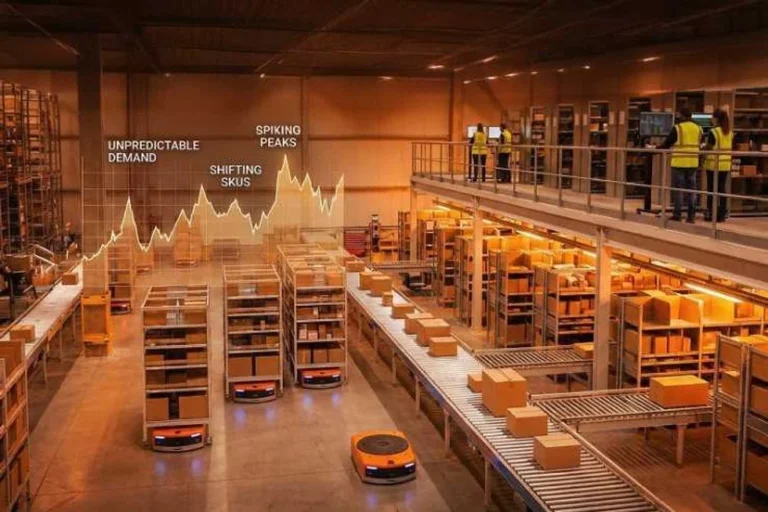
As economic indicators fluctuate, warehouse operators are finding that the traditional metrics—the ones that served them well during the stable growth periods of the last decade—may no longer be sufficient. The rise of AI-enabled technologies, from autonomous mobile robots (AMRs) to predictive analytics for demand forecasting, has introduced a new layer of complexity. Leaders are forced to ask: Are we deploying technology to solve strategic problems, or are we simply digitizing inefficient processes?
This "strategic disconnect" has become the defining hurdle of 2026. Companies that once prioritized massive scale are now pivoting toward lean operations, yet their legacy infrastructure and outdated KPIs often prevent them from achieving the necessary flexibility.
Chronology of the Crisis: From Stability to Volatility
To understand how the warehouse industry arrived at this crossroads, one must look at the recent timeline of supply chain evolution:
- 2020–2022 (The Pandemic Surge): The industry operated in a "growth at all costs" environment. Warehouses were tasked with managing massive volume spikes, leading to an over-indexing on physical footprint expansion and headcount growth.
- 2023–2024 (The Adjustment Period): As demand cooled and interest rates rose, the focus shifted to cost-cutting. Organizations began to realize that the massive inventories held during the pandemic had become liabilities.
- 2025 (The AI Infusion): The integration of AI began in earnest. Initially seen as a silver bullet for labor shortages, it quickly became clear that AI required a level of data hygiene and organizational maturity that many facilities lacked.
- 2026 (The Inflection Point): We now find ourselves in a period where organizations are forced to "rethink the playbook." The focus has moved from rapid expansion to intelligent optimization, as reflected in the latest WERC findings.
Supporting Data: Benchmarking Performance
The "DC Measures" study remains the industry’s gold standard for benchmarking. By surveying WERC members and DC Velocity readers, the research provides a granular look at how facilities are performing against key performance indicators (KPIs).
The Metrics that Matter
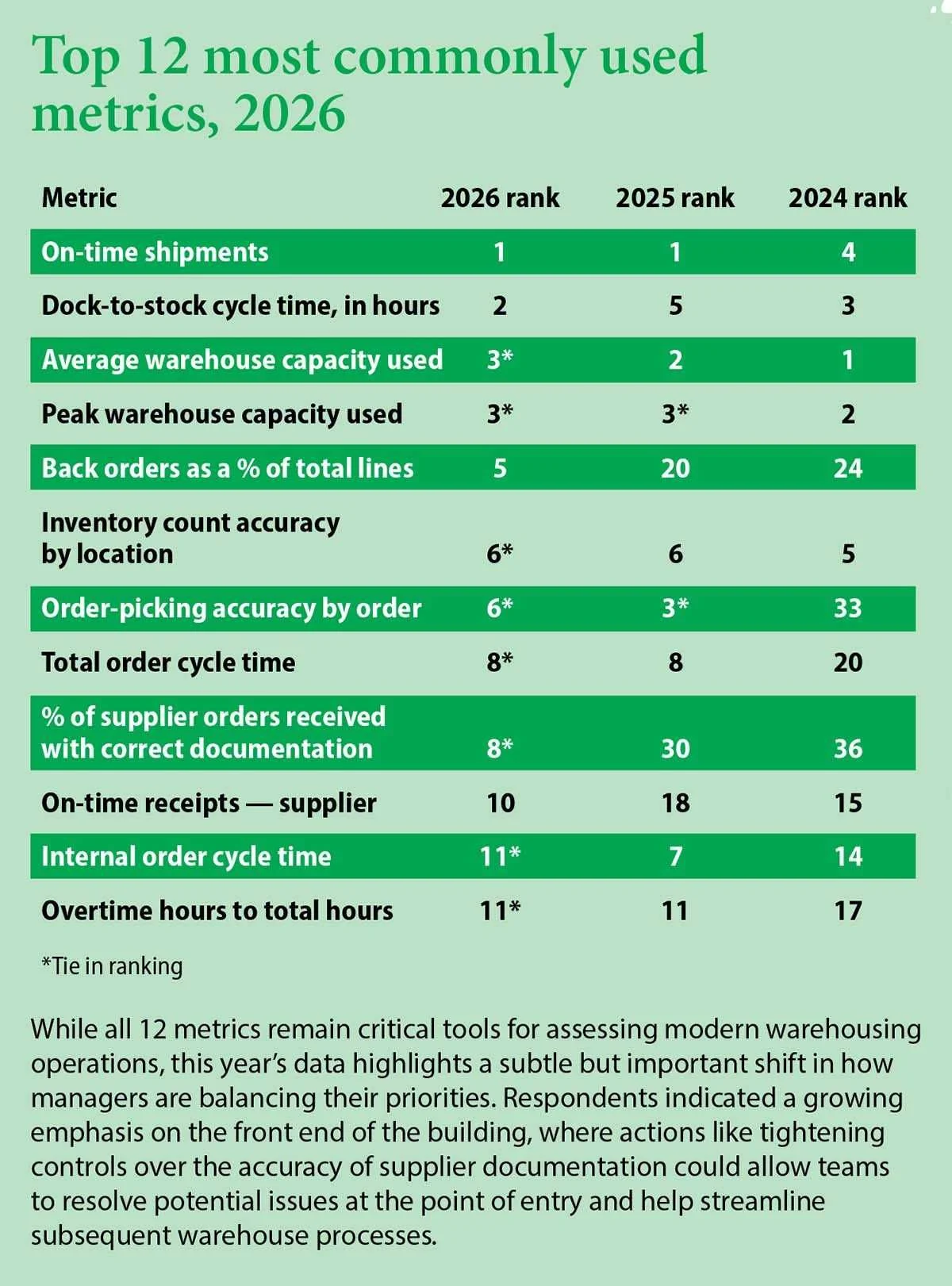
The survey highlights a shift in what leaders are prioritizing. While "order fill rate" and "on-time delivery" remain perennial favorites, there is a marked increase in the importance of:
- Inventory Velocity: Moving away from static storage toward high-turnover models.
- Labor Productivity per Hour: A direct response to rising wage inflation.
- Cost per Order: A critical metric for e-commerce-heavy operations.
- AI Utilization Rate: A nascent, but rapidly growing metric used to measure the ROI of new automation investments.
The data reveals that high-performing warehouses are those that have successfully integrated "data-driven decision-making" into their frontline operations. Conversely, lower-performing facilities continue to rely on manual, reactive management styles that prioritize short-term fixes over long-term structural health.
Official Perspectives: Expert Analysis
The 2026 report was spearheaded by industry veterans Donnie F. Williams Jr., associate professor at the University of Arkansas, and Dr. Karl B. Manrodt, professor of logistics at Georgia College & State University. Their research underscores that the primary issue is not a lack of technology, but a lack of alignment.
"The disconnect we are seeing is fundamentally about governance," noted Dr. Manrodt during the report’s presentation. "When a C-suite executive mandates a move toward ‘omnichannel agility,’ but the facility manager is still being incentivized solely on ‘cost-per-case,’ you are guaranteed to see operational friction."

The WERC association continues to act as a bridge between these disparate stakeholders. By providing standardized benchmarking, the council helps managers translate high-level business goals into specific, actionable metrics for the warehouse floor.
Implications for the Future of Distribution
The implications of the current "rethinking" phase are profound. As we look toward the remainder of the decade, several key shifts are becoming inevitable.
1. The Death of the "One-Size-Fits-All" Warehouse
Future warehouses will be highly specialized. The "DC Measures" report suggests that the era of the massive, generic distribution center is fading. In its place, we are seeing the rise of regionalized, micro-fulfillment centers designed to be closer to the end consumer, supported by AI-driven inventory positioning.
2. The Human-Machine Symbiosis
There is a pervasive fear that AI will replace the warehouse workforce. However, the study suggests that the most successful organizations are those that use AI to augment human capability. By using AI to handle complex routing and predictive labor scheduling, firms are allowing human employees to focus on value-added tasks—such as exception handling and quality control—that AI still struggles to master.
3. Sustainability as a KPI
Perhaps the most significant shift is the integration of sustainability metrics into the core operational playbook. Previously, "green" initiatives were treated as CSR (Corporate Social Responsibility) exercises. Today, they are being treated as operational imperatives. Reducing energy consumption and optimizing transport routes is no longer just "good for the planet"—it is a core component of reducing the total cost of ownership.
4. The Data-First Culture
The final, and perhaps most difficult, implication is the requirement for a total cultural overhaul. A warehouse is no longer just a physical box; it is a node in a data network. Managers who cannot interpret data, who do not understand the flow of information, and who cannot communicate the strategic value of technology will find themselves unable to lead in this new environment.
Conclusion: The Path Forward
The 23rd annual "DC Measures" report serves as both a warning and a roadmap. The organizations that will thrive in the coming years are those that stop treating the warehouse as a cost center and start treating it as a strategic asset.
This requires a departure from the "playbook" that defined the last decade. It requires the courage to sunset underperforming processes, the discipline to invest in data integrity, and the leadership to align floor-level execution with boardroom strategy.
As volatility continues to be the only constant, the ability to pivot—informed by precise, industry-standard metrics—will separate the market leaders from the laggards. The tools are available, the data is clear, and the inflection point is here. The question remains: is your organization ready to rewrite its playbook?
About the Study:
The annual "DC Measures" study is produced by the Warehousing Education and Research Council (WERC), a professional association for warehousing and distribution logistics managers, in partnership with DC Velocity. For further reading, performance benchmarking data, and full survey results, please visit werc.org/metrics.
About the Author