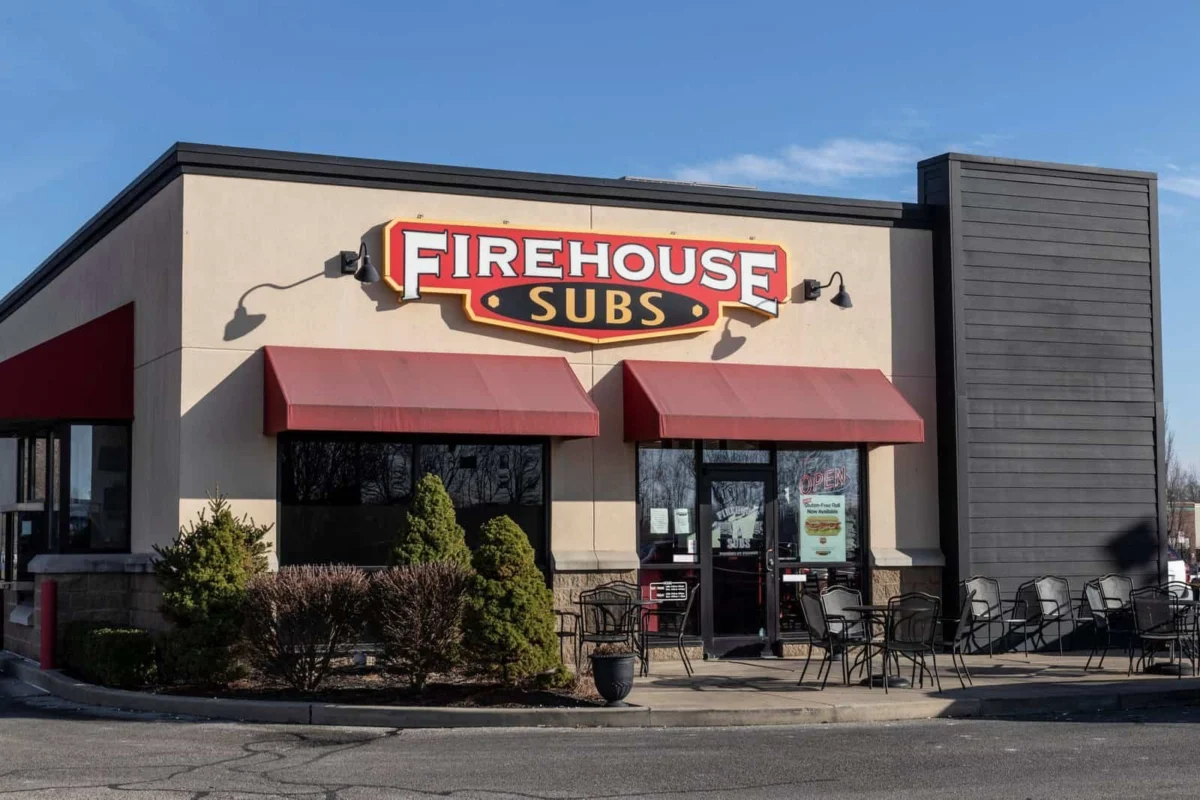
Firehouse Subs, the Jacksonville-founded sandwich chain known for its firefighter heritage and hot, steamed-sub specialty, has announced a significant leadership shift. Carolina Berti, a seasoned executive with a decade of experience at Tim Hortons, has been appointed as the new Chief Marketing Officer (CMO) for the brand’s U.S. and Canadian operations. This appointment marks a pivotal moment for the company as it transitions from a regional favorite to a major player in the global quick-service restaurant (QSR) landscape under the stewardship of Restaurant Brands International (RBI).
Berti’s mandate is expansive: she will oversee brand marketing, lead menu development, and spearhead guest engagement strategies. Her arrival comes at a time when the sandwich industry is experiencing heightened competition, forcing brands to differentiate not just through ingredients, but through sophisticated loyalty ecosystems and aggressive international expansion.
A Proven Track Record: The Chronology of Success
To understand why RBI—the parent company of Firehouse Subs—selected Berti, one must look at her tenure at Tim Hortons. Over nearly ten years, Berti rose through the ranks to become the vice president of marketing and innovation. Her career at the coffee-and-bakery giant was characterized by a data-driven, yet consumer-centric, approach to product development.
During her time at Tim Hortons, the brand achieved a rare streak of 17 consecutive quarters of sales growth. This consistency was largely attributed to Berti’s ability to modernize the menu. She oversaw the launch of over 100 new products, proving that she could balance the delicate act of maintaining brand heritage while introducing the innovation required to capture younger, more fickle demographics. By importing this "innovation-first" playbook to Firehouse Subs, RBI is betting that Berti can replicate that sustained growth trajectory in the competitive sandwich category.
Supporting Data: Firehouse in the QSR Ecosystem
The scale of the challenge for Berti is significant, yet the foundation is robust. Founded in 1994 by brothers and former firefighters Chris and Robin Sorensen, Firehouse Subs currently operates just over 1,200 locations. While this footprint is impressive, it is dwarfed by the industry titan, Subway, which maintains more than 20,000 U.S. locations. However, Firehouse is not competing solely on raw store count; it is positioning itself as a premium, high-quality alternative, placing it in direct competition with rapidly growing chains like Jersey Mike’s and Jimmy John’s.
Since the $1 billion acquisition by Restaurant Brands International in 2021, Firehouse has been integrated into a massive portfolio that includes Burger King, Popeyes, and Tim Hortons. RBI has set a lofty goal: reaching 40,000 restaurants worldwide by the end of the decade. For Firehouse to fulfill its role in this ambitious target, it must accelerate both domestic and international development.
Recent financial disclosures and development announcements suggest the gears are already in motion:
- Domestic Incentives: RBI has rolled out aggressive incentive packages for U.S. franchisees to stimulate new store openings and remodel older locations.
- International Foray: The brand has signed substantial development deals, including a commitment to open 100 restaurants in Mexico and a target of 500 in Brazil over the next ten years.
- Operational Synergies: By sharing supply chain and logistical infrastructure with its sister brands under the RBI umbrella, Firehouse is poised to achieve efficiencies that were previously impossible as an independent entity.
Official Perspectives: The Vision for the Next Chapter
Mike Hancock, president of Firehouse Subs, has expressed high expectations for the new CMO. In a statement regarding the appointment, Hancock emphasized that Berti’s specific blend of creative marketing and rigorous business acumen is essential for "writing the next chapter" of the brand.
"Carolina brings a rare combination of experience in scaling global brands and a deep understanding of what drives customer loyalty in the modern era," Hancock noted. "As we move into this next phase of expansion, our ability to innovate our menu while keeping our guests at the center of our digital strategy is paramount."
For her part, Berti joins the organization at a time when the "firefighter" brand identity—a key differentiator in the crowded sandwich space—is being tested for its scalability. Her focus will be to preserve the brand’s community-focused, charitable spirit (via the Firehouse Subs Public Safety Foundation) while leveraging the corporate muscle of RBI to drive scale.
The Evolution of the CMO Role
The appointment of Berti is a textbook example of how the role of the Chief Marketing Officer in the QSR industry has fundamentally changed. A decade ago, the CMO was largely responsible for advertising, public relations, and broad brand sentiment. Today, the role has evolved into a "Chief Growth Officer" hybrid.
At Firehouse Subs, Berti’s portfolio reflects this shift. She is responsible for:
- Menu Innovation: Moving beyond seasonal promotions to core product development that creates long-term value.
- Digital Integration: Managing the intersection of app-based ordering, delivery platforms, and in-store guest experience.
- Loyalty Ecosystems: Developing programs that turn occasional diners into recurring guests—a "standard battleground" in the industry where data is the new currency.
By moving an executive from Tim Hortons to Firehouse, RBI is also demonstrating its preference for "talent rotation." This internal mobility allows the corporation to cross-pollinate strategies. The logic is that the lessons learned in the hyper-competitive coffee sector—where loyalty programs and quick, digital-first transactions are the difference between success and failure—are directly applicable to the lunch-heavy, high-turnover sandwich market.
Strategic Implications: What the Industry Should Watch
The appointment of Berti has broader implications for the restaurant industry. As chains consolidate under larger parent companies, the "best practices" of the group will likely become the standard for the individual units.
1. The Power of "System-Wide" Talent
Expect to see more leadership movement between RBI’s portfolio brands. This ensures that the corporate culture and strategic priorities remain aligned, even as individual brands target different market segments. It also reduces the "learning curve" for new executives, as they are already accustomed to the RBI operational framework.
2. Loyalty as the North Star
As the sandwich market becomes increasingly saturated, price competition is becoming a "race to the bottom" that nobody wins. The real battle is now for customer data. Expect Berti to prioritize the Firehouse loyalty program, using the data to drive personalized offers and menu decisions. If she can replicate the loyalty engagement levels of the Tim Hortons mobile app, Firehouse could see a dramatic increase in lifetime customer value.
3. Scaling the "Firehouse" DNA
The primary risk for any brand undergoing rapid, global expansion is dilution. Can Firehouse maintain its reputation for high-quality, hot-steamed sandwiches while operating in vastly different markets like Brazil and Mexico? Berti’s challenge will be to maintain the "Firehouse" feel—the local community engagement and the charitable mission—while scaling the operations to meet RBI’s growth targets.
4. The Integration of Product and Marketing
Gone are the days when the marketing team would simply promote a product developed by the culinary team. Under this new leadership, marketing and culinary development will be deeply intertwined. We should expect to see menu launches that are explicitly tied to digital marketing campaigns, with real-time adjustments based on app-based feedback.
Conclusion
The appointment of Carolina Berti is not merely a change in personnel; it is a clear signal of Firehouse Subs’ strategic intent. By bringing in a veteran of the RBI system who understands the mechanics of scale, innovation, and digital loyalty, the brand is positioning itself to be more than just a regional sandwich shop.
As Firehouse Subs sets its sights on international markets and intensified domestic growth, the integration of menu, marketing, and technology will be the ultimate test of its business model. For competitors like Jersey Mike’s and Subway, the message is clear: Firehouse is no longer a small-scale challenger. With the weight of the RBI machine behind it and a leadership team focused on high-growth, high-engagement strategies, the sandwich wars are about to get significantly more interesting.
Industry analysts will be watching the next 18 to 24 months closely. If Berti can successfully adapt the "Tim Hortons playbook" to the unique culture of Firehouse Subs, the brand is well-positioned to meet the ambitious growth targets set by its parent company. For the consumer, this likely means more frequent menu updates, a more seamless digital experience, and perhaps a wider presence of the brand in neighborhoods and markets where it was previously absent. The next chapter for Firehouse Subs is undoubtedly being written, and it is being written with an eye toward global scale and technological sophistication.
About the Author