In the modern digital economy, the race for top-tier talent has moved entirely online. While this transition has vastly increased the reach of job postings, it has simultaneously created a daunting administrative challenge for hiring managers. A single job posting on a major portal can now attract hundreds—or even thousands—of applications, turning the simple act of candidate sourcing into a logistical bottleneck.
To navigate this landscape, organizations have increasingly turned to Applicant Tracking Systems (ATS). Data indicates that a staggering 95% of Fortune 500 companies rely on these platforms to filter, sort, and track candidates. By digitizing the recruitment workflow, these tools are no longer just optional enhancements; they are foundational elements of a competitive talent acquisition strategy.
The Core Facts: What is Applicant Tracking Software?
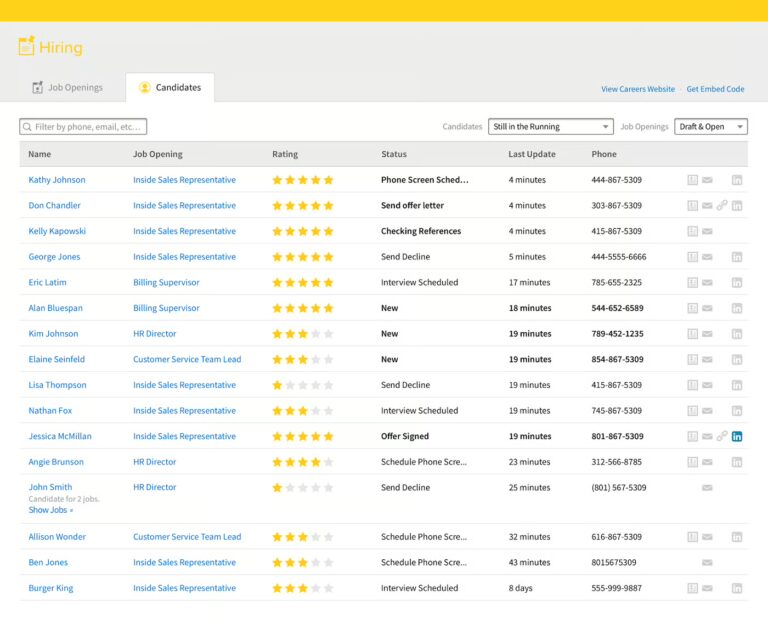
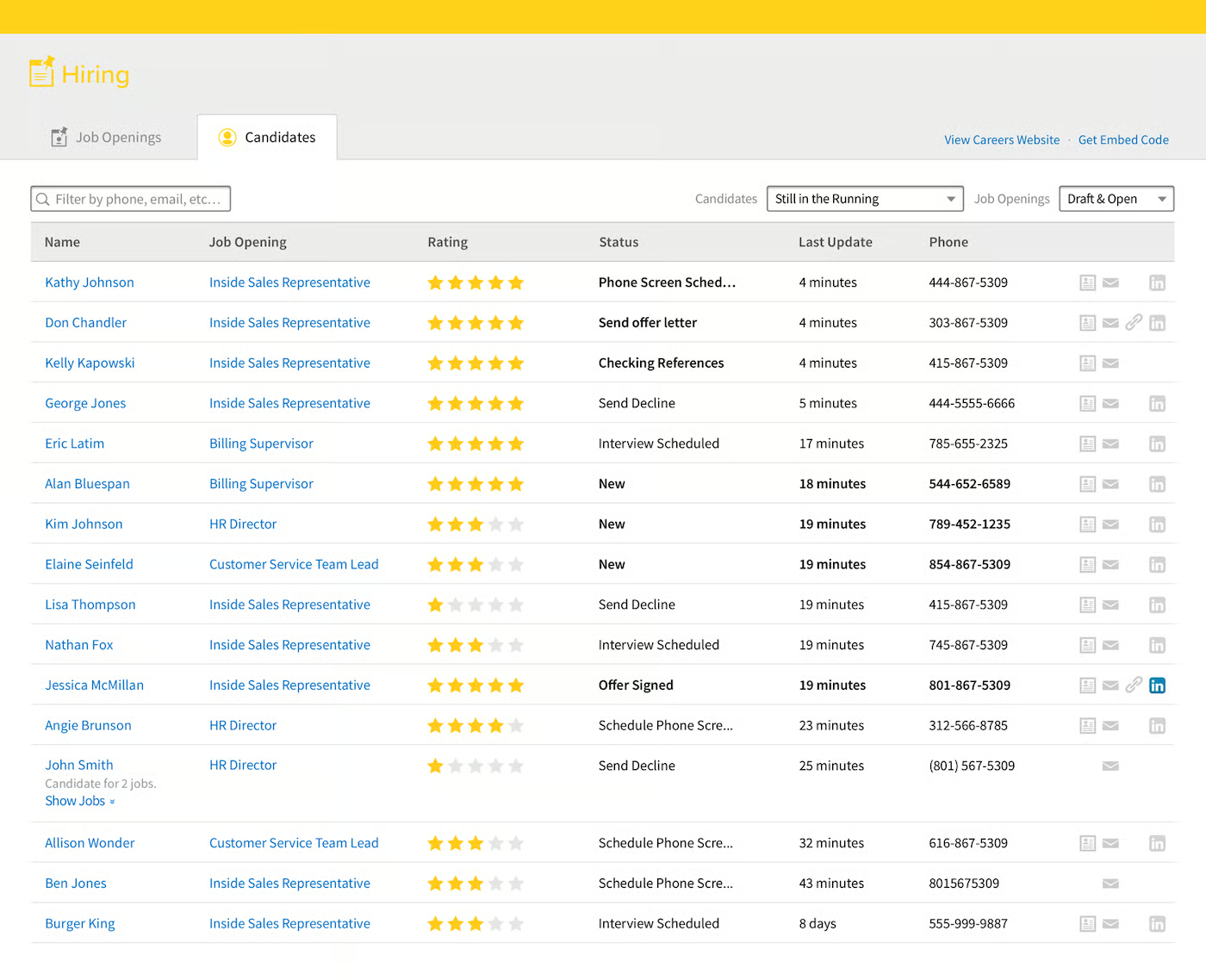
At its most fundamental level, an Applicant Tracking System (ATS) is a software application that centralizes the entire recruitment lifecycle. It serves as a digital repository for resumes, cover letters, and candidate data, providing a structured environment where hiring teams can track individuals from the moment of initial interest to the final onboarding signature.
The Evolution of Recruitment Tech
Historically, recruitment was a manual, paper-heavy process involving filing cabinets and physical sorting. The evolution into the digital age necessitated a system that could handle volume without sacrificing quality. Modern ATS solutions now function as the "mission control" for HR departments, providing a unified dashboard that tracks job requisitions, interview feedback, and candidate status updates. Whether embedded within a larger Human Resources Information System (HRIS) or operating as a specialized, standalone tool, an ATS is designed to reduce the "time-to-hire" metric—a critical KPI for growing businesses.

A Chronology of the Modern Hiring Pipeline
The implementation of an ATS typically follows a well-defined chronological flow within an organization. Understanding this timeline is essential for businesses looking to optimize their internal processes.
- Strategic Planning and Requisition: The process begins with the hiring manager defining the role, requirements, and budget. The ATS allows for the creation of standardized job descriptions that can be pushed to multiple job boards simultaneously.
- Sourcing and Application: Candidates interact with a branded career page, often integrated with tools like LinkedIn auto-fill to reduce friction. The ATS captures this data and automatically parses the resume for relevant skills and keywords.
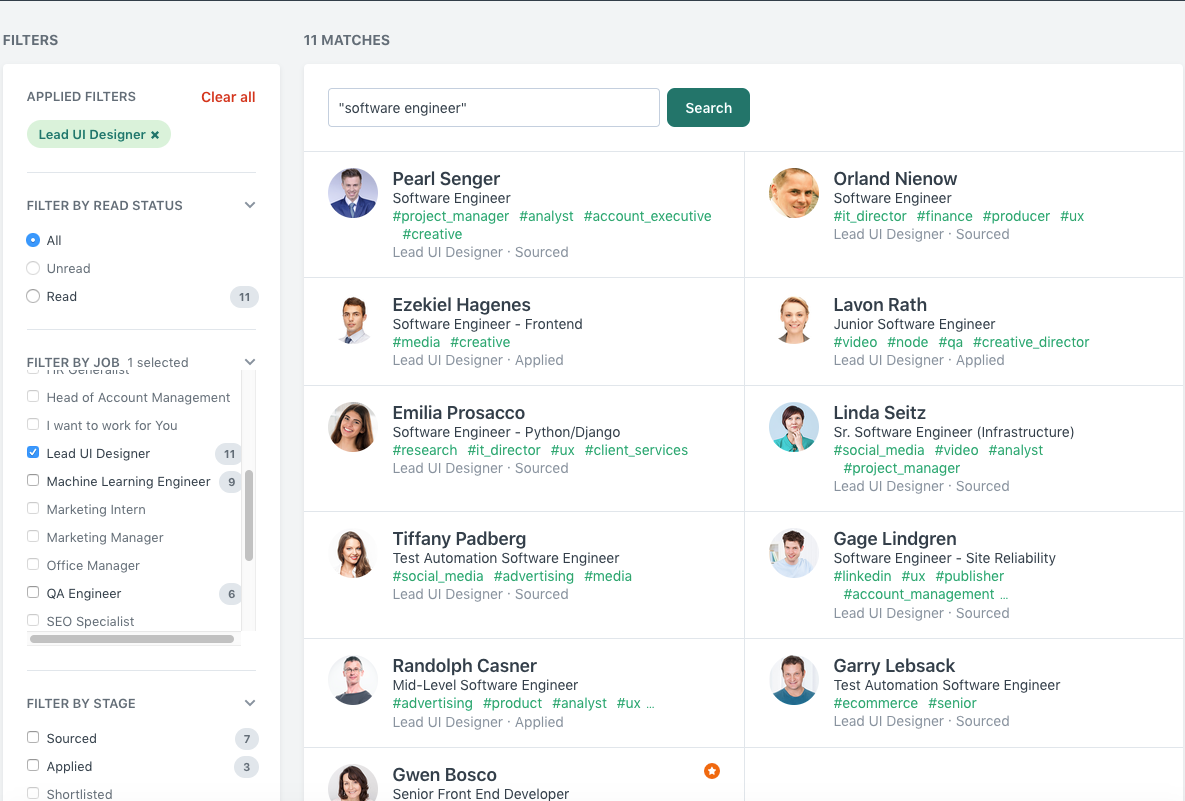
- Screening and Sorting: Once the inflow begins, the software utilizes AI or filter-based rules to surface the most qualified candidates, effectively "shortlisting" individuals for human review.
- Interview and Assessment: Once a candidate is flagged, the ATS manages scheduling. By syncing with internal calendars, the system removes the manual back-and-forth communication that often plagues the middle stages of hiring.
- Onboarding and Data Migration: Once an offer is signed, the ATS hands off the successful candidate to the onboarding module, ensuring that employee data is seamlessly integrated into payroll and performance management systems.
Supporting Data: Why Small Businesses Need Professional Tools
For small and medium-sized enterprises (SMEs), the misconception often exists that ATS tools are only for corporate giants. However, the data suggests otherwise. According to industry analysis, the average job posting in the U.S. receives approximately 250 applications. For a small business with limited HR bandwidth, manually reviewing these is impossible.
Comparative Landscape of Top ATS Vendors
| Vendor | Customizable Pages | Employee Onboarding | All-in-One HR Suite | Referral Tracking |
|---|---|---|---|---|
| Zoho Recruit | Yes | No | No | No |
| Breezy HR | Yes | No | Yes | No |
| Workable | No | Yes | Yes | Yes |
| Freshteam | No | No | No | No |
| Bamboo HR | No | No | No | No |
Note: Table highlights specific feature strengths. Most platforms offer varying degrees of functionality depending on the subscription tier.
Deep Dive: Profiles of Market Leaders
Zoho Recruit
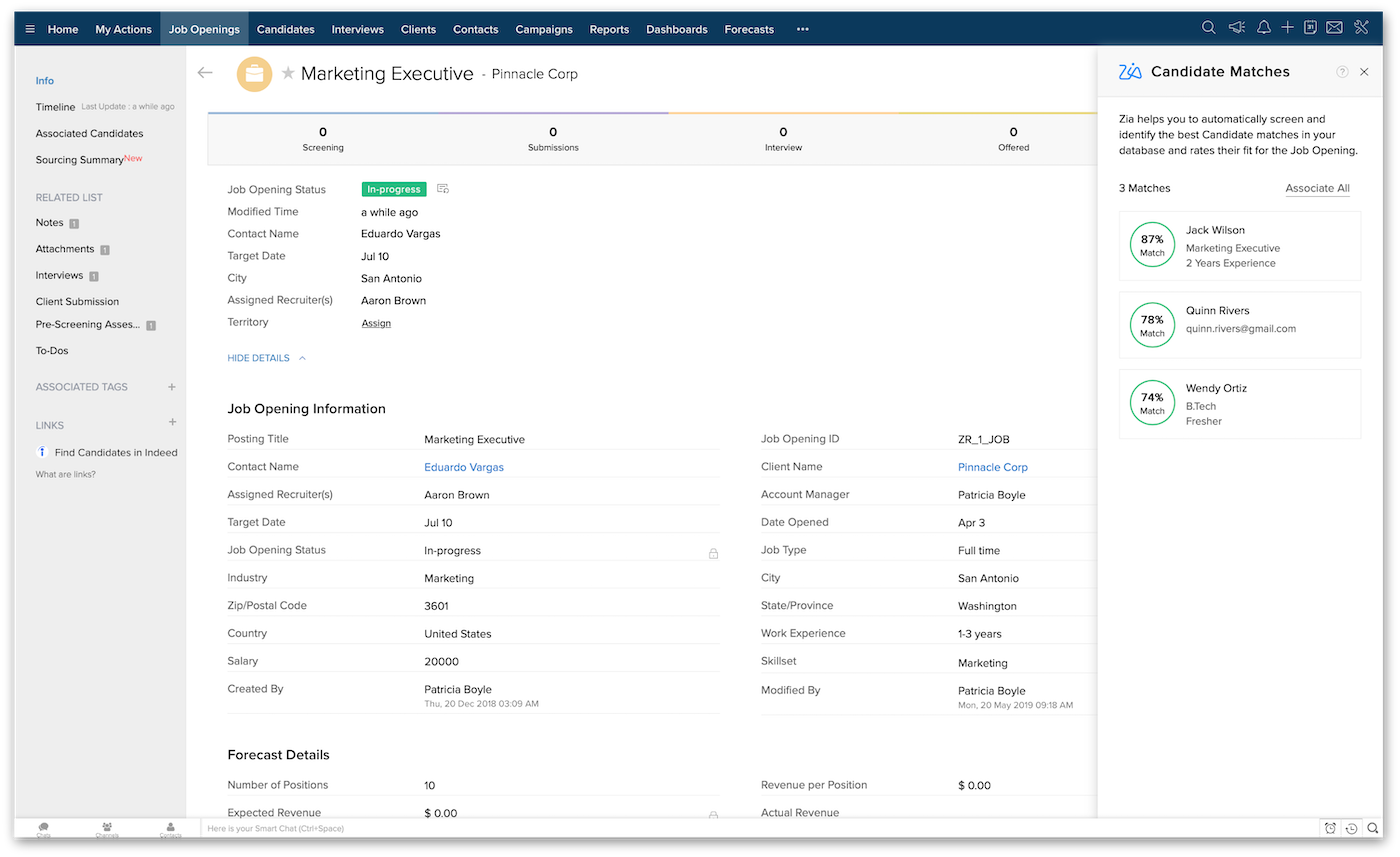
Zoho Recruit is tailored for both staffing agencies and internal corporate teams. Its strength lies in its ecosystem; it integrates deeply with other Zoho products. While new users may face a learning curve due to the sheer depth of its customization, the platform is renowned for automating workflows, including LinkedIn integration and secure background check protocols.
Breezy HR
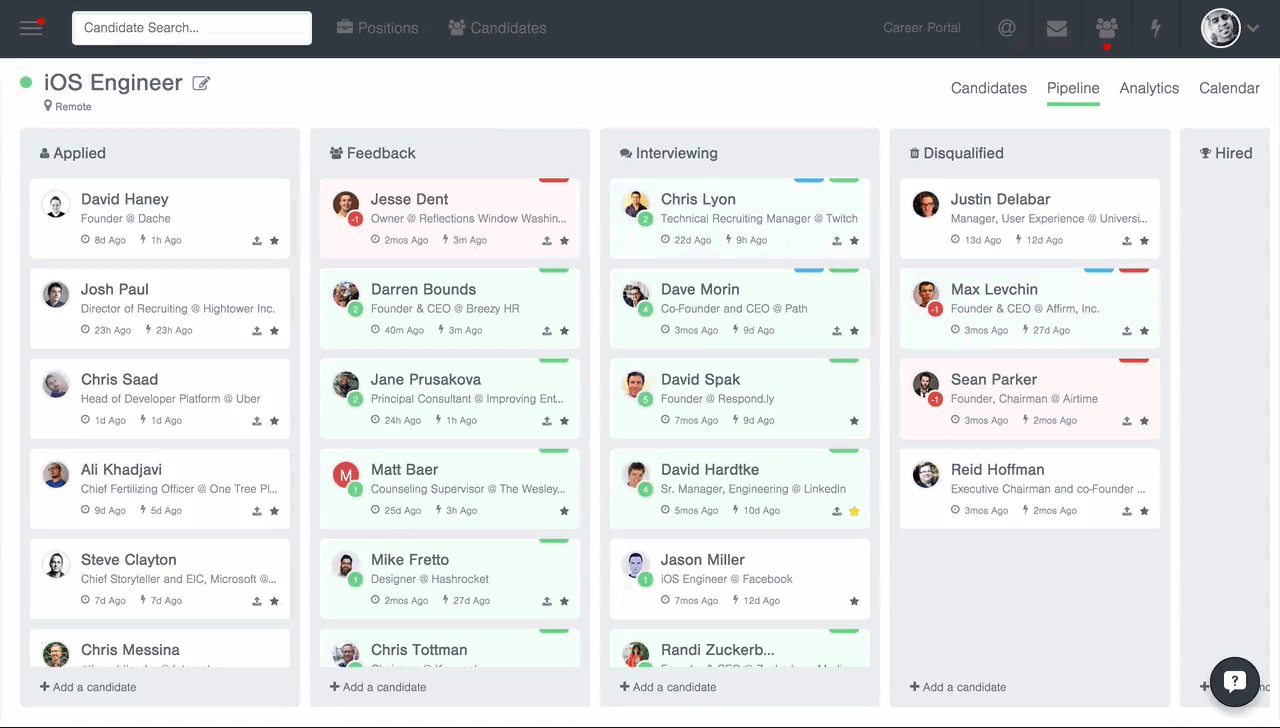
Breezy HR distinguishes itself through its visual interface. By utilizing a Kanban-style board—familiar to those who use project management tools like Trello—it allows hiring managers to drag and drop candidates through various stages of the hiring funnel. It is an excellent choice for teams that prioritize visual flow and ease of use.
Workable
Workable is built for scalability. Its AI-powered candidate identification tools are designed to surface passive candidates and those who best match job requirements. With one-click posting to over 200 job sites, it is arguably the most efficient tool for companies that are hiring at a high volume and need to reduce time-to-hire across multiple locations.
Freshteam
As a member of the Freshworks family, Freshteam is the ideal candidate for businesses looking for a lightweight, "all-in-one" HR entry point. Its standout feature is its highly competitive free tier, making it accessible for startups that need professional-grade software without the enterprise-level price tag.
Bamboo HR
Bamboo HR is the gold standard for organizations that view hiring as part of a larger employee experience. Beyond basic tracking, it provides performance management and employee data analytics. It is specifically designed to bridge the gap between "hiring" and "retaining," offering features like the Employee Wellbeing survey tool.
Official Responses and Industry Best Practices
Industry leaders and HR consultants emphasize that the "best" ATS is not necessarily the one with the most features, but the one that aligns with a company’s unique workflow.
"The goal of automation is to remove the mundane, not to dehumanize the candidate," says a spokesperson from a leading HR consultancy. "When you automate the email templates or the scheduling, you aren’t losing the personal touch; you are gaining the time to have higher-quality conversations during the actual interview."
Experts recommend that companies prioritize three specific pillars when choosing a vendor:
- Interoperability: How well does the system talk to your existing payroll or communication tools?
- User Experience (UX): If the hiring managers find the software clunky, they will stop using it, leading to "shadow recruiting" outside the system.
- Data Integrity: The system must provide actionable insights, such as which job boards generate the highest-quality candidates versus just the highest volume of applications.
Implications: The Future of Hiring
The implementation of an ATS has profound implications for a business’s long-term health. By moving to a centralized system, companies can unlock "actionable insights" that were previously invisible. For instance, analytics can reveal that a company’s "time-to-hire" is significantly higher for engineering roles compared to marketing roles, allowing leadership to adjust their recruitment strategy accordingly.
The Human Element in Automation
The biggest risk in adopting ATS technology is the potential for bias or poor candidate communication. Leading organizations are now using these tools to enhance transparency. By providing automated updates to candidates on their status, companies avoid the "black hole" experience where applicants are left wondering if their resume was ever received.
Strategic Recommendations
As you evaluate your next step, consider these critical questions:
- What is our projected hiring volume for the next 24 months?
- Do we need an all-in-one HR suite (including payroll/benefits), or just a recruitment-focused tool?
- Is our current team tech-savvy enough to manage a complex system, or do we need a plug-and-play solution?
In conclusion, the decision to invest in an Applicant Tracking System is a decision to prioritize efficiency and data-driven decision-making. By automating the repetitive tasks—screening, scheduling, and tracking—you empower your human talent to focus on the most important part of the business: the people.
About the Author