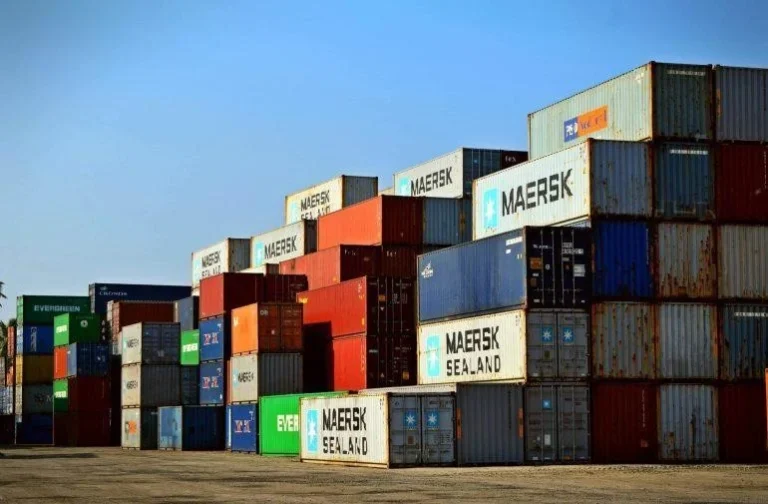
Global container shipping markets are navigating a period of significant volatility as freight rates climb for the second consecutive week. According to the latest data from the Drewry World Container Index (WCI), the composite index has risen 4% to reach $4,526 per 40-foot container. This uptick reflects a stark divergence in global trade lanes: while the Transpacific corridor is experiencing a sharp ascent in pricing due to constrained capacity and robust demand, the Asia-Europe trade routes are witnessing a cooling effect, with spot rates trending downward.
As the industry moves through the traditional peak season, shippers are facing a complex landscape defined by strategic capacity adjustments, emerging geopolitical risks, and persistent operational bottlenecks.
Main Facts: A Tale of Two Trade Lanes
The current state of the global shipping market is characterized by a "split-track" performance. The 4% increase in the WCI composite index masks the underlying tension between major trade corridors.
The primary driver of the current inflationary pressure on rates is the Transpacific lane. Carriers have aggressively managed supply, leading to significant rate hikes. Conversely, the Asia-Europe trades have seen a slight retreat in spot rates, signaling a potential softening of demand or an adjustment in the inventory restocking cycles of European importers.
The Drewry index, a closely watched barometer for the industry, confirms that the strength of the U.S.-bound trade is currently the primary engine driving global rate volatility. This is occurring despite efforts by major carriers to normalize their networks following months of disruption.
Chronology of Recent Market Developments
The recent trajectory of shipping rates is the result of a series of tactical decisions made by major ocean carriers over the past month.
- Early August: Carriers began to signal a tightening of supply on Transpacific routes, prioritizing revenue management as peak season volumes intensified.
- Mid-August: Capacity data revealed a significant drop in available space for U.S.-bound cargo. Specifically, capacity from Asia to the U.S. East Coast plummeted by 9% month-over-month, while Asia-U.S. West Coast capacity saw a marginal decline of 0.4%.
- Week 33: Drewry reported that port congestion remained a critical factor, with average vessel delays reaching 32.3 hours in Shanghai and 25 hours in Rotterdam.
- Current Week: The WCI composite reached $4,526 per 40-foot container, with specific spot rates for Shanghai-New York and Shanghai-Los Angeles jumping by 9% each.
Supporting Data and Regional Breakdown
The disparity between trade routes is underscored by the specific movement of spot rates across major global hubs.
The Transpacific Surge
The Transpacific trade has become the most expensive and volatile corridor for shippers.
- Shanghai to New York: Spot rates climbed 9% to $9,507 per 40-foot container.
- Shanghai to Los Angeles: Spot rates similarly rose by 9%, settling at $6,802 per 40-foot container.
These increases are directly correlated with "blank sailings"—a practice where carriers cancel scheduled port calls to reduce available capacity, thereby propping up spot rates. Drewry reports that seven blank sailings are currently scheduled for the coming week, further limiting available slots and increasing the likelihood of "rolled cargo," where containers are left behind at ports due to lack of space.
The Asia-Europe Softening
In contrast, the Asia-Europe trades are experiencing a slight reprieve for shippers, though rates remain historically elevated compared to pre-pandemic levels.
- Shanghai to Genoa: Rates fell 2% to $4,955 per 40-foot container.
- Shanghai to Rotterdam: Rates slipped 1% to $4,401 per 40-foot container.
While carriers are also employing blank sailings on this route—with two scheduled for next week—the supply-demand balance appears to be loosening, providing minor relief to European importers.
Official Responses and Carrier Strategy
Ocean carriers are maintaining a firm grip on capacity, citing the need to stabilize networks amidst persistent operational inefficiencies. For many carriers, the primary objective in the current quarter is to protect profitability by ensuring that high-demand routes remain lucrative, even if it requires the artificial constriction of capacity.
Beyond base rate hikes, carriers are increasingly utilizing surcharges to mitigate the costs associated with navigating restricted waterways. Notably, several carriers have announced new Panama Canal surcharges for services moving from Asia to the U.S. East and Gulf coasts. This move is expected to add significant overhead to logistics budgets for companies importing goods into the U.S. during the crucial September shipping window.
The industry is also keeping a close watch on the "Red Sea factor." While some container lines have tentatively begun restoring services through the Red Sea and Suez Canal, citing minor improvements in security, the overall impact on transit times and insurance premiums remains a point of contention.
Geopolitical Risks and Structural Challenges
The volatility in shipping rates is not merely a product of supply and demand; it is deeply intertwined with geopolitical instability.
The expiration of the U.S.-Iran memorandum regarding the Strait of Hormuz has introduced a new layer of uncertainty for global energy and trade flows. While container shipping is not as directly impacted as the tanker market, the resulting regional tension keeps premiums high and risk assessments conservative.
Operational challenges at ports further complicate the landscape. Beyond the congestion at major hubs like Shanghai and Rotterdam, labor unrest remains a critical concern. Specifically, ongoing labor disputes at German ports are threatening to derail the modest recovery in schedule reliability. When labor issues coincide with port congestion, the resulting bottleneck creates a "bullwhip effect," where delays at one port cascade through the entire global network.
Implications for Shippers and the Global Economy
The current environment carries profound implications for cargo owners and the broader economy.
- Increased Logistics Costs: The reliance on blank sailings and new surcharges means that shippers should prepare for sustained, high-cost transportation environments. Businesses that operate on thin margins may find it increasingly difficult to absorb these costs without passing them on to the end consumer.
- Inventory Planning: The risk of "rolled cargo" is at its highest in months. Shippers who do not secure space in advance face the prospect of their goods sitting on docks for weeks, which can cause significant disruptions to just-in-time manufacturing and retail seasonal inventory cycles.
- Strategic Diversification: The unpredictability of the Suez and Panama canals is forcing logistics managers to consider alternative routing. However, with limited options available, most are forced to pay the premium to stay on established, albeit currently expensive, routes.
Expert Recommendations
Drewry, along with other industry analysts, is advising shippers to adopt a "proactive, not reactive" approach.
- Book Early: Given the current capacity constraints and the propensity of carriers to blank sailings, booking cargo 3–4 weeks in advance has become the new standard for ensuring space.
- Buffer Stocks: Companies should build additional lead time into their supply chains to account for potential delays at major ports and the unpredictability of vessel schedules.
- Monitor Surcharges: Shippers should conduct regular audits of their freight invoices to account for the increasing array of surcharges—from Panama Canal fees to bunker adjustment factors—that are being implemented with little notice.
Conclusion: A Future of Continued Volatility
The diverging performance of the Transpacific and Asia-Europe trades serves as a reminder of the fragility of the global supply chain. While carriers have successfully demonstrated their ability to manipulate rates through capacity management, they are operating within an increasingly unpredictable global context.
As the industry looks toward the remainder of the year, the combination of geopolitical risk, labor disruptions, and the strategic use of blank sailings suggests that rate volatility will remain the status quo. For global trade, the path forward is one of caution: while capacity exists, its availability is being tightly controlled, leaving little room for error for those managing the flow of goods across the world’s oceans. Shippers must remain vigilant, flexible, and prepared for a market that is fundamentally being reshaped by the minute.
About the Author