In a strategic maneuver designed to insulate its customer base from the lingering sting of stubborn inflation, retail titan Walmart has confirmed it is funneling nearly $3 billion in federal tariff refunds directly into aggressive price reductions. The Arkansas-based retail giant, which serves as a bellwether for the broader American economy, reported its second-quarter earnings on Thursday, unveiling a complex fiscal narrative defined by a massive tax windfall, cooling consumer demand, and an intense focus on retaining its "Everyday Low Price" (EDLP) value proposition.
As household budgets remain strained by elevated fuel costs and the rising price of essential goods, Walmart’s decision to pass these savings onto the consumer is not merely an act of benevolence; it is a calculated effort to solidify market share in a tightening economic climate.
The Core Financials: A Strategic Reinvestment
The cornerstone of Walmart’s recent financial disclosure is the receipt of approximately $2.9 billion in tariff refunds. According to Chief Financial Officer John David Rainey, the company has successfully collected "substantially all" of the funds for which it was eligible.
This liquidity boost comes at a critical juncture. While Walmart’s operating income for the second quarter surged by nearly 30% year-over-year—a performance significantly bolstered by the influx of these refunds—the company simultaneously faced a sobering reality: growth in U.S. comparable sales hit a six-year low. Comparable sales, a vital industry metric tracking revenue from stores and e-commerce platforms operational for at least 12 months, grew by just 2.6% in the second quarter, a notable deceleration from the 4.1% growth seen in the first quarter.
The market’s reaction to this slowing momentum was immediate, with Walmart shares experiencing a 9% decline in morning trading following the announcement. Despite the stock volatility, executive leadership maintains that the long-term play is to prioritize value and volume over short-term margin expansion.
Chronology: From Legal Battles to Consumer Relief
To understand the current retail landscape, one must look back at the judicial and policy shifts that enabled this multi-billion-dollar infusion.
- The IEEPA Conflict: The refunds are the direct result of a legal challenge surrounding tariffs imposed during the Trump administration under the International Emergency Economic Powers Act (IEEPA). For years, retailers and importers argued that these executive-mandated tariffs were overreaching.
- The Supreme Court Intervention: In February of this year, the Supreme Court delivered a landmark ruling that effectively struck down the legal basis for these specific tariffs. This judicial reversal opened the floodgates for a massive bureaucratic reconciliation process.
- The National Windfall: As of July 31, court filings indicate that the U.S. government has processed approximately $100 billion in IEEPA tariff refunds across various industries, with Walmart emerging as a primary beneficiary.
- The "Rollback" Acceleration: Recognizing the liquidity injection, Walmart began systematically lowering prices in July. The company reported a sharp uptick in "rollbacks"—temporary price cuts—delivering 11,000 such discounts in the second quarter, up from 7,200 in the first quarter.
Supporting Data: Mapping the Consumer Pressure
Walmart’s strategic pivot is underpinned by a mountain of data suggesting that the average American shopper is at a breaking point.
The Macroeconomic Headwinds
Inflationary pressures, exacerbated by global geopolitical volatility—including the ongoing impacts of the war in Iran on fuel supply chains—have fundamentally altered consumer behavior. The cost of transportation and energy has trickled down to the retail shelf, forcing families to make difficult trade-offs between discretionary spending and essential household needs.
Price Sensitivity in the Aisles
Walmart’s focus is not broad-spectrum; it is surgical. By targeting high-frequency purchase items such as beef, Coca-Cola, and laundry detergent, the retailer is effectively subsidizing the "basket of goods" that defines a household’s weekly expenditure.
- Operating Income Growth: 30% increase (Q2 year-over-year).
- Comparable Sales Growth: 2.6% (Q2), down from 4.1% (Q1).
- Rollback Volume: 11,000 instances in Q2 vs. 7,200 in Q1.
These figures illustrate a company fighting for every percentage point of growth by using its massive scale to absorb costs that smaller competitors simply cannot afford to shoulder.
Official Responses: The Executive and Analytical Perspective
The C-Suite Strategy
CFO John David Rainey addressed investors with a message of pragmatic optimism. "We are channeling these funds into improving customer experiences, with priority investments in groceries and general merchandise," Rainey stated during the earnings call. He emphasized that the heavy investment in price is not just a reactive measure, but a proactive tool to gain market share. "Customers need it," he added, "and it is expected to drive market share gains over time."
CEO John Furner echoed this sentiment, highlighting that the operational agility required to deploy 11,000 rollbacks in a single quarter demonstrates the company’s commitment to its core demographic.
The Analyst Outlook
Neil Saunders, managing director at GlobalData Retail, suggests that the market’s negative reaction may be short-sighted. According to Saunders, Walmart’s strategy is a classic defensive maneuver that, in the long run, will prove to be an offensive triumph.
"With the tariff money available, Walmart is likely to concentrate on price savings for essential items to preserve its competitive position as an Everyday Low Price retailer," Saunders noted. He further highlighted that the strategy extends beyond just the price tag; the funds are also earmarked for physical store upgrades—a critical area of investment as the retail environment shifts toward an omnichannel, modernized experience.
Implications: The Future of Retail Competition
The implications of Walmart’s "refund-to-rollback" strategy are far-reaching, signaling a potential shift in how large retailers navigate inflationary cycles.
1. The Consolidation of Market Power
By aggressively lowering prices, Walmart is essentially forcing a "price war" that its smaller, less-liquid competitors cannot sustain. As inflation persists, the gap between Walmart’s pricing and that of smaller regional grocery chains or independent retailers is widening. This could lead to a consolidation of the market, where Walmart captures a larger share of the "middle-class" consumer who is trading down to save money.
2. The Return to "Everyday Low Prices"
For years, the retail industry has experimented with various pricing models, including dynamic pricing and digital couponing. However, Walmart’s massive investment suggests that in an era of high inflation, there is no substitute for the simplicity and reliability of the EDLP model. The psychological impact of a visible "rollback" on essential goods is a powerful loyalty driver that digital algorithms struggle to replicate.
3. Store Experience as a Differentiator
As the industry matures, the distinction between "online" and "in-store" shopping is blurring. By using the tariff windfall to fund store improvements alongside price cuts, Walmart is acknowledging that the physical shopping experience remains a critical touchpoint. If customers can find lower prices and a cleaner, more efficient store environment, the barrier to switching to competitors becomes significantly higher.
4. Navigating Geopolitical Uncertainty
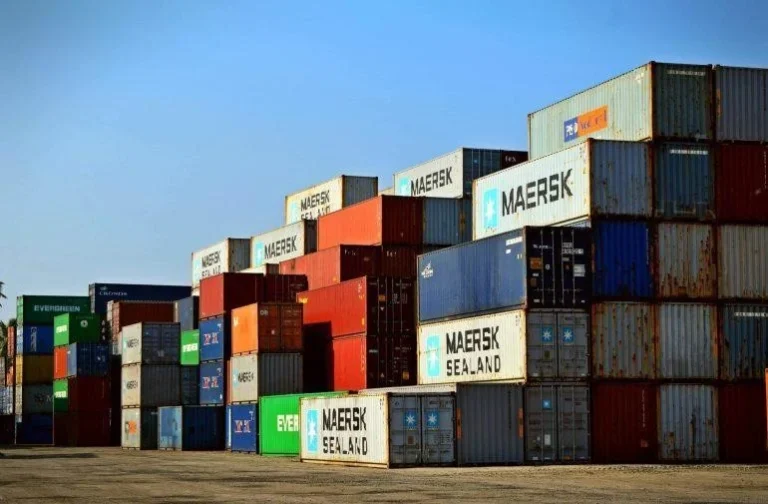
Finally, the reliance on tariff refunds highlights the vulnerability of global supply chains. While Walmart has secured this specific windfall, the broader issue of tariff-related costs remains a risk factor for the company. The ongoing trade talks—such as those between the U.S. and Canada—serve as a reminder that the retail sector is perpetually hostage to macroeconomic policy. Walmart’s current success depends on its ability to leverage its size to absorb these shocks, a strategy that will be tested if global trade tensions continue to escalate.
Conclusion
Walmart’s recent earnings report is a masterclass in corporate adaptation. By taking a $2.9 billion windfall and immediately reinvesting it into the customer experience, the retailer is attempting to play both offense and defense. While investors may be wary of slowing growth metrics, the company’s leadership remains steadfast in its belief that price-leadership is the only path to sustainable growth in an inflationary environment. As the retail sector watches closely, Walmart’s success—or failure—to capitalize on these refunds will likely set the standard for how the nation’s largest companies navigate the complex economic challenges of the coming decade.
About the Author