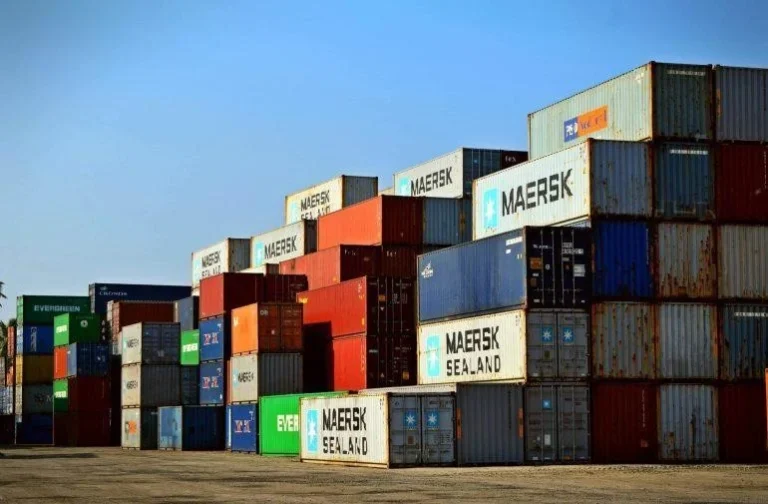
The global maritime logistics landscape is currently navigating a period of profound instability, characterized by shifting trade lanes, capacity constraints, and persistent geopolitical friction. According to the latest data from the Drewry World Container Index (WCI)—the industry’s premier benchmark for container freight pricing—global rates have climbed once again, marking a 4% increase to reach $4,526 per 40-foot container. This latest uptick is driven primarily by a surge in demand across Transpacific trade routes, where shipping lines continue to exert stringent control over vessel capacity.
As shippers grapple with these rising costs, the industry is closely monitoring how carrier strategies—ranging from capacity management to the implementation of new surcharges—will reshape the flow of global commerce as the peak shipping season reaches its zenith.
Main Facts: A Transpacific-Led Price Rally
The latest WCI reading underscores a divergence in regional performance. While the Asia-Europe trade lanes have seen a slight softening in spot rates, the Transpacific corridor remains the primary engine of inflationary pressure.
Specifically, spot prices for cargo moving from Shanghai to New York have surged by 9%, hitting a staggering $9,507 per 40-foot container. Similarly, rates for shipments from Shanghai to Los Angeles have climbed by an identical 9%, reaching $6,802. This trend is not accidental; it is the result of a deliberate "capacity discipline" strategy adopted by major shipping lines. By utilizing "blank sailings"—the cancellation of scheduled port calls—and reducing overall deployed tonnage, operators have effectively tightened supply to match or exceed the robust demand emanating from North American importers.
Chronology: The Evolution of Recent Market Pressures
To understand the current state of the market, one must look at the sequence of events that have defined the third quarter of 2024:
- Early July: Shipping lines began aggressively adjusting schedules to compensate for vessel diversions away from the Red Sea and the Suez Canal, a reaction to ongoing security risks.
- Late July: The accumulation of port congestion in major Asian hubs, particularly Shanghai, began to ripple across the supply chain, extending vessel waiting times and trapping equipment.
- August 1–15: Data from Drewry’s Container Capacity Insight revealed that capacity on the Asia-to-US East Coast lane contracted by 9% month-over-month. Concurrently, the Asia-to-US West Coast lane saw a 0.4% contraction, creating an environment where demand consistently outpaced available space.
- Late August (Present): Carriers announced a series of new surcharges, most notably regarding the Panama Canal, which are set to take effect in September. These additions, combined with existing congestion, have solidified the current high-rate environment.
Supporting Data and Capacity Analysis
The underlying data provided by the Drewry WCI and accompanying market intelligence paints a picture of a market defined by artificial scarcity.
Capacity and Blank Sailings
For the upcoming week, shipping lines have scheduled seven blank sailings, effectively removing significant chunks of capacity from the market. This tactical withdrawal of vessel space ensures that carriers maintain leverage during negotiations with shippers. In the Asia-to-US East Coast trade lane, the 9% monthly reduction in capacity has served as a catalyst for the double-digit price increases observed in the spot market.
Port Congestion Metrics
Efficiency in port operations remains a critical variable. As of week 33, Shanghai and Rotterdam—two of the world’s most vital logistics nodes—are still experiencing significant dwell times. Average vessel waiting times at Shanghai have reached 32.3 hours, while Rotterdam is averaging 25.0 hours. While these figures represent a moderate improvement from the acute bottlenecks seen earlier in the summer, they remain far above historical norms, indicating that the supply chain is still operating under extreme duress.
Divergent Trends: The Asia-Europe Route
While the Transpacific is heating up, the Asia-Europe route has seen a cooling effect. Spot rates from Shanghai to Genoa dropped 2% to $4,955, while Shanghai-to-Rotterdam rates eased by 1% to $4,401. Despite this, the presence of two scheduled blank sailings for the coming week suggests that carriers are attempting to place a floor under these rates, preventing a deeper slide even as demand in Europe shows signs of stagnation compared to the US.
Official Responses and Strategic Shifts
The shipping industry is in the midst of a fundamental shift in business models. As highlighted by recent trends, major container shipping giants are moving away from traditional chartering—where vessels are leased from third-party owners—toward full-scale fleet ownership. This shift is designed to give carriers greater autonomy over their asset deployment and reduce reliance on a volatile charter market.
Furthermore, carriers are responding to operational challenges with financial measures. Several lines have declared upcoming Panama Canal surcharges for Asia-US East Coast and Asia-Gulf Coast routes. These fees are being justified by the continued operational costs associated with drought-related draft restrictions at the canal and the need to manage traffic flow through alternative routes.
Regarding the geopolitical landscape, the situation remains fluid. While the US-Iran memorandum regarding the Strait of Hormuz lapsed without a durable long-term accord, the industry is witnessing a cautious return to normalcy in some areas. A handful of carriers have begun to test the waters, resuming select passages through the Red Sea and Suez Canal following improved security evaluations. However, these are localized successes; the broader market remains hyper-sensitive to any escalation in regional conflict.
Implications for Shippers and the Global Economy
The current state of the container freight market carries significant implications for the global economy, particularly for businesses that rely on "just-in-time" inventory models.
The Cost of Uncertainty
For the retail and manufacturing sectors, the primary takeaway is that uncertainty is the new normal. With schedule reliability undermined by labor strikes at German ports and persistent bottlenecks in Asia, the traditional predictability of supply chains has evaporated. Shippers are finding it increasingly difficult to guarantee delivery dates, leading to a surge in "safety stock" hoarding, which in turn places further pressure on warehousing capacity.
Recommendations for Shippers
Industry analysts are unanimous in their advice: the window for reactive logistics has closed. Shippers are strongly urged to:
- Reserve Space Early: With capacity being tightly managed via blank sailings, booking cargo space well in advance is essential to avoid being left behind.
- Factor in "Buffer" Time: Given the current average waiting times at major ports, shippers must build an additional 7–14 days of transit time into their logistics planning to account for potential cargo rollovers and unforeseen delays.
- Diversify Routes: Where possible, importers are exploring multi-modal solutions—such as sea-air combinations or rail-based intermodal options—to bypass the most congested maritime gateways.
Future Outlook
Looking ahead, Drewry projects that freight rates will remain largely stable in the coming week. However, this stability is fragile. With the introduction of the new Panama Canal surcharges in September, the market may see a second wave of upward pressure. The ability of carriers to maintain "capacity discipline" will be the deciding factor in whether rates remain at these elevated levels or begin a slow, painful descent toward pre-2024 baselines.
In conclusion, while the global economy has proven resilient, the container shipping industry remains a bottleneck. The interplay between geopolitical instability, deliberate capacity management by carriers, and the physical limitations of global port infrastructure suggests that the current high-cost, high-volatility environment will persist for the foreseeable future. Stakeholders must remain vigilant, prioritize flexibility, and prepare for a peak season that will be defined more by logistics management than by price competitiveness.
About the Author