In a striking display of the ongoing challenges facing U.S. border security, U.S. Customs and Border Protection (CBP) officers at the Roma, Texas, Port of Entry recently executed a massive narcotics seizure. The operation, which took place on August 11, resulted in the recovery of more than 1,000 pounds of suspected methamphetamine concealed within a routine commercial shipment of laundry detergent. The haul, valued at over $9.57 million, underscores the sophisticated methods employed by transnational criminal organizations to exploit international freight channels.
The Chronology of the Interception
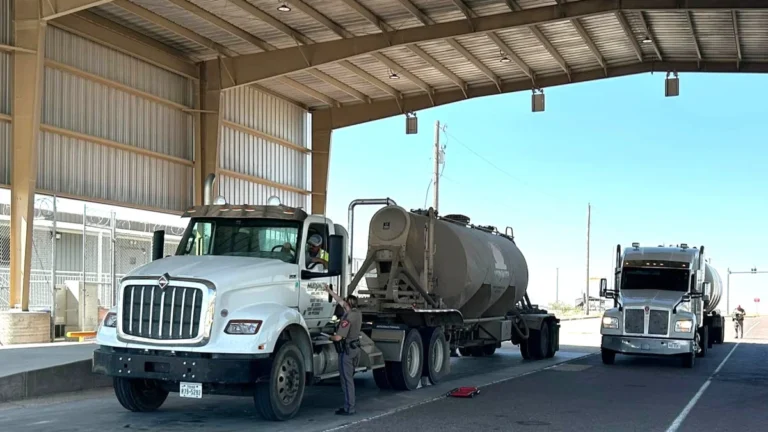
The seizure began as a standard commercial transit at the Roma International Bridge, a vital commercial artery connecting Roma, Texas, with Ciudad Miguel Alemán in the Mexican state of Tamaulipas. According to official reports, a 2012 tractor-trailer arrived at the border crossing from Mexico, with the driver declaring a commercial load of household detergent.
While the paperwork appeared routine, the vehicle was flagged for further scrutiny upon its arrival. CBP officers, utilizing their professional training and risk-assessment protocols, directed the tractor-trailer to a secondary inspection area. This move is a standard procedure when officers perceive discrepancies or anomalies in the declared cargo or travel documentation.
Once in the secondary inspection bay, the process shifted to advanced technology. CBP personnel employed non-intrusive inspection (NII) equipment—a suite of high-tech scanners designed to detect contraband without the need for manual offloading. Simultaneously, a highly trained canine team was deployed to conduct a physical search of the cargo. The synergy between technological scanning and canine detection proved decisive. The search yielded a total of 240 distinct bundles, all expertly concealed within the mass of detergent containers. Subsequent testing confirmed that the contents were methamphetamine, totaling 1,071 pounds (approximately 485.78 kilograms).
A Closer Look at the Data and Methodology
The sheer scale of this seizure highlights the logistical complexity of modern drug smuggling. To move over half a ton of illicit substances, traffickers must integrate their contraband into legitimate supply chains, counting on the sheer volume of daily trade to provide cover.
Breakdown of the Seizure:
- Total Weight: 1,071 pounds (485.78 kilograms).
- Number of Bundles: 240 individual packages.
- Estimated Street Value: $9.57 million.
- Concealment Method: Integrated into a declared load of commercial-grade detergent.
- Equipment Used: Non-intrusive inspection (NII) scanners and canine detection teams.
The use of non-intrusive inspection equipment has become the backbone of modern border security. These systems, which utilize X-ray and gamma-ray technology, allow officers to see through dense cargo, identifying hidden compartments or irregularities in material density that would be invisible to the naked eye. When paired with the olfactory capabilities of a CBP canine unit, the likelihood of detection increases exponentially.
Official Responses and Tactical Insights
Port Director Andres Guerra, who oversees operations at the Roma Port of Entry, praised the interdiction as a testament to the effectiveness of the CBP’s layered enforcement strategy.
"Drug smugglers sometimes try to hide in plain sight, but our frontline CBP officers remain vigilant," Guerra stated following the seizure. "The integration of advanced inspection technology, combined with the experience and intuition of our personnel, allowed us to identify this significant quantity of narcotics before it could reach our communities."
Guerra’s remarks reflect a broader institutional philosophy within the Department of Homeland Security. By emphasizing that border security is not merely about physical barriers, but about "vigilance" and "experience," the agency acknowledges that smugglers are constantly evolving. The success of this operation rested on the officers’ ability to look beyond the manifest and question the integrity of the shipment, even when the documentation appeared to be in order.
Implications for Global Freight and Border Security
The seizure at the Roma International Bridge is not an isolated incident; rather, it represents a growing trend in which illicit actors use commercial freight as a primary vehicle for smuggling. For the logistics and trucking industries, this incident serves as a stark reminder of the risks associated with cross-border operations.
The Challenge of Supply Chain Integrity
Criminal organizations often use "shell" shipments—legitimate products like detergent, produce, or industrial components—to mask the transport of high-value contraband. This puts a tremendous burden on carriers and brokers, who may unwittingly facilitate the movement of illegal goods.
When a truck is seized, the fallout extends far beyond the confiscation of the drugs. The vehicle, the trailer, and potentially the driver are removed from the supply chain for the duration of the investigation. While no specific details were released regarding the shipper, carrier, or intended recipient in this case, such incidents often trigger deep-dive audits into the supply chain, causing delays and financial disruption for all parties involved.
The Regulatory Landscape
As smuggling techniques evolve, the regulatory environment is also tightening. The upcoming Brokerage Compliance Symposium, scheduled for October 2026, highlights the industry’s concern regarding fraud exposure and carrier liability. Issues such as cargo theft, insurance gaps, and illicit exploitation of trucking links have become central themes for stakeholders. The ability of a logistics company to vet its partners and ensure the provenance of its cargo has shifted from a best practice to an operational necessity.
Moving Forward: The Criminal Investigation
Following the discovery, the tractor-trailer, the illicit load, and the driver were turned over to the Roma Police Department. This transfer marks the transition from border interdiction to a formal criminal investigation.
While the CBP’s announcement provided comprehensive data regarding the seizure itself, it remained notably silent on the human and organizational elements of the case. The identity of the driver has not been released, nor have any criminal charges been filed as of the initial report. Furthermore, authorities have yet to identify a suspect organization, broker, or intended recipient for the narcotics.
This lack of detail is common in the early stages of a federal or cross-jurisdictional investigation. Investigators are likely tracking the "paper trail" of the detergent shipment, attempting to identify the point of origin in Mexico and the intended destination in the United States. In complex transnational cases, the goal is often to "follow the money" or the supply chain back to the leadership of the criminal syndicate, rather than simply prosecuting the individual who happened to be driving the truck.
The Strategic Importance of Border Inspections
The Roma incident highlights why constant, randomized, and intelligence-driven inspections are critical. There is a persistent debate in policy circles about how to balance the flow of international commerce with the necessity of border security. Every minute spent in a secondary inspection bay is a minute of lost productivity for the carrier. However, as the $9.5 million value of this single seizure demonstrates, the cost of allowing such shipments to pass unchecked is far higher.
The incident serves as a case study for the industry at large. It confirms that documentation is not a guarantee of legitimacy. As criminal organizations become more adept at mimicking the appearance of legal commerce, the burden of security falls on the technology, training, and institutional skepticism of the officers on the front lines.
As the criminal case develops, further details are expected to emerge regarding the origin and the networks behind the shipment. Until then, the incident serves as a stern warning to those who seek to use the nation’s freight corridors for illicit activity: the border is not a blind spot, but a highly monitored checkpoint where the intersection of technology and human expertise remains a formidable defense.
About the Author