In the vast landscape of the American economy, field service operations stand as a cornerstone of essential infrastructure. From HVAC repair and pest control to electrical maintenance and telecommunications, over 500,000 companies across the United States form the backbone of daily operations for millions of homes and businesses. However, beneath the surface of high demand and steady service requests lies a precarious reality: the majority of these firms do not fail because of a lack of work. They fail because their hard-earned revenue remains trapped in the limbo of unpaid bills and unbilled job sheets.
The "Field Service Paradox" is simple: the more work you do, the faster your cash flow can collapse if your billing cycle is not airtight. In an industry where technicians are the primary revenue drivers, every minute spent on a job is a potential asset—but that asset only realizes its value when it is converted into cash.
The Chronology of a Cash Flow Crisis
The clock for a field service business begins ticking the exact moment a technician completes a job. For many operators, this is where the system begins to fracture. The traditional workflow often looks like this:
- The Service Event: A technician completes a complex repair but focuses entirely on the technical aspect of the job, treating the paperwork as a secondary, burdensome task.
- The Data Gap: Hours, or even days, pass before the "paper ticket" reaches the back office. Incomplete notes, forgotten parts, and illegible handwriting create an immediate administrative hurdle.
- The Administrative Bottleneck: Office staff spend hours chasing signatures, cross-referencing manuals, and clarifying job details with field personnel. This phase frequently introduces a 14-day delay in billing.
- The Invoice Submission: By the time the invoice reaches the customer, the service is no longer top-of-mind. The emotional momentum of a job well done has evaporated, and the invoice is treated as just another bill to be pushed to the bottom of the stack.
Delaying invoice creation by even forty-eight hours introduces unnecessary, systemic risk into your cash flow pipeline. When invoices clog your balance sheets, profitable work is transformed into a payroll headache, forcing business owners to rely on expensive lines of credit to bridge the gap between completed work and received payments.
The Hidden Cost of Incomplete Data
The fiscal health of a field service company is inextricably linked to the accuracy of the data captured at the point of service. According to industry research, manual invoice processing is a significant profit leak, costing up to $19.83 per document due to data entry errors, correction cycles, and the inevitable back-and-forth communication required to reconcile accounts.
The Financial Drain of Manual Processes
When technicians rely on manual or disconnected systems, they aren’t just performing a service; they are creating a future administrative burden. "Every late payment usually starts with an inaccurate or delayed work order," says industry analyst Mark Thompson. "When the information on the truck doesn’t match the information in the accounting software, you have created a friction point that can delay payment by weeks."
The implications are severe. When a company burns labor hours trying to reconcile job facts after the fact, they are effectively paying their office staff to perform "non-revenue-generating" work. This administrative overhead is a silent killer of profit margins, often hidden within general operational costs, yet it represents a significant portion of a company’s lost potential.
Accelerating the Dispatch-to-Cash Cycle
To thrive, field operations must modernize their invoicing lifecycle. Speed is the primary factor in determining how fast customers settle their balances. The most effective strategy is to eliminate the gap between job completion and invoice delivery.
The Power of Niche-Specific Automation
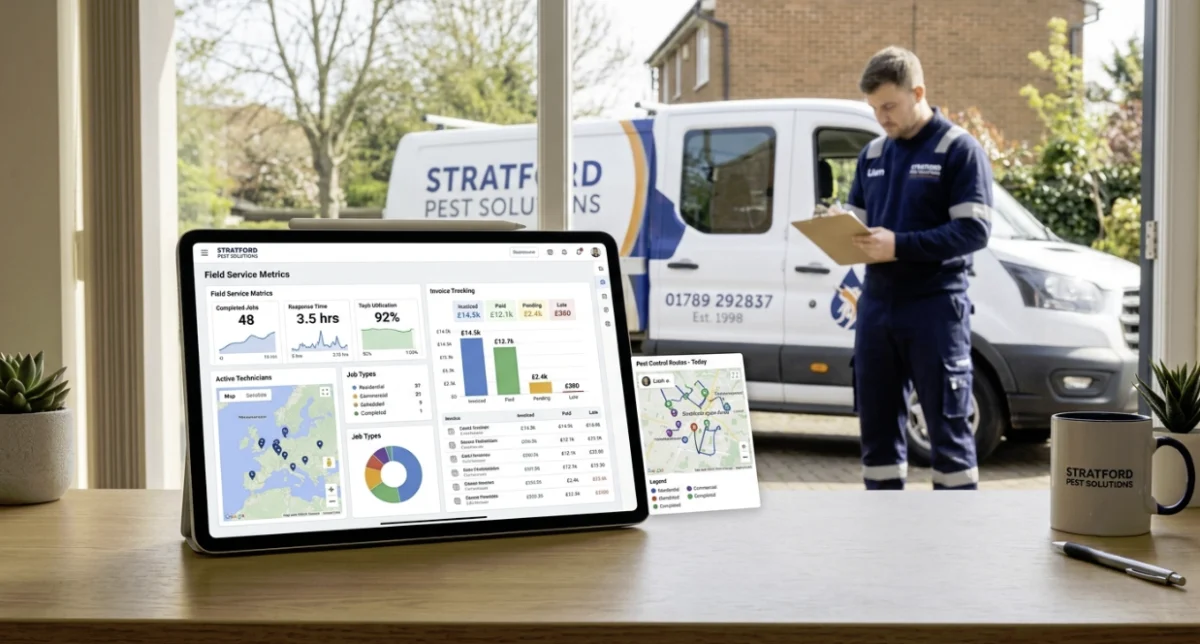
Modernization does not mean adopting generic software; it means adopting tools built for the nuances of your specific field. For instance, companies utilizing specialized pest control or plumbing billing software can trigger automated electronic invoices or even collect payments directly at the doorstep.
By utilizing mobile-first platforms, field teams can capture photos of the repair, log parts used, and obtain digital customer signatures in real-time. This data flows automatically into the central system, generating a professional, accurate bill before the service vehicle has even cleared the driveway. This transition reduces Days Sales Outstanding (DSO) by an average of four days—a massive shift in working capital availability that allows companies to scale without needing external financing.
Eliminating Disputes Through Billing Precision
A customer dispute is the fastest way to stall cash flow. A single ambiguous line item on an invoice can turn a simple transaction into a weeks-long administrative standoff. Accuracy is not just an accounting requirement; it is a customer service strategy.
Standards for Financial Integrity
To eliminate friction, businesses must adopt three core operational standards:
- Mobile Proof of Work: Digital records that include "before and after" photos and instant customer sign-offs.
- Automated Price Books: Digital catalogs that ensure technicians quote accurately every time, preventing under-billing or over-charging errors.
- Real-time Ledger Integration: Systems that remove the need for dual entry, ensuring the accounting department sees what the technician sees the moment the record is saved.
When customers receive an itemized, transparent bill that includes proof of the completed work, the need for follow-up questions is drastically reduced. Transparency builds trust, and trust leads to faster payments.
Synchronizing the Field with the Ledger
Perhaps the most dangerous aspect of legacy field service management is the "blind spot" created by disconnected systems. When dispatch software operates in a silo, independent of the general ledger, the business owner is essentially flying blind.
The Dangers of Double Entry
Double-entry systems—where an admin must copy data from a dispatch report into an accounting program—are hotbeds for human error. These errors often result in under-billing, where revenue is simply lost, or over-billing, which damages client relationships and creates expensive, time-consuming refund processes.
By integrating these environments, owners gain a "single source of truth." This visibility allows for:
- Real-time Financial Forecasting: Knowing exactly what cash is incoming versus what is promised.
- Automated Recurring Billing: Ensuring that long-term maintenance contracts are invoiced on time, every time, without manual intervention.
- Data-Driven Strategy: Making hiring, route planning, and equipment purchasing decisions based on actual cash balances rather than estimates.
Implications for Long-Term Resilience
The field service industry is evolving. As operational costs rise and the demand for skilled labor increases, the companies that will survive the next decade are those that treat their financial back-office with the same rigor they apply to their technical service.
The shift toward automated, digitized, and integrated workflows is no longer a "luxury upgrade"—it is a competitive necessity. Companies that continue to rely on paper-based, manual, or disconnected systems will find themselves increasingly unable to compete with the speed and efficiency of modernized rivals.
Expert Insight on Future-Proofing
"Business owners often view billing as a back-office chore, but it is actually the final step of the service delivery," notes Sarah Jenkins, a consultant for field service optimization. "If you finish the job but don’t finish the billing, the job isn’t actually done. You haven’t captured the value you created."
Building a resilient cash flow system requires a cultural shift within the organization. It requires training technicians to understand that their digital entries are as important as their physical repairs. It requires office staff to shift from "data entry clerks" to "account managers."
In conclusion, the path to sustained growth in the field service sector is paved with precision. By eliminating manual bottlenecks, embracing real-time data capture, and ensuring that your dispatch system talks seamlessly to your ledger, you protect your business from the "silent leaks" that plague so many operators. In an era where cash is the ultimate measure of agility, the ability to convert service into settlement with lightning speed is the greatest competitive advantage a company can possess. The businesses that master this cycle will not only survive the ebbs and flows of the market but will find themselves with the financial stability to innovate, expand, and lead their respective sectors for years to come.
About the Author