Introduction: A New Era of Transatlantic Distribution
In a move that signals a paradigm shift in its operational strategy, California-based food technology and e-commerce giant GrubMarket has officially crossed the Atlantic. The venture-backed company, which has spent the last decade digitizing and consolidating the fragmented North American food supply chain, announced this week its acquisition of U.K.-based JR Holland. This strategic entry into the British market marks the first time the company has extended its footprint beyond the borders of the United States and Canada, signaling an ambitious intent to modernize the global fresh food distribution landscape.
GrubMarket has built its reputation on a dual-pronged approach: acquiring established, high-performing regional distributors and layering them with proprietary software-as-a-service (SaaS) solutions. By integrating JR Holland—a staple of the North East England and Scottish food markets—GrubMarket is not merely adding a new territory to its map; it is proving that its "platform-plus-acquisitions" model is exportable to highly developed European logistics markets.
The Strategic Significance of the JR Holland Acquisition
JR Holland is far from an experimental acquisition. Founded in 1983 by John Holland, the company has operated for over four decades as a pillar of the food service industry in the North East of England. Based in Gateshead, JR Holland has built a formidable reputation as a comprehensive supplier of fresh produce, dairy, meat, bakery, and pantry essentials.
Operational Scale and Infrastructure
The acquisition provides GrubMarket with an immediate, mature operational base in the U.K. The company currently maintains:
- Infrastructure: Two strategic locations in the Newcastle area, totaling 65,000 square feet of warehousing and distribution capacity.
- Workforce: A dedicated team of over 120 logistics and supply chain professionals.
- Logistics Network: A fleet of 32 modern, temperature-controlled vehicles capable of maintaining the cold chain integrity necessary for premium food delivery.
- Reach: A high-volume operation that completes over 3,000 deliveries weekly, serving critical sectors including healthcare, education, hospitality, and the public sector.
For GrubMarket, the value lies in the "last mile" infrastructure that JR Holland has spent forty years perfecting. In an era where supply chain resilience is paramount, inheriting a fleet and a customer base with such deep institutional knowledge provides a massive competitive advantage.
A Chronology of Rapid Expansion (2025–Present)
GrubMarket’s entry into the U.K. is the culmination of a relentless, high-velocity acquisition strategy that has characterized the company’s trajectory over the last 18 months. To understand the scale of their ambition, one must look at the recent timeline of their consolidation efforts.
The 2025 Buying Spree
The year 2025 was transformative for GrubMarket, as it transitioned from a purely distribution-focused entity into a tech-enabled supply chain juggernaut.
- The Technology Foundation: The acquisition of Procurant in early 2025 served as the "brain" for the company. Procurant provides an advanced SaaS platform that automates procurement, order management, and regulatory compliance. This allows GrubMarket to standardize operations across all its newly acquired subsidiaries.
- Expanding the U.S. Footprint: Throughout 2025, the company engaged in a rapid-fire series of acquisitions designed to secure both vertical and geographic dominance:
- Coast Citrus Distributors (San Diego): Strengthened the company’s position in tropical produce imports.
- Delta Fresh Produce: A critical link for Mexican-grown produce destined for U.S. retail and food service.
- Bay Cities Produce (San Leandro): Solidified their grip on the Northern California food service market.
- Sally Produce: Bolstered their specialty produce offerings across the West Coast.
Recent 2026 Milestones
The momentum did not slow entering 2026. In July, GrubMarket successfully acquired SPUD (Sustainable Produce Urban Delivery), a major Canadian online grocery player. This served as a precursor to the current U.K. expansion, testing the company’s ability to navigate international markets and cross-border regulatory frameworks.
Fueling the Machine: Capitalizing for Global Scale
The engine behind this aggressive expansion is a significant inflow of venture capital. GrubMarket has successfully leveraged its status as a leader in food-tech to secure substantial funding, allowing it to move quickly when high-quality acquisition targets become available.
The Financial Backing
- Series H Round (February): The company secured $50 million in fresh capital specifically earmarked for accelerating e-commerce and artificial intelligence (AI) transformation within the supply chain.
- Series G Round (2025): An additional $50 million was raised to support growth, cementing its position as one of the largest and most well-funded private food technology companies in the U.S.
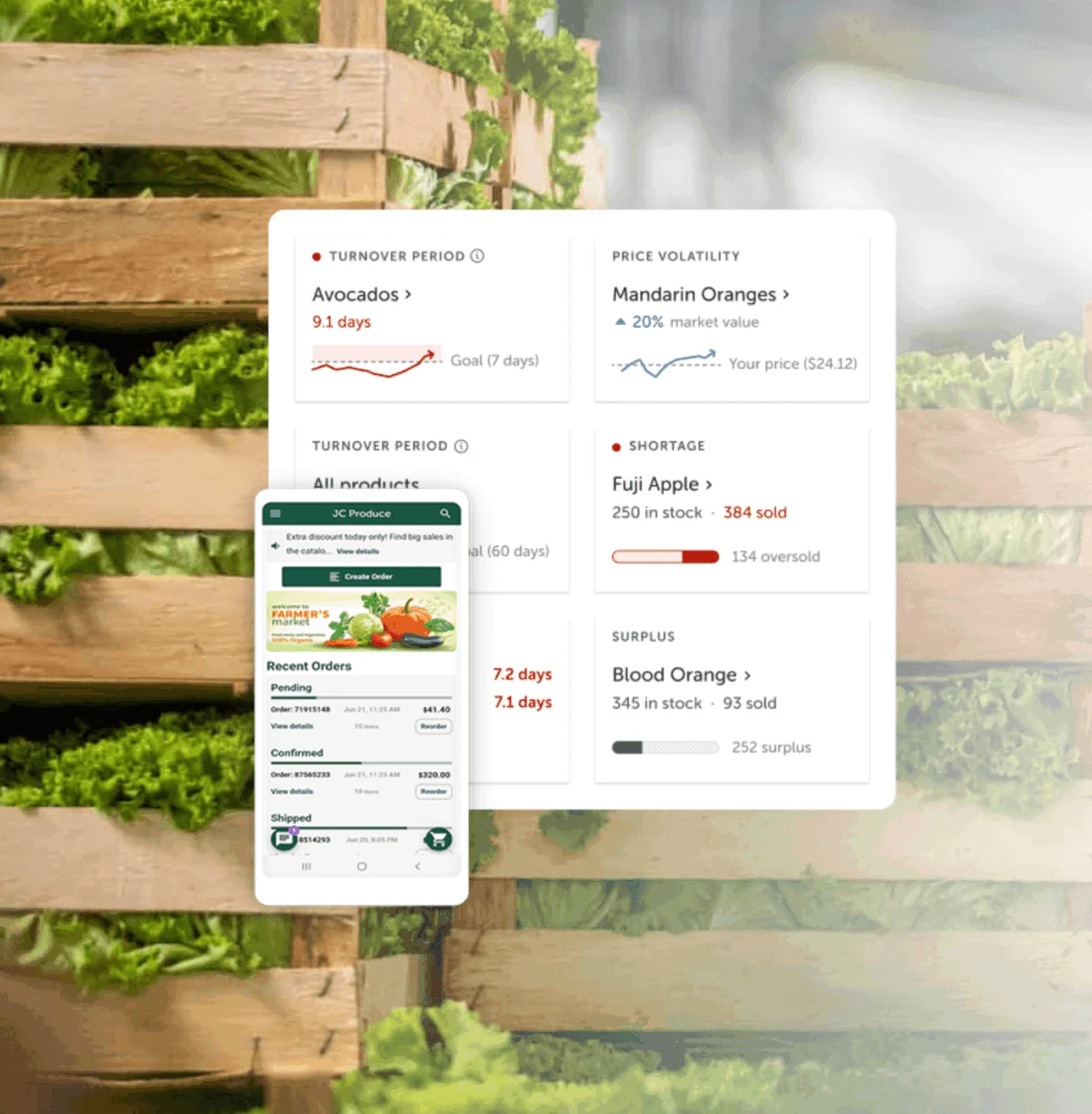
This capital is not merely being used to buy companies; it is being invested in the "AI-ification" of the food supply chain. By applying predictive analytics to demand forecasting, reducing food waste, and optimizing delivery routes, GrubMarket is positioning itself as a technology company that happens to move food, rather than a food company that uses technology.
Implications for the Industry
The integration of JR Holland into the GrubMarket portfolio holds several profound implications for the global food industry.
1. The Digital Transformation of Traditional Distribution
For decades, food distribution in the U.K. and Europe has relied on legacy systems—paper-based invoicing, manual order entry, and fragmented communications between farmers and hospitality buyers. By introducing their suite of SaaS tools to JR Holland, GrubMarket is essentially "upgrading" the U.K. firm’s operating system. This is expected to lead to lower operational costs, fewer errors in the order-to-delivery process, and enhanced transparency regarding the provenance of food products.
2. Market Consolidation and Resilience
The food supply chain is notoriously fragile, as evidenced by recent global disruptions. GrubMarket’s model of regional consolidation creates a "hub-and-spoke" network that is inherently more resilient. By owning the distributors, the software, and the logistics, the company can reroute supply in the event of local shortages or regional instability.
3. Sustainability and Waste Reduction
One of the primary goals of the Procurant acquisition and the broader AI strategy is the reduction of food waste. By matching supply and demand more accurately through digital tools, GrubMarket aims to solve one of the industry’s oldest problems: overstocking and spoilage.
Official Perspectives and Future Outlook
While company executives have emphasized that the acquisition of JR Holland is a strategic move to leverage local expertise, they have also hinted that this is merely the "beachhead" for further European growth.
"The U.K. represents a significant opportunity for us to apply our proven model of technological integration," noted a company spokesperson. "JR Holland’s existing relationships with the public sector, healthcare, and hospitality sectors provide us with a stable foundation from which to innovate."
Industry analysts are watching closely to see if GrubMarket will attempt to acquire further entities in Europe or if they will focus on organic growth through the JR Holland platform. The company’s ability to maintain the "local touch" of these family-founded businesses while applying the efficiency of a global, tech-forward corporation will be the primary test of their long-term success.
Conclusion: A Global Blueprint
GrubMarket’s journey from a California-based e-commerce platform to a transatlantic supply chain leader illustrates a wider trend in the venture capital landscape: the shift toward "boring" industries that are ripe for digital disruption. By targeting the essential, high-volume, and historically low-tech world of fresh food distribution, GrubMarket is creating a blueprint for the future of food logistics.
As the company integrates its U.K. operations, the focus will likely remain on three core pillars: scaling the AI-driven procurement platform, expanding the distribution network to cover more of Scotland and the U.K. Midlands, and maintaining the trust of the local suppliers that have kept JR Holland successful for over 40 years. Whether or not this model can be successfully scaled across the diverse regulatory environments of the European Union remains an open question, but with $100 million in recent capital and a proven history of successful integration, GrubMarket is clearly the entity to watch in the global food supply chain space.
About the Author