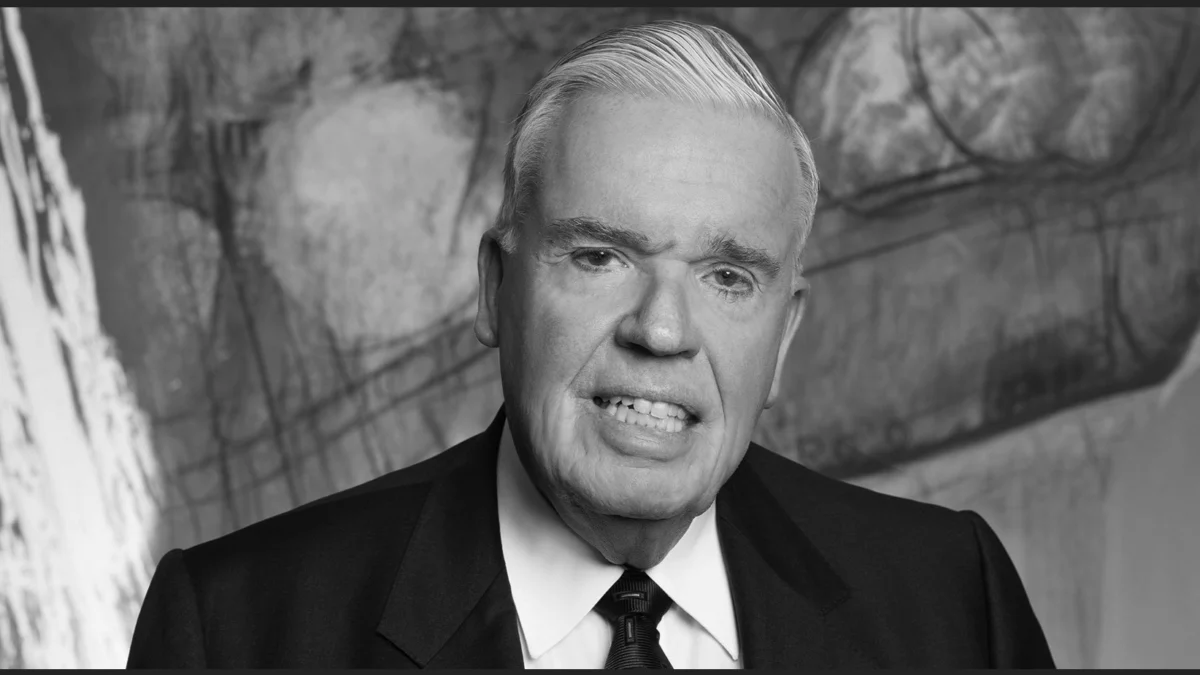
The global logistics industry is in mourning following the passing of Klaus-Michael Kühne, the visionary leader and long-time steward of Kuehne+Nagel International AG. A titan of the freight forwarding world, Kühne passed away on Sunday at the age of 89. His departure marks the end of an era for the Swiss-headquartered logistics giant, which stands today as one of the top five logistics companies in the world by revenue, a testament to his decades of strategic foresight and unwavering commitment to international expansion.
For over six decades, Kühne was more than just an executive; he was the primary architect of a business model that transformed how the world moves goods. From the expansion of air and ocean freight to the sophisticated complexities of modern supply chain management, his influence is woven into the very fabric of global commerce.
A Life Dedicated to Connectivity: The Chronology of an Industry Icon
Born in Hamburg, Germany, Klaus-Michael Kühne was destined to become a central figure in the history of the family business. Kuehne+Nagel had been co-founded by his grandfather 68 years prior to his arrival in 1958. However, it was the young Kühne’s ambition that would elevate the firm from a regional operation to a global powerhouse.
The Early Years and Rapid Ascent
In 1966, at the age of just 29, Kühne assumed the role of Chief Executive Officer of K+N Speditions-AG. His leadership style was characterized by a distinct "entrepreneurial outlook" that prioritized long-term growth over short-term gains. By 1974, recognizing the shifting tides of the global economy, Kühne orchestrated a bold move: he relocated both himself and the company headquarters to Switzerland. This decision was pivotal, providing a stable, neutral, and tax-efficient environment that facilitated the company’s aggressive internationalization strategy.
Building a Global Footprint
Kühne’s vision was truly borderless. In 1979, he demonstrated his foresight by opening K+N’s first office in China, long before the country became the "world’s factory." This early entry into the Chinese market solidified the company’s position as an essential link in the burgeoning global supply chain.
In 1992, as the company moved its corporate headquarters to its current site in Schindellegi, Switzerland, Kühne assumed the title of chairman. Two years later, in 1994, he took the decisive step of taking the company public on the Swiss stock exchange. This move provided the capital necessary for further expansion, allowing the firm to scale its warehousing, air freight, and ocean shipping capabilities on a truly global scale.
The Later Years: Mentorship and Philanthropy
Since 2011, Kühne transitioned into the role of honorary chairman of the board, allowing him to focus on his philanthropic and educational endeavors. He founded the Kühne Logistics University (KLU) in Hamburg, a private institution dedicated to the study of logistics and supply chain management, and established the Kühne Foundation, which has become a significant force in supporting academic research and humanitarian logistics.
Beyond logistics, Kühne maintained a significant footprint in the transportation sector, holding approximately 30% of the container shipping company Hapag-Lloyd and a 17% stake in the German airline Lufthansa, signaling his continued interest in the mechanics of global movement.
Supporting Data: A Legacy of Market Dominance
To understand the scale of Klaus-Michael Kühne’s impact, one must look at the current standing of Kuehne+Nagel. The company currently employs tens of thousands of people across more than 100 countries. It is a dominant force in:
- Ocean Freight: The company is consistently ranked as the world’s leading sea freight forwarder by volume.
- Air Freight: A top-tier provider for high-value and time-sensitive cargo.
- Contract Logistics: Managing complex warehousing and supply chain solutions for the world’s largest multinational corporations.
His tenure saw the transition from traditional freight forwarding to a technology-driven, data-heavy industry. By the time he stepped back into an honorary role, he had successfully navigated the company through the digitization of the supply chain, the rise of e-commerce, and the massive logistical shifts prompted by global crises.
Official Responses and Industry Tributes
The outpouring of grief from the logistics community highlights the profound respect commanded by Kühne. Current CEO Stefan Paul paid tribute to his predecessor, emphasizing that Kühne’s legacy is not merely in the assets he built, but in the culture he fostered.
"His entrepreneurial outlook was always firmly directed towards the future," Paul stated on LinkedIn. "He challenged Kuehne+Nagel to think internationally, pursue new opportunities and keep moving forward. The Management Board and I are deeply conscious of our responsibility to build on what he set in motion: to remain entrepreneurial, embrace change and continue developing Kuehne+Nagel for the future. We will carry this responsibility forward with great respect for our history and the ambition to write the next chapter of Kuehne+Nagel."
The sentiment was echoed by industry peers. Diego Gonzalez Skvasik, CEO of Sterker Group Logistics Brazil, noted, "For those of us who have devoted much of our professional lives to freight forwarding, logistics, and global supply chains, Klaus-Michael Kühne was one of the defining figures of our industry. His vision, entrepreneurial spirit, international mindset, and determination to keep moving forward helped shape not only Kuehne+Nagel, but also the evolution of modern global logistics."
Skvasik added that true industry builders like Kühne are a rarity, emphasizing that his influence extends far beyond the boardroom of a single company through the standards he set and the generations of logisticians he inspired.
Implications: The Future of the Kühne Legacy
The passing of Klaus-Michael Kühne leaves a significant void, but the infrastructure he built is robust. As the industry faces new challenges—including the rapid integration of artificial intelligence into supply chain optimization and the need for more sustainable, "green" logistics—the company finds itself at a crossroads.
The recent strategic decision by Kuehne+Nagel to adjust its workforce—including the reduction of 2,000 roles amid weak demand and a strategic pivot toward AI-driven efficiency—demonstrates that the company remains in a state of constant evolution. This transition, while difficult, aligns with the very spirit of "embracing change" that Kühne championed throughout his life.
The Kühne Foundation and the Kühne Logistics University ensure that his intellectual legacy will continue to influence future generations. By institutionalizing his knowledge, he ensured that his vision of "international mindset" and "entrepreneurial spirit" would be taught to the next wave of leaders, researchers, and engineers.
Klaus-Michael Kühne is survived by his wife, Christine. As the logistics industry reflects on his life, it is clear that while the man has passed, the systems, standards, and global connections he forged will remain central to the movement of the world’s goods for decades to come. His story is not just one of a successful business executive; it is the story of how the world became connected in the 20th and 21st centuries. His imprint on global trade is indelible, and his journey from a family business in Bremen to a global titan in Schindellegi will remain a blueprint for entrepreneurs worldwide.
About the Author