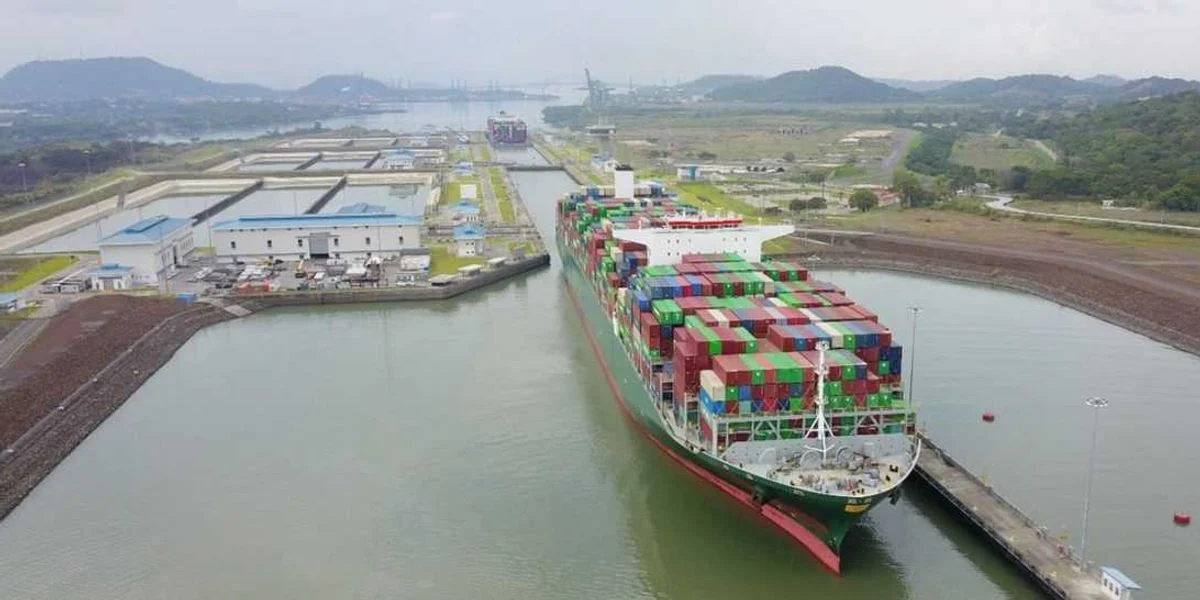
The Panama Canal, one of the world’s most critical maritime bottlenecks, is once again grappling with the stark realities of climate change. As the El Niño weather phenomenon continues to disrupt precipitation patterns across the Americas, the Panama Canal Authority (ACP) has announced a series of increasingly stringent draft restrictions for vessels transiting the Neopanamax locks. These measures, necessitated by a severe depletion of water levels in the vital Gatun Lake, signal a period of renewed uncertainty for global supply chains that rely on this shortcut between the Atlantic and Pacific oceans.
The Current Crisis: A Shift in Navigation Limits
The Panama Canal functions as a complex hydraulic marvel, relying on millions of gallons of fresh water from Gatun Lake to raise and lower ships through its locks. Unlike sea-level canals, the Panama Canal is entirely dependent on the rainfall that feeds this massive reservoir. As drought conditions intensify, the water available for lockages diminishes, forcing the ACP to reduce the "draft"—the depth a ship sits in the water—to ensure that vessels can pass safely without grounding on the canal bed.
The ACP’s latest directives represent a systematic tightening of operational parameters. While the canal’s optimal maximum draft is 50 feet, that threshold is quickly becoming a relic of more stable weather patterns. Under the current schedule, the limit is set to drop to 48 feet (14.63 meters) on August 26, followed by a further reduction to 47.5 feet (14.48 meters) effective September 3.
These restrictions are not merely technical adjustments; they represent a significant reduction in the weight capacity of the world’s largest cargo vessels. Every inch of draft reduction forces carriers to carry less cargo per voyage, effectively "lightening" the load to ensure safe passage. For a global logistics industry already operating on thin margins, these constraints act as an artificial cap on shipping capacity, reverberating through the entire supply chain.
Chronology of Climate-Induced Constraints
The current situation is the culmination of a multi-year trend of meteorological volatility. The following timeline tracks the progression of the crisis:
- December 2025: Facing early indicators of an impending dry season, the Panama Canal Authority initiates proactive water conservation and resource management strategies. These measures were designed to preserve the integrity of Gatun Lake’s water levels long before the peak of the drought.
- Early 2026: El Niño conditions intensify, causing significant rainfall deficits across the Panama watershed. The ACP begins monitoring lake levels with heightened scrutiny, preparing the maritime community for potential operational adjustments.
- August 5, 2026: The ACP issues a formal release detailing the upcoming draft restrictions, emphasizing that the measures are vital for the long-term sustainability of the waterway.
- August 26, 2026: The maximum allowable draft for Neopanamax locks is reduced to 48 feet.
- September 3, 2026: The maximum allowable draft is further reduced to 47.5 feet, marking the latest milestone in a series of restrictive adjustments.
Supporting Data: The Economic Ripple Effect
The implications of these restrictions are quantifiable and immediate. According to data provided by Freightos, the industry response has been swift. Several major carriers have already signaled their intent to implement "Panama Canal Transit Surcharges" to offset the revenue lost due to reduced cargo volumes per vessel. These surcharges are projected to range from $200 to $1,000 per forty-foot equivalent unit (FEU) container, starting in mid-September.
This surcharge represents a direct pass-through of cost to the consumer. As shipping lines are forced to manage lower cargo loads on the same number of daily transits, the unit cost per container rises. Freightos analysts noted that while the current measures are less severe than the historic lows experienced in 2023, they serve as a harbinger of potential future instability.
Furthermore, the operational environment is being compounded by a "perfect storm" of global stressors. Descartes, a leader in supply chain intelligence, reports that while U.S. import demand remains surprisingly resilient, the operating environment is arguably the most complex in recent history. The convergence of tariff shifts, elevated maritime risk in the Middle East, Red Sea disruptions, and now the Panama Canal bottleneck, has created a volatile cocktail of increased costs and schedule unreliability.
Official Responses and Strategic Management
The Panama Canal Authority has maintained a posture of transparency and long-term planning. In their August 5th communiqué, the ACP was careful to distinguish between transit volume and draft depth. "The draft adjustment will not affect the number of daily vessel transits," the Authority clarified. "Instead, it reflects water conservation and resource management measures that have been in place since December 2025."
The ACP’s strategy is rooted in the necessity of preserving the reservoir levels required to support the massive volume of water displacement needed for each transit. By sacrificing weight capacity rather than the frequency of ship movements, the Authority is attempting to maintain a steady flow of traffic, even if the total tonnage transiting the canal is lower than in non-drought years.
This, however, is a delicate balancing act. The ACP is under pressure to maintain the canal’s reputation as a reliable, efficient global trade route, yet it is simultaneously beholden to the hydrological reality of its environment. The current strategy aims to ensure that the canal remains operational through the 2026 dry season without necessitating the drastic, total-closure scenarios that have been feared by global trade bodies in the past.
Implications for Global Supply Chains
For shippers, retailers, and manufacturers, the news from Panama is a reminder that the "just-in-time" supply chain model is increasingly vulnerable to environmental externalities. Jackson Wood, Director of Industry Strategy at Descartes, emphasizes that the era of predictable, low-cost maritime transit is currently suspended.
1. The Cost of Inefficiency
The immediate impact is the inflation of freight costs. When carriers impose surcharges, the cost of goods sold (COGS) for importers rises. This, in turn, pressures retailers to either absorb the cost—eroding margins—or pass it on to consumers, contributing to broader inflationary pressures.
2. Routing and Diversification
The complexity of these restrictions is forcing logistics managers to reconsider their sourcing and routing strategies. Many firms are now looking at "multi-modal" or "diversified routing" strategies. This might include shipping to West Coast U.S. ports and utilizing rail to reach the interior, rather than relying on an all-water route through the Panama Canal to the East Coast. While this bypasses the canal’s draft restrictions, it introduces its own set of costs and logistical complexities, including the potential for bottlenecks at railheads and ports.
3. The Resilience Mandate
The current climate reality demands a shift in how supply chains are designed. Companies that maintain "flexible sourcing" are finding themselves better equipped to handle the Panama Canal’s constraints. By having the ability to switch between ports of entry or adjust transit routes on short notice, importers can mitigate the risk of being "stuck" with high-cost, low-capacity maritime solutions.
4. Long-term Infrastructure Concerns
The ongoing drought also sparks a broader debate about the long-term viability of the Panama Canal. As climate change continues to impact the rainfall patterns of Central America, the ACP will likely need to accelerate investments in alternative water management technologies. Whether this includes desalination projects, the dredging of new reservoirs, or the implementation of water-saving lock designs, the physical infrastructure of the canal must evolve to match the changing environment.
Conclusion: A New Normal for Maritime Trade
The Panama Canal’s current situation is a microcosm of the challenges facing global trade in the 21st century. The intersection of a vital, century-old infrastructure project and a rapidly changing climate creates a landscape of constant adjustment. While the ACP’s management of the situation shows a commendable level of foresight—moving to restrict draft well before the water crisis reached a critical breaking point—the economic reality for global trade is clear.
The volatility of the Panama Canal is no longer an outlier; it is a permanent variable in the global logistics equation. As businesses navigate the remainder of 2026 and look toward 2027, the ability to anticipate, adapt, and innovate in the face of these constraints will distinguish the most resilient global supply chains from those that remain fragile. The "lightening" of ships in the Neopanamax locks is a sign that while the canal remains open, the cost of moving goods across the globe is becoming heavier than ever.
About the Author