The Paradigm Shift: From Transactional to Immersive
Technology has long been a tool we operated; today, it is an environment we inhabit. The rise of Artificial Intelligence has fundamentally altered the topography of human-brand interaction. We have transitioned from a transactional era—where consumers simply clicked buttons or visited websites—into a conversational era. In this new paradigm, AI does not merely retrieve information; it creates context, synthesizes data, and generates content in real-time.
This shift is not merely technological; it is deeply psychological. As interactions become more human-like, the traditional boundaries between human desire and machine response are dissolving. For marketers, this represents a tectonic shift. To survive, brands must move beyond the "transactional" and embrace the "agentic."
The Evolution of the "Lovemark"
In the early 2000s, Kevin Roberts, then-CEO of Saatchi & Saatchi, introduced the world to the "Lovemark"—a brand that inspires irrational loyalty beyond reason. Today, Arjan Kapteijns, his successor in the Dutch market, is redefining this concept for the AI-infused age.
Kapteijns proposes the concept of "Agentic Lovemarks." In this vision, the emotional connection consumers feel is no longer directed solely toward a human-led organization, but toward the digital agents that represent those brands. The core necessity remains the same—emotional resonance—but the architecture of that connection is now orchestrated by machine learning algorithms.
Chronology: From Archetypes to Algorithms
To understand why the current branding playbook is insufficient, we must look at the evolution of brand strategy:
- Early 20th Century: The birth of psychological marketing. Brands began to leverage human emotions to drive repeat purchases, moving away from purely functional advertising.
- 1999: Margaret Mark and Carol Pearson published The Hero and the Outlaw, codifying the 12-brand archetype model. This provided a rational guide for irrational consumer behavior, giving brands a "personality" that humans could easily recognize.
- 2020–2025: The explosion of Generative AI and LLMs (Large Language Models) signaled the end of the static brand experience.
- 2026: The emergence of the PRISM Model and the Legible-Lovable Law, marking the transition toward operationalizing brand personality for autonomous AI agents.
For decades, the 12-archetype model worked because humans were the ones interpreting the brand’s "personality." Today, however, we are ceding control of that interpretation to machines. If an AI is left to interpret a vague archetype, the resulting customer experience becomes erratic—the digital equivalent of a brand changing its logo every time a search query is entered.
Supporting Data: The Legible-Lovable Law
Thomas Marzano, a veteran brand strategist for Philips and ASML, has championed the "Legible-Lovable Law." This principle posits that in an agentic economy, a brand must be:

- Legible to AI: The brand must be defined in a way that machines can index, recognize, and recommend.
- Lovable to Humans: The brand must maintain emotional relevance in human decision-making.
This is not a rejection of emotion, but a technical reinforcement of it. Only by making a brand "readable" can it become a "Branded AI." Without this structured data, an AI interaction remains generic, stripped of the brand’s unique soul, tone, and vocabulary.
Introducing the PRISM Model
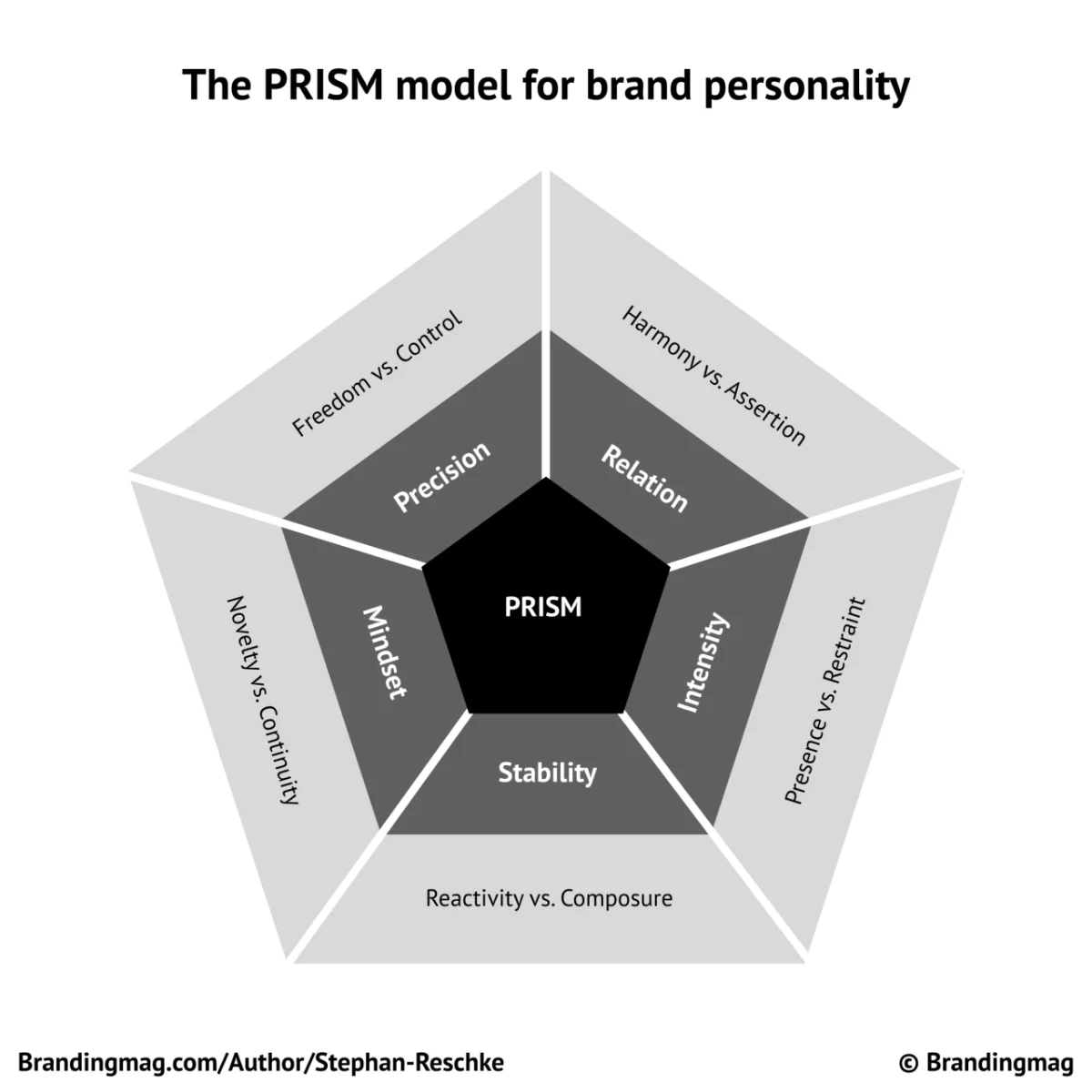
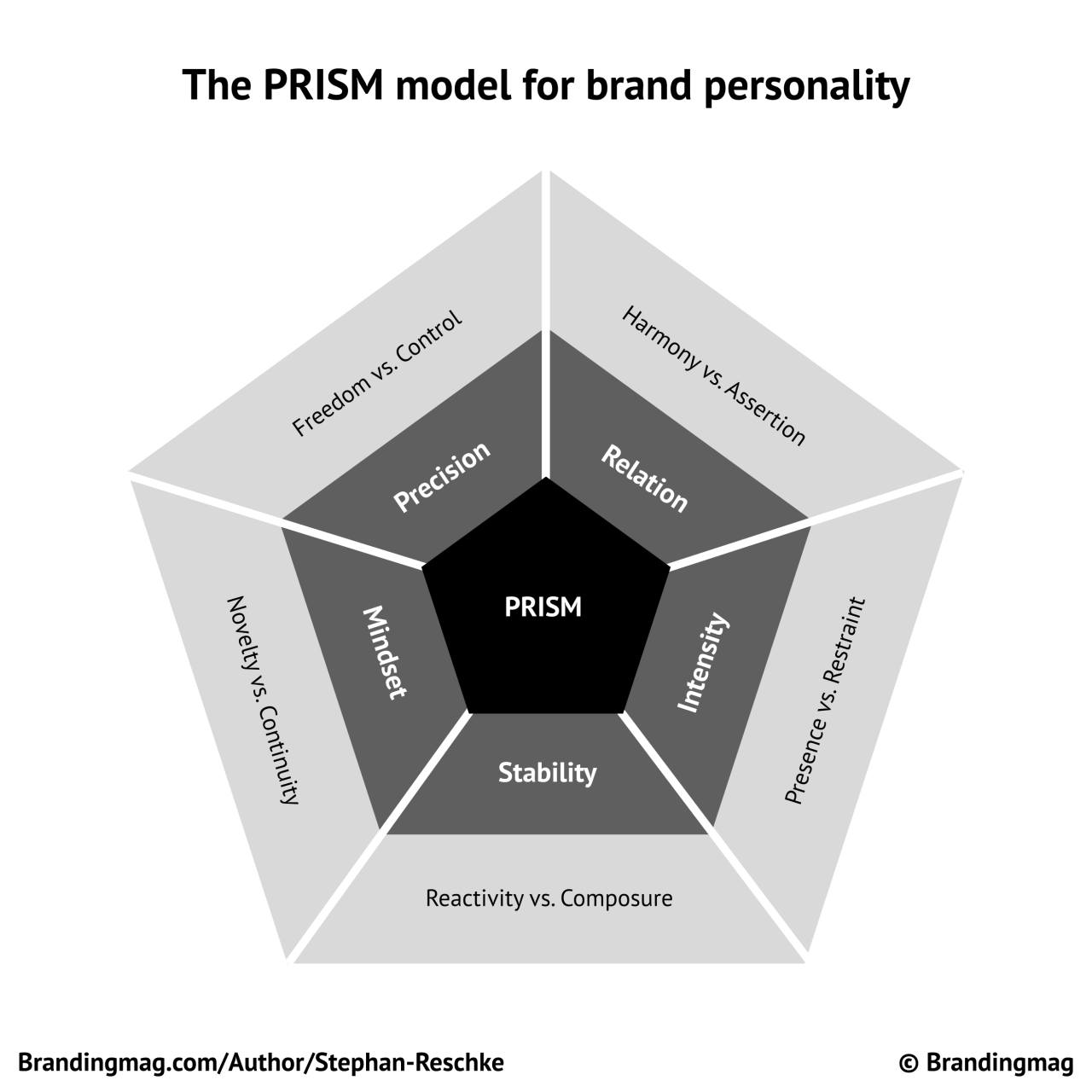
To bridge the gap between abstract personality and machine-readable behavior, the industry is shifting toward the PRISM model. Based on the "Big Five" (OCEAN) personality traits of human psychology, PRISM translates human nuance into a language that AI can operationalize.
The five core domains of the PRISM model include:
- P – Personality: The core character traits, ranging from agreeable to assertive.
- R – Resonance: The ability of the brand to align with the user’s emotional state.
- I – Intelligence: The capacity for the brand to handle complexity and problem-solving.
- S – Sociality: The brand’s approach to dialogue, etiquette, and interpersonal norms.
- M – Mindset: The fundamental values and strategic outlook of the brand.
Each domain consists of six sub-characteristics measured on a granular scale. By quantifying these traits, marketers can create a "Digital Soul" for their brand. This data is not stored in a dusty PDF; it is embedded directly into the system prompts and infrastructure of LLMs.
Implications: The New Frontier of Brand Language
In a voice-first, AI-driven world, language has replaced the visual campaign as the primary touchpoint. When a user asks an AI agent for a recommendation, the "brand" does not appear as a billboard; it appears as a voice, a tone, and a syntax.
The Shift from Campaign to Conversation
Brands must now develop a Brand Language Framework. This includes:
- Vocabulary/Grammar: Defining the specific linguistic markers that make the brand recognizable.
- Tone of Voice: Establishing how the brand responds to high-stress vs. low-stress queries.
- System Prompting: Encoding the PRISM model directly into the AI’s backend to ensure consistency across every interaction.
When this is executed correctly, the brand becomes a persistent presence in the user’s life. It is no longer a static entity that one "visits"; it is a digital companion that one "lives with."
Official Perspectives on the Agentic Economy
Industry experts suggest that while this transition is anxiety-inducing, it is an inevitable evolution of brand equity.
"The anxiety we feel comes from the uncertainty of the machine-mediated future," notes a lead strategist at a major global agency. "But the solution is not to retreat to the old ways of branding. The solution is to lean into the technology. We must treat our brand personality as code. If we don’t define the brand’s behavior for the AI, the AI will define it for us—and that is a risk no company should be willing to take."
Strategic Implications for the Future
The move toward Agentic Lovemarks demands a structural overhaul of marketing departments. CMOs must now collaborate closely with CTOs and AI architects. The brand identity is no longer just a set of colors and fonts; it is a set of behavioral protocols.
- Operationalization: Brands must move their guidelines from static manuals to dynamic, machine-readable datasets.
- Real-time Adaptation: The "Experience Engine"—a concept central to the Brand Constitution—allows for real-time, on-demand brand experiences that are tailored to the individual, yet grounded in the brand’s core identity.
- Human-Centric Design: Despite the technical nature of the PRISM model, the ultimate goal remains human connection. The machine is the conduit; the emotion is the objective.
Conclusion: Embracing the Digital Soul
The emergence of the PRISM model and the rise of Agentic Lovemarks signify that we have entered a new era of brand building. The future of marketing is not about how we talk to our customers, but how we enable the agents that talk for us to embody our brand’s essence.
The anxiety surrounding AI is merely the growing pain of a new creative frontier. By embracing frameworks like PRISM, brands can ensure they remain not just visible, but vital, in a world where technology has finally gained a "personality." The conversation has already begun. For brands, the choice is simple: either write the script for your digital soul, or let the algorithms write it for you.
About the Author