The modern supply chain is undergoing a profound metamorphosis. As consumer expectations for rapid delivery intensify and global markets become increasingly volatile, the pressure on distribution centers (DCs) to maximize throughput while minimizing downtime has never been greater. In a recent series of industry discussions, experts from Zebra Technologies, KNAPP North America, and E80 Group joined DC Velocity’s David Maloney to explore how artificial intelligence (AI), predictive maintenance, and strategic automation are redefining the standard for operational excellence.
1. Main Facts: The Triple Threat to Traditional Operations
The current landscape of logistics is defined by three major friction points: the prevalence of "false-positive" system stops, the reactive nature of equipment maintenance, and the fragmentation of automated systems.
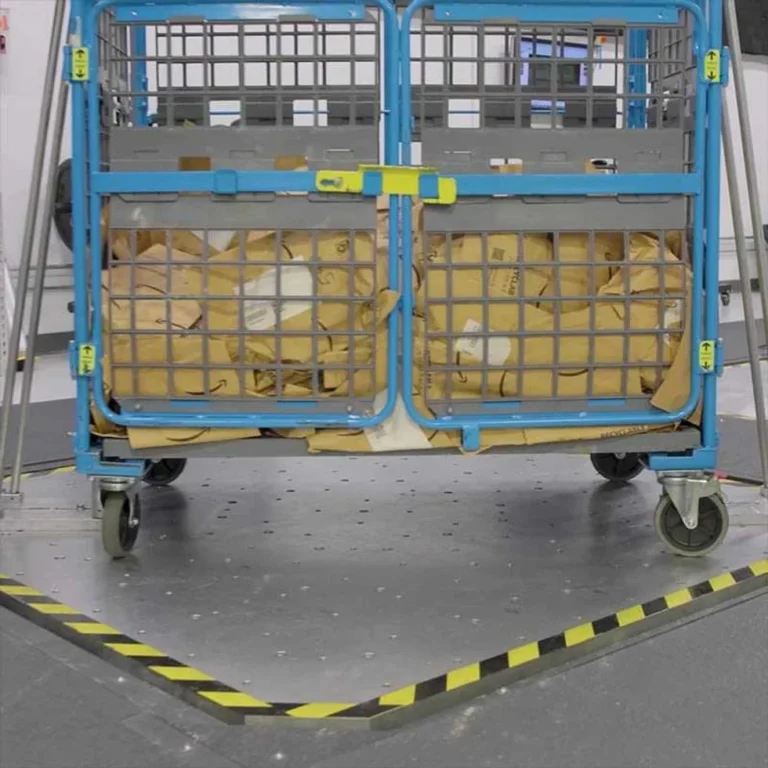
- The "False Jam" Dilemma: In high-speed sorting environments, traditional sensors often lack the nuance to distinguish between a genuine bottleneck and a simple, harmless cluster of packages. This leads to costly, unnecessary system halts.
- The Service Gap: Many legacy customer service models are built on reactive repairs. When a machine fails, operations stop, and the clock starts ticking on lost revenue, creating a cycle of frustration for both the provider and the client.
- The Automation Silo: Many companies have invested in "islands of automation"—standalone machines that perform specific tasks but fail to communicate with the broader warehouse management system (WMS), resulting in inefficiencies in the flow of goods from raw material to finished shipment.
These challenges are not merely technical; they represent a fundamental bottleneck to growth. Addressing them requires a shift toward intelligent, interconnected, and predictive technologies.
2. Chronology: The Evolution Toward Intelligent Logistics
To understand where the industry is heading, one must look at the recent timeline of technological adoption:
- Phase 1: Mechanization (1990s–2000s): The era of fixed conveyor systems and basic automated storage and retrieval systems (AS/RS). These systems increased speed but lacked "eyes" and "brains" to understand their environment.
- Phase 2: Digitalization (2010s): The integration of real-time data tracking and basic connectivity. Systems began reporting their status, but human intervention remained the primary driver for problem-solving.
- Phase 3: The AI-Driven Era (2020s–Present): We are currently in a transition where machine vision, predictive analytics, and holistic software integration are allowing machines to "self-correct" and "self-diagnose."
The recent dialogues hosted by DC Velocity underscore that this third phase is no longer optional for firms seeking to maintain a competitive edge.

3. Supporting Data: The Case for AI-Powered Jam Detection
Charlie Long, Vice President and General Manager of Machine Vision and Fixed Industrial Scanning at Zebra Technologies, highlights a critical area of waste in modern DCs: the "false jam."
In a traditional setup, photoelectric sensors are calibrated to trigger a stop if an object blocks a beam for a specific duration. However, in high-volume environments, packages often bunch together. If a sensor cannot differentiate between a "cluster" and a "jam," the entire line shuts down.
Operational Impact:
- Throughput Loss: Every minute a line is stopped, the throughput capacity drops linearly.
- Labor Costs: Resuming a line requires human intervention, pulling workers away from value-added tasks like picking and packing.
- The AI Solution: Zebra’s AI-powered vision systems analyze visual data rather than simple beam interruptions. The AI recognizes the geometry of a legitimate blockage versus a normal package density. By implementing this, facilities report significantly higher "uptime" and more consistent flow, allowing the system to operate at higher speeds without the fear of cascading downtime.
4. Official Responses: The Shift to Proactive Service and Strategy
Industry leaders are shifting their philosophy from selling hardware to providing "uptime guarantees."
The Proactive Service Model (KNAPP North America)
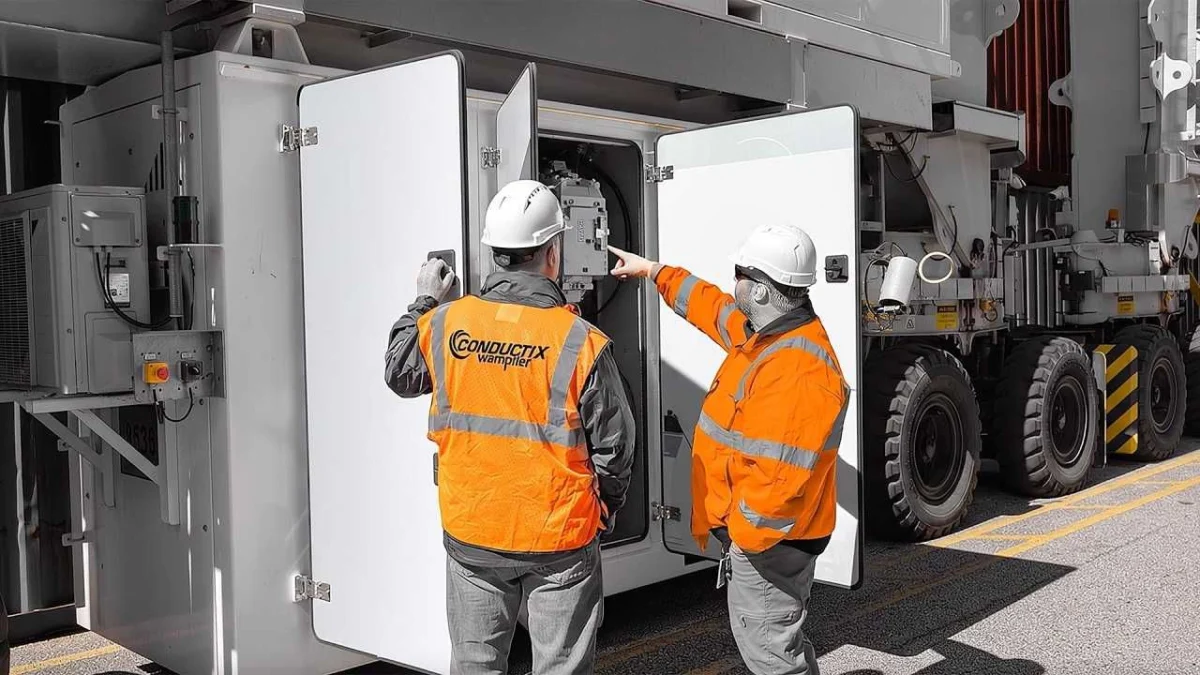
Deep Tayal, Senior Vice President of Customer Service at KNAPP North America, emphasizes that the true differentiator in a 70-year-old industry is the post-sale partnership. "Good service breeds loyalty," Tayal explains. In an era of complex automation, the goal is to be predictive. By leveraging remote monitoring and data analytics, service providers can now identify a component showing signs of wear before it breaks, scheduling maintenance during off-peak hours. This transition from "break-fix" to "proactive health management" turns the service department into a value-generating asset rather than a cost center.

Strategic Automation (E80 Group)
Darrin Peuterbaugh, Sales Director for North America at E80 Group, argues that the age of AI has changed the definition of automation. "Distributors don’t just want robots; they want smart automation that reduces complexity," says Peuterbaugh. The strategy today involves viewing the entire supply chain as a single, connected flow. Whether it is moving raw materials or staging finished goods for shipping, E80 advocates for systems that talk to each other. By creating an "intelligent flow," businesses can achieve better visibility and, more importantly, a more resilient supply chain that can pivot when market demands shift.
5. Implications: What This Means for the Future of Work
The convergence of these technologies suggests a future where the warehouse is a self-optimizing ecosystem.
Enhanced Workforce Productivity
Contrary to the fear that automation replaces humans, these technologies actually elevate the role of the worker. By removing the need to manually clear false jams or reactively fix broken equipment, the workforce is freed to focus on higher-level analytical tasks, system optimization, and complex problem-solving that AI is not yet equipped to handle.
Financial Resilience
For the CFO, these shifts represent a de-risking of the supply chain. Increased consistency in sorting means more predictable delivery timelines. Proactive service means fewer catastrophic operational failures. Connected, strategic automation means the facility is scalable—it can grow alongside the business rather than requiring a total overhaul every five years.
The Competitive Mandate
As these tools become more accessible, the barrier to entry for smaller players will lower, while the ceiling for industry leaders will rise. Companies that fail to integrate AI-driven vision and predictive service models will likely find themselves struggling with higher labor costs and lower throughput, ultimately losing their share of the market to more efficient, data-driven competitors.

Conclusion
The insights shared by Zebra Technologies, KNAPP North America, and E80 Group point toward a unified conclusion: the future of supply chain management is not found in bigger machines, but in smarter ones.
Whether it is the precision of AI-powered vision, the foresight of proactive maintenance, or the strategic orchestration of end-to-end automation, the goal remains the same: to create a logistics infrastructure that is not only faster but also more intelligent. As we move further into the decade, the winners in the supply chain space will be those who stop viewing their technology as a collection of tools and start viewing it as a strategic, living network capable of learning, anticipating, and adapting to the complexities of the global market.
For logistics professionals, the mandate is clear: the age of smart, connected, and proactive operations has arrived. The only question that remains is how quickly organizations can adapt to this new standard of performance.
About the Author