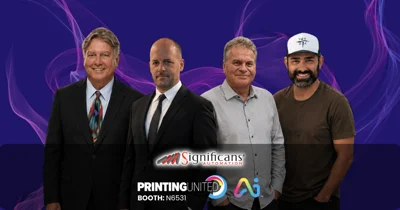
As the printing and packaging industries stand at the precipice of a technological revolution, the distinction between merely "adopting AI" and "mastering workflow automation" has never been more critical. At this year’s highly anticipated PRINTING United Expo, Significans Automation is set to demystify this transition. By anchoring their presence at the PRINTING AI Pavilion, the company intends to pivot the conversation away from abstract artificial intelligence concepts toward the tangible, high-stakes reality of customized, integrated production environments.
Through a series of strategic fireside chats and technical clinics, Significans Automation aims to showcase that the future of print is not found in isolated software tools, but in the seamless, intelligent integration of legacy systems and cutting-edge machine learning.
The Core Objective: Bridging the Silo Gap
The central premise of Significans Automation’s exhibition at PRINTING United is a provocative one: the printing industry is suffering from "automation sprawl." Despite the influx of advanced software, many businesses find themselves managing a patchwork of disconnected systems. These silos—prepress, estimating, planning, and shop-floor management—often fail to communicate, leading to redundant data entry, human error, and missed opportunities for optimization.
Marc Raad, President of Significans Automation, argues that the industry has spent years buying "islands of automation" that never truly speak to one another. "Most printers have not yet realized the full potential of combining AI with highly customized workflow automation," Raad notes. "Our goal at the AI Pavilion is to demonstrate how our clients are breaking down these barriers to transform their businesses in ways previously thought impossible."
Chronology of the Transformation: The "Automation Odyssey"
The centerpiece of the Significans presence is the two-day event titled, "The Automation Odyssey: Lessons from Real Deployments." Scheduled for Wednesday, September 23, and Thursday, September 24, these sessions are designed to move beyond the marketing buzzwords that currently dominate the AI conversation.
Wednesday, September 23: The Foundation of Change
The inaugural session will feature a panel of industry veterans, including an Enterprise Systems Architect and three print executives who have successfully navigated the transition to AI-integrated workflows. The focus here is on the "how" and "why." Participants will detail:
- Problem Identification: How they audited their existing workflows to pinpoint inefficiency.
- Strategy Selection: The rationale behind choosing specific AI tools over others.
- The Implementation Phase: Real-world challenges encountered during the rollout and how they were mitigated.
- Measurable Outcomes: Data-backed results showing improvements in speed, accuracy, and profitability.
Following the panel, attendees will transition to "The Loop"—a dedicated space for a Workflow Automation Clinic. This interactive segment allows attendees to bring their specific operational bottlenecks to the experts for real-time analysis and brainstorming.
Thursday, September 24: Solving the Unsolvable
The second day of the "Odyssey" will focus on the nuances of persistent, complex problems. Titled "The Workflow Problems we did not Solve Yesterday," this session addresses the reality that AI is not a "set-it-and-forget-it" magic bullet. The clinic will dive into the nuances of edge cases, specialized substrate handling, and complex finishing requirements that often stump standard automation software. This session will conclude with an open-floor Q&A, encouraging a collaborative atmosphere between the experts and the audience.
Data Sovereignty and the AI Foundation
A critical component of the discussion led by Sean Davis, VP of Technology at Significans Automation, is the philosophy of "Responsible AI." In an era where data breaches and intellectual property (IP) theft are major concerns, Davis emphasizes that the effectiveness of AI is strictly limited by the quality and security of the underlying data.
The Pillar of Control
Davis asserts that for a print organization to truly benefit from AI, it must maintain absolute sovereignty over its data. "Print companies must maintain total control and access to their own data to benefit from Artificial Intelligence," says Davis. This perspective is a direct challenge to "black box" AI solutions that require companies to upload sensitive production data to external, opaque servers.

The Human-in-the-Loop Requirement
Furthermore, Significans rejects the notion that AI should operate autonomously without oversight. Their model advocates for a "Human-in-the-Loop" architecture. In this framework:
- AI acts as a supportive engine: It handles pattern recognition, estimation, and initial planning.
- Human experts provide the final gatekeeping: Critical decisions regarding complex jobs or non-standard production requirements remain in the hands of the operators.
- Boundary Enforcement: AI is given specific "guardrails" to ensure that it operates within the safety and quality parameters established by the business, protecting the company’s reputation and bottom line.
Implications: Why This Matters to the Print Industry
The shift toward AI-driven, customized workflow automation has massive implications for the long-term viability of print service providers (PSPs).
1. Competitive Differentiation
In a commoditized market, the ability to produce high-quality work at lower costs and faster speeds is the ultimate competitive advantage. By automating the "boring" parts of the job—such as prepress file cleaning or basic shop-floor routing—companies can reallocate their human talent to high-value areas like customer relationship management, creative consulting, and complex project execution.
2. Operational Resilience
The "Automation Odyssey" is not just about growth; it is about survival. As labor shortages continue to impact the printing sector, the ability to automate routine tasks ensures that a shop can maintain consistent output regardless of staffing fluctuations. The systems demonstrated by Significans represent a move toward "lights-out" manufacturing, where the business can operate with higher reliability and less susceptibility to human burnout.
3. Future-Proofing the Business
Perhaps the most significant takeaway from the upcoming sessions is the focus on "future-proofing." By moving away from rigid, out-of-the-box software and toward modular, customized workflows, printers create an infrastructure that is flexible enough to integrate tomorrow’s AI advancements. The companies that learn how to integrate AI today will be the ones that can plug in next-generation tools—such as advanced predictive maintenance or generative design—with minimal disruption.
A Call to Action for Attendees
For those attending PRINTING United, the sessions hosted by Significans Automation represent a rare opportunity to move from the "what" to the "how." The combination of technical expertise from Sean Davis and the practical, client-led narratives moderated by Marc Raad offers a balanced view of the modern printing landscape.
As the industry continues to navigate the complexities of digital transformation, the consensus emerging from leaders like Significans is clear: AI is not a replacement for the print craftsman; it is a force multiplier. However, the multiplier only works if the business has a robust, unified data foundation.
Attendees are encouraged to come prepared with their most difficult production questions. Whether it is the integration of disparate ERP and MIS systems, the automation of finishing queues, or the struggle to keep production data secure, the "Automation Odyssey" promises to provide the roadmap for the next decade of print operations.
By the end of the expo, the goal for those who engage with the Significans team is not just to have seen the future, but to have gained the practical, actionable insights necessary to begin building that future within their own walls. In an industry defined by its ability to evolve, this year’s PRINTING United may well be remembered as the moment when the "automation odyssey" truly began for the mainstream printing community.
About the Author